



Więcej o książce
Quebec in this century has undergone changes that have had a profound impact in Quebec and on Canada as a whole. Initially, the political response to Quebec's urbanization and industrialization was delayed, thanks to the persistence in power of Maurice Duplessis's Union nationale. The Quebec state expanded rapidly to assume functions held by the Church and to carve out a new role for Francophones in the Quebec economy. Traditional French-Canadian nationalism was replaced by a secular, Quebec-based nationalism. Out of these processes emerged a challenge to the Canadian political order: the Quebec independence movement. In the newly written concluding chapter to this definite study of Quebec politics and society, Kenneth McRoberts examines recent events and attitudes. The failed Meech Lake Accord, the rejection of the Charlottetown Accord by Quebec and by the rest of Canada, the emergence of the Bloc quebecois in the House of Commons, the strong yet vacillating support for sovereignty in Quebec, the constitutional exhaustion of the Canadian body politic, the polarization of Canada's two solitudes, and North American economic integration all point to an uncertain future for Quebec - and for Canada.
Zakup książki
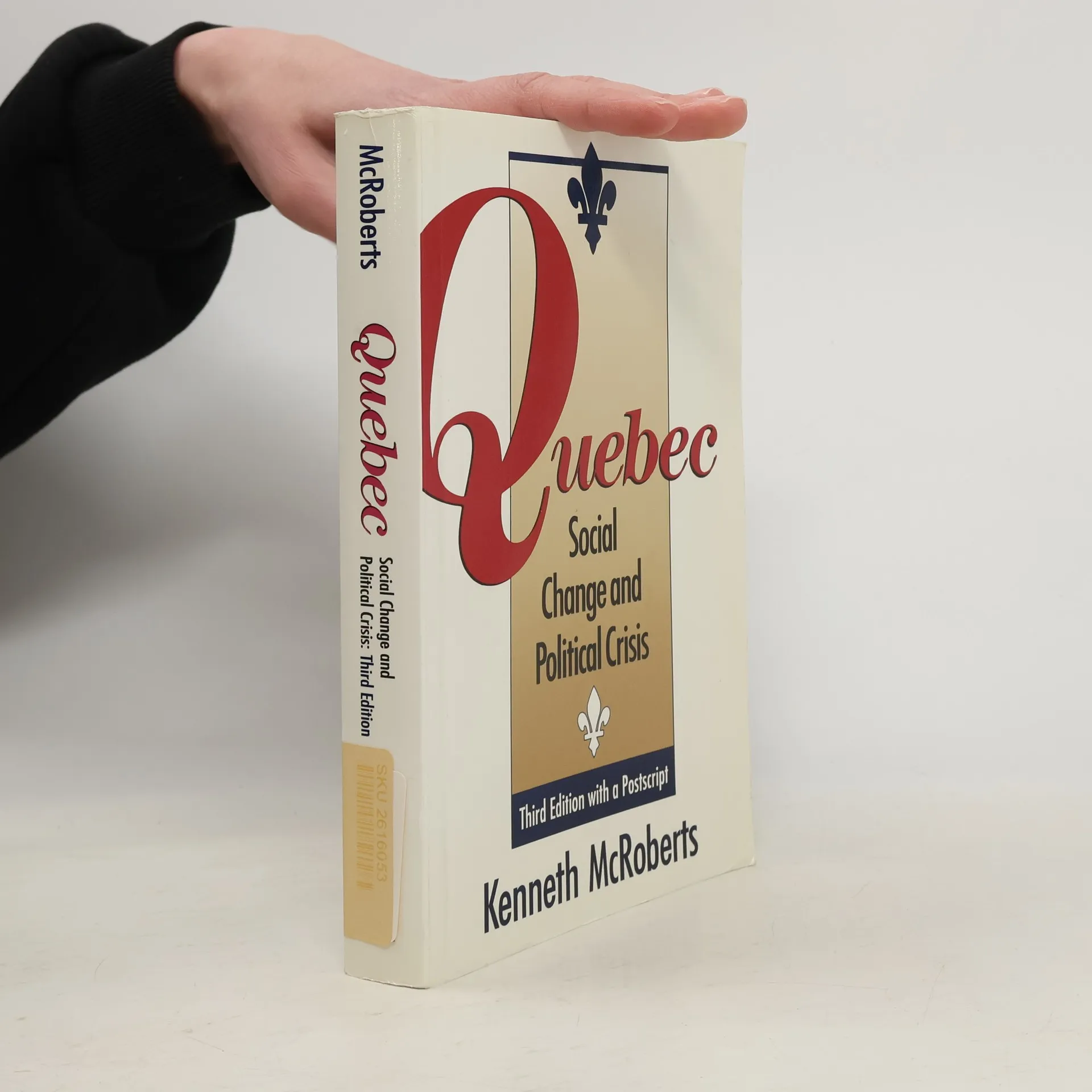
Quebec Social Change and Political Crisis, Kenneth McRoberts
- Język

- Rok wydania
- 1993
- Oprawa
- (miękka)
Metody płatności
Nikt jeszcze nie ocenił.
- Tytuł
- Quebec Social Change and Political Crisis
- Podtytuł
- Third Edition with a Postscript
- Język
- angielski
- Autorzy
- Kenneth McRoberts
- Wydawca
- Random House Inc
- Rok wydania
- 1993
- Oprawa
- miękka
- Liczba stron
- 556
- ISBN10
- 0771055137
- ISBN13
- 9780771055133
- Seria
- Opis
- Quebec in this century has undergone changes that have had a profound impact in Quebec and on Canada as a whole. Initially, the political response to Quebec's urbanization and industrialization was delayed, thanks to the persistence in power of Maurice Duplessis's Union nationale. The Quebec state expanded rapidly to assume functions held by the Church and to carve out a new role for Francophones in the Quebec economy. Traditional French-Canadian nationalism was replaced by a secular, Quebec-based nationalism. Out of these processes emerged a challenge to the Canadian political order: the Quebec independence movement. In the newly written concluding chapter to this definite study of Quebec politics and society, Kenneth McRoberts examines recent events and attitudes. The failed Meech Lake Accord, the rejection of the Charlottetown Accord by Quebec and by the rest of Canada, the emergence of the Bloc quebecois in the House of Commons, the strong yet vacillating support for sovereignty in Quebec, the constitutional exhaustion of the Canadian body politic, the polarization of Canada's two solitudes, and North American economic integration all point to an uncertain future for Quebec - and for Canada.