



Parametry
- 224 strony
- 8 godzin czytania
Więcej o książce
The 'anthropology of development' challenges established ideas in development thought and practice. The authors draw on their experiences with aid projects in Africa and Asia to scrutinize deep-seated assumptions held by 'developers'. Flawed beliefs about progress, gender, technology, partnership, motivation, culture, and race persist, creating significant gaps between these assumptions and the actual policies and practices in development. Through ethnographic case studies from an international NGO and a multilateral agency, the authors examine interactions among expatriate development personnel, local officials, and aid beneficiaries. They highlight how power inequalities related to race, class, and gender manifest in aid processes. This work is nuanced, questioning the simplistic divide between 'developers' and 'beneficiaries'. The authors challenge the perceived monolithic power of developers, advocating for a more complex understanding of the relationships within the aid industry. While avoiding simplistic solutions, the book enriches our comprehension of the cultural and structural dynamics at play in the development process.
Zakup książki
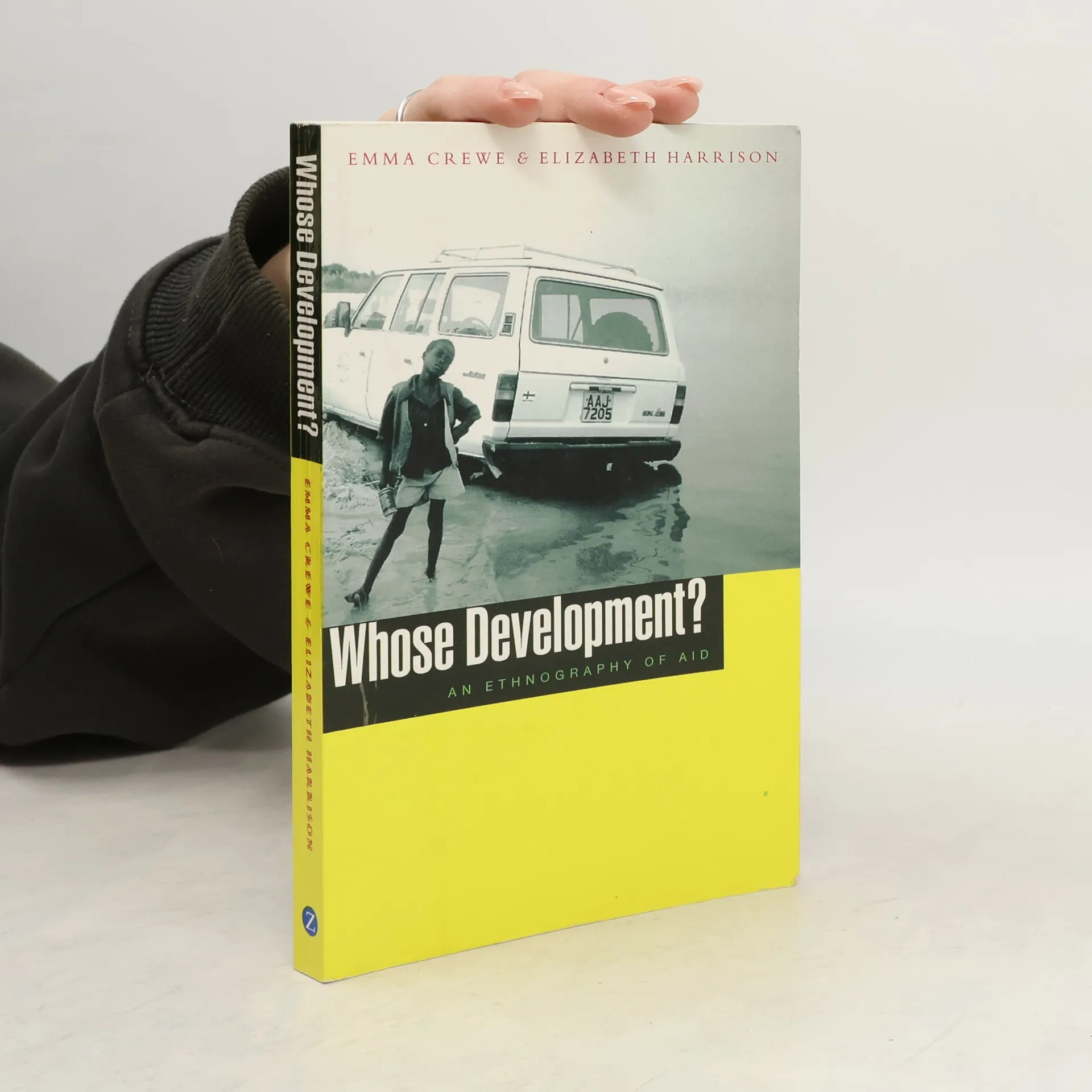
Whose Development?, Emma Crewe, Elizabeth Harrison
- Język

- Rok wydania
- 1998
- Oprawa
- (miękka)
Metody płatności
Brakuje nam tutaj Twojej recenzji.
- Tytuł
- Whose Development?
- Podtytuł
- An Ethnography of Aid
- Język
- angielski
- Autorzy
- Emma Crewe, Elizabeth Harrison
- Wydawca
- Zed Books
- Rok wydania
- 1998
- Oprawa
- miękka
- Liczba stron
- 224
- ISBN10
- 1856496066
- ISBN13
- 9781856496063
- Seria
- Kategorie
- Tagi
- Biznes, Tematy prawne, Społeczeństwo, Afryka, Etnografia, Azja, Teorie polityczne, Stosunki międzynarodowe, Rozwój, Współpraca międzynarodowa
- Ocena
- 3,7 z 5
- Opis
- The 'anthropology of development' challenges established ideas in development thought and practice. The authors draw on their experiences with aid projects in Africa and Asia to scrutinize deep-seated assumptions held by 'developers'. Flawed beliefs about progress, gender, technology, partnership, motivation, culture, and race persist, creating significant gaps between these assumptions and the actual policies and practices in development. Through ethnographic case studies from an international NGO and a multilateral agency, the authors examine interactions among expatriate development personnel, local officials, and aid beneficiaries. They highlight how power inequalities related to race, class, and gender manifest in aid processes. This work is nuanced, questioning the simplistic divide between 'developers' and 'beneficiaries'. The authors challenge the perceived monolithic power of developers, advocating for a more complex understanding of the relationships within the aid industry. While avoiding simplistic solutions, the book enriches our comprehension of the cultural and structural dynamics at play in the development process.