

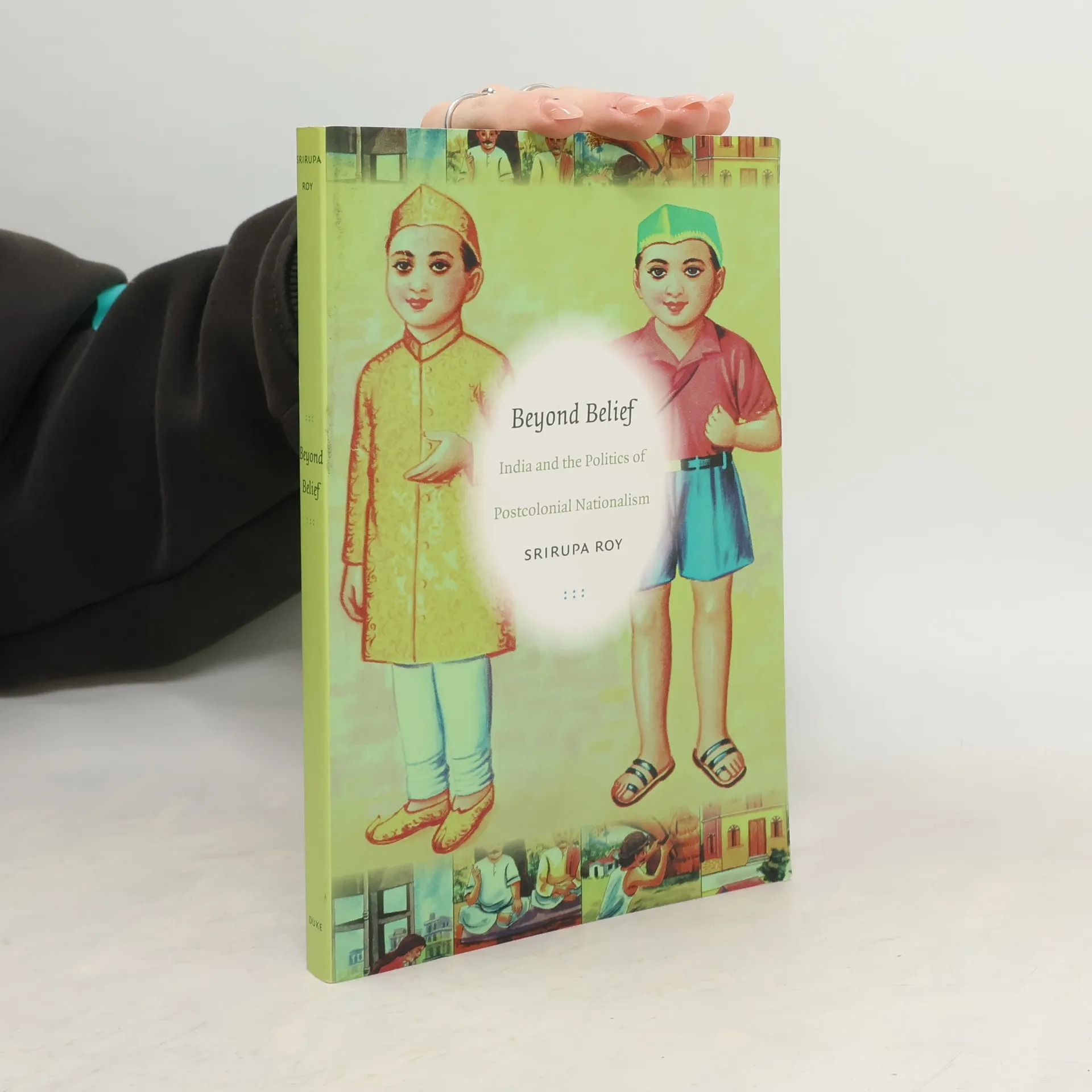


Więcej o książce
This work offers a bold rethinking of nation-state ideologies, focusing on India in the two decades after its 1947 independence. Srirupa Roy examines how nationalists are transformed into nationals, subjects into citizens, and the colonial state into a sovereign entity. She contends that the postcolonial nation-state is solidified not through the creation of a shared cultural community, but by establishing a recognizable and authoritative state identity. This project positions the state as the definitive representative of the nation, emphasizing its role in managing the inherent cultural diversity of the country. Roy explores various methods through which identification with the Indian nation-state was fostered in the 1950s and 1960s. She highlights the Films Division of India, which enabled citizens to "see the state"; the reinforcement of "unity in diversity" during Republic Day commemorations; and the government's discourse on scientific development as a national priority. Additionally, she analyzes the steel towns—industrial hubs for nationalized steel workers—viewed as exemplary spaces of the new India. By focusing on tangible interactions with the state, Roy transcends traditional theories of nationalism and state formation based on collective belief.
Zakup książki
Beyond Belief, Srirupa Roy
- Język

- Rok wydania
- 2006
- Oprawa
- (miękka)
Metody płatności
Brakuje nam tutaj Twojej recenzji.
- Tytuł
- Beyond Belief
- Podtytuł
- India and the Politics of Postcolonial Nationalism
- Język
- angielski
- Autorzy
- Srirupa Roy
- Wydawca
- Duke University Press
- Rok wydania
- 2006
- Oprawa
- miękka
- Liczba stron
- 264
- ISBN10
- 0822340011
- ISBN13
- 9780822340010
- Seria
- Ocena
- 3,15 z 5
- Opis
- This work offers a bold rethinking of nation-state ideologies, focusing on India in the two decades after its 1947 independence. Srirupa Roy examines how nationalists are transformed into nationals, subjects into citizens, and the colonial state into a sovereign entity. She contends that the postcolonial nation-state is solidified not through the creation of a shared cultural community, but by establishing a recognizable and authoritative state identity. This project positions the state as the definitive representative of the nation, emphasizing its role in managing the inherent cultural diversity of the country. Roy explores various methods through which identification with the Indian nation-state was fostered in the 1950s and 1960s. She highlights the Films Division of India, which enabled citizens to "see the state"; the reinforcement of "unity in diversity" during Republic Day commemorations; and the government's discourse on scientific development as a national priority. Additionally, she analyzes the steel towns—industrial hubs for nationalized steel workers—viewed as exemplary spaces of the new India. By focusing on tangible interactions with the state, Roy transcends traditional theories of nationalism and state formation based on collective belief.