

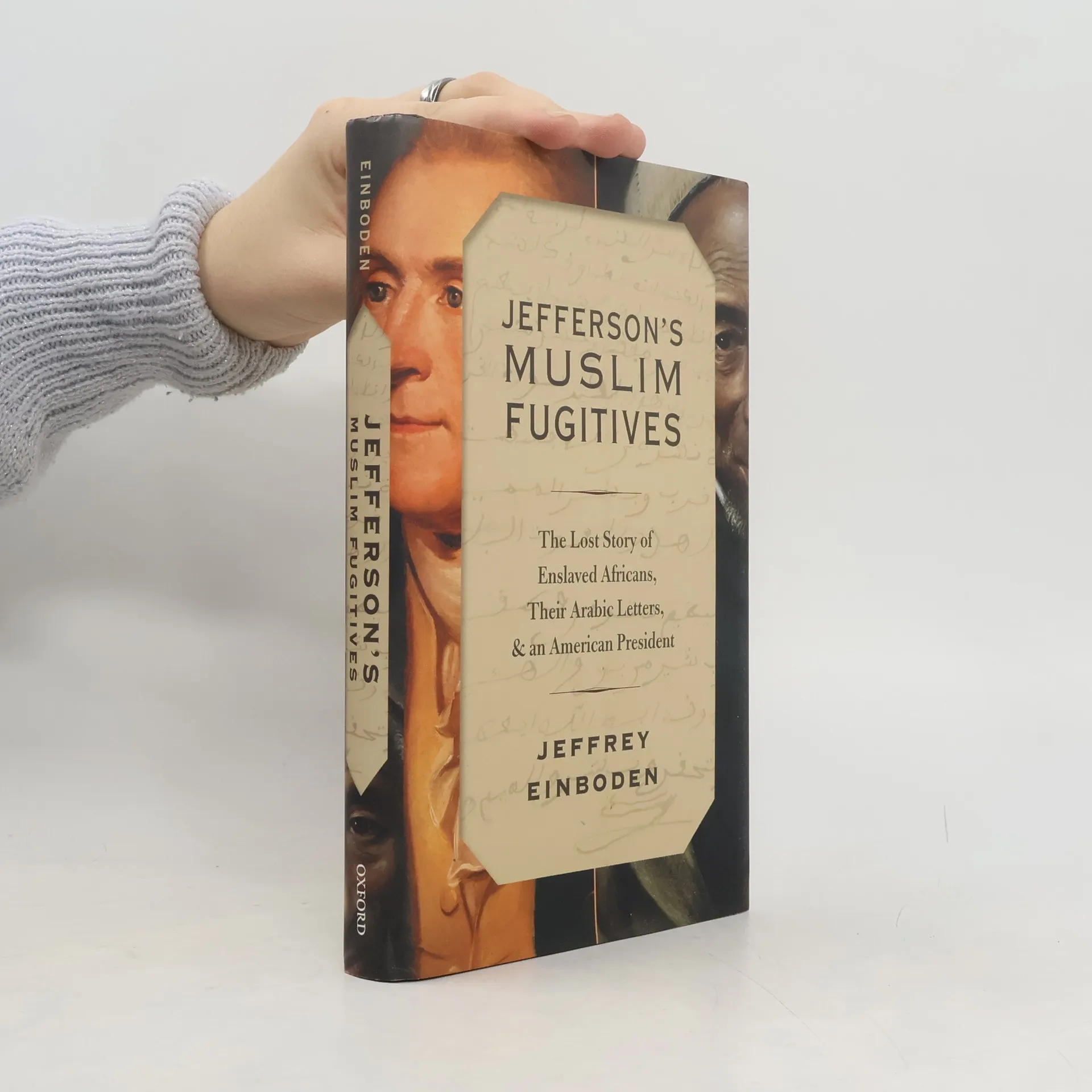

Jefferson's Muslim Fugitives
The Lost Story of Enslaved Africans, their Arabic Letters, and an American President
Autorzy
Ocena książki
Parametry
- 352 strony
- 13 godzin czytania
Więcej o książce
On October 3, 1807, Thomas Jefferson was contacted by an unknown traveler urgently pleading for a private "interview" with the President, promising to disclose "a matter of momentous importance". By the next day, Jefferson held in his hands two astonishing manuscripts whose history has been lost for over two centuries. Authored by Muslims fleeing captivity in rural Kentucky, these documents delivered to the President in 1807 were penned by literate African slaves, and written entirely in Arabic.Jefferson's Muslim Fugitives reveals the untold story of two escaped West Africans in the American heartland whose Arabic writings reached a sitting U.S. President, prompting him to intervene on their behalf. Recounting a quest for emancipation that crosses borders of race, region and religion, Jeffrey Einboden unearths Arabic manuscripts that circulated among Jefferson and his prominent peers, including a document from 1780s Georgia which Einboden identifies as the earliest surviving example of Muslim slave authorship in the newly-formed United States. Revealing Jefferson's lifelong entanglements with slavery and Islam, Jefferson's Muslim Fugitives tracks the ascent of Arabic slave writings to the highest halls of U.S. power, while questioning why such vital legacies from the American past have been entirely forgotten.
Zakup książki
Jefferson's Muslim Fugitives, Jeffrey Einboden
- Język

- Rok wydania
- 2020
- Oprawa
- (twarda)
Metody płatności
Brakuje nam tutaj Twojej recenzji.
- Tytuł
- Jefferson's Muslim Fugitives
- Podtytuł
- The Lost Story of Enslaved Africans, their Arabic Letters, and an American President
- Język
- angielski
- Autorzy
- Jeffrey Einboden
- Wydawca
- Oxford University Press
- Rok wydania
- 2020
- Oprawa
- twarda
- Liczba stron
- 352
- ISBN10
- 0190844477
- ISBN13
- 9780190844479
- Seria
- Tagi
- Tematy historyczne, USA, Literatura amerykańska, XIX wiek, Literatura fachowa, Społeczeństwo, Historia religii, Nauki humanistyczne, Religioznawstwo, Niewolnictwo, Muzułmanie, Grupy Społeczne
- Ocena
- 3,3 z 5
- Opis
- On October 3, 1807, Thomas Jefferson was contacted by an unknown traveler urgently pleading for a private "interview" with the President, promising to disclose "a matter of momentous importance". By the next day, Jefferson held in his hands two astonishing manuscripts whose history has been lost for over two centuries. Authored by Muslims fleeing captivity in rural Kentucky, these documents delivered to the President in 1807 were penned by literate African slaves, and written entirely in Arabic.Jefferson's Muslim Fugitives reveals the untold story of two escaped West Africans in the American heartland whose Arabic writings reached a sitting U.S. President, prompting him to intervene on their behalf. Recounting a quest for emancipation that crosses borders of race, region and religion, Jeffrey Einboden unearths Arabic manuscripts that circulated among Jefferson and his prominent peers, including a document from 1780s Georgia which Einboden identifies as the earliest surviving example of Muslim slave authorship in the newly-formed United States. Revealing Jefferson's lifelong entanglements with slavery and Islam, Jefferson's Muslim Fugitives tracks the ascent of Arabic slave writings to the highest halls of U.S. power, while questioning why such vital legacies from the American past have been entirely forgotten.