

Więcej o książce
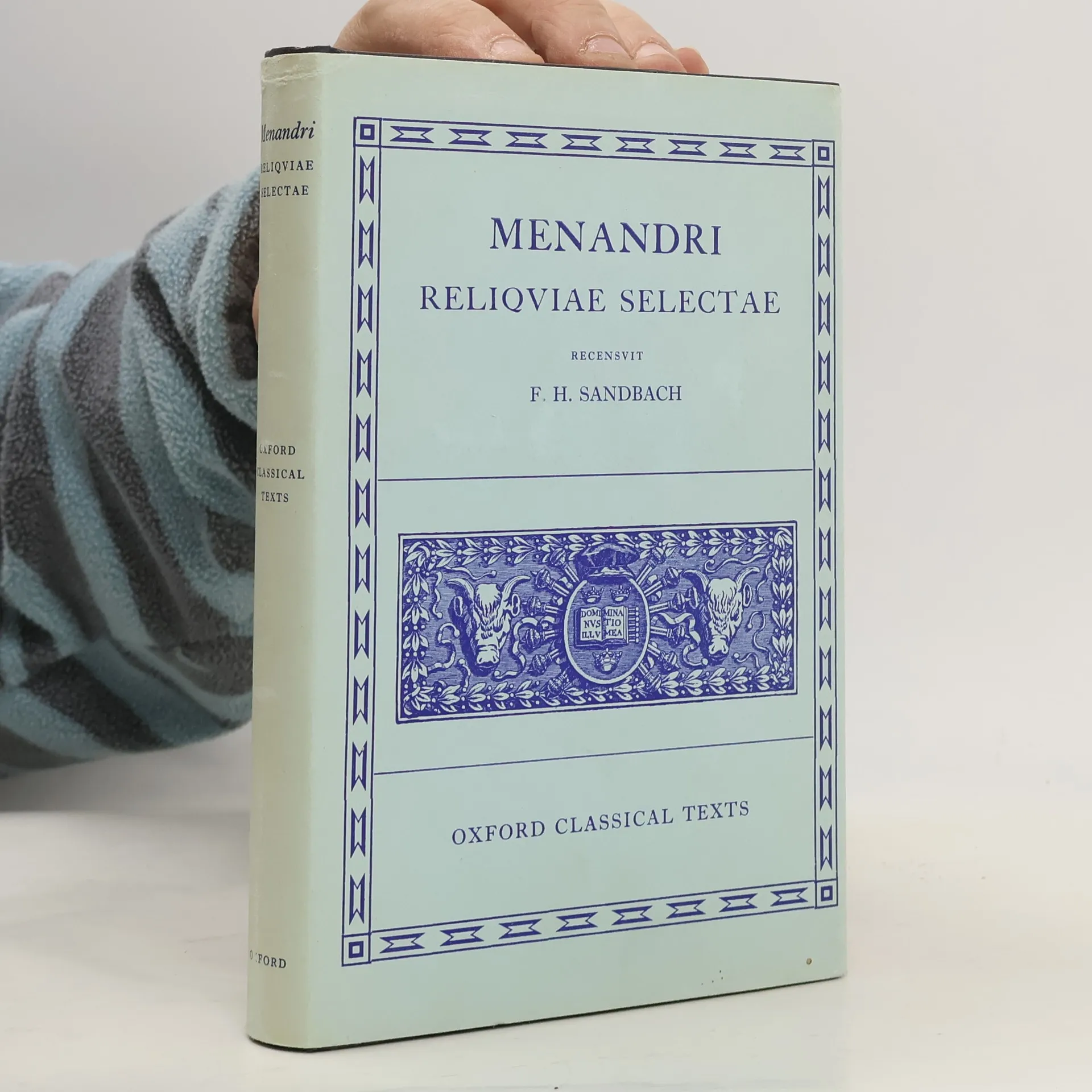
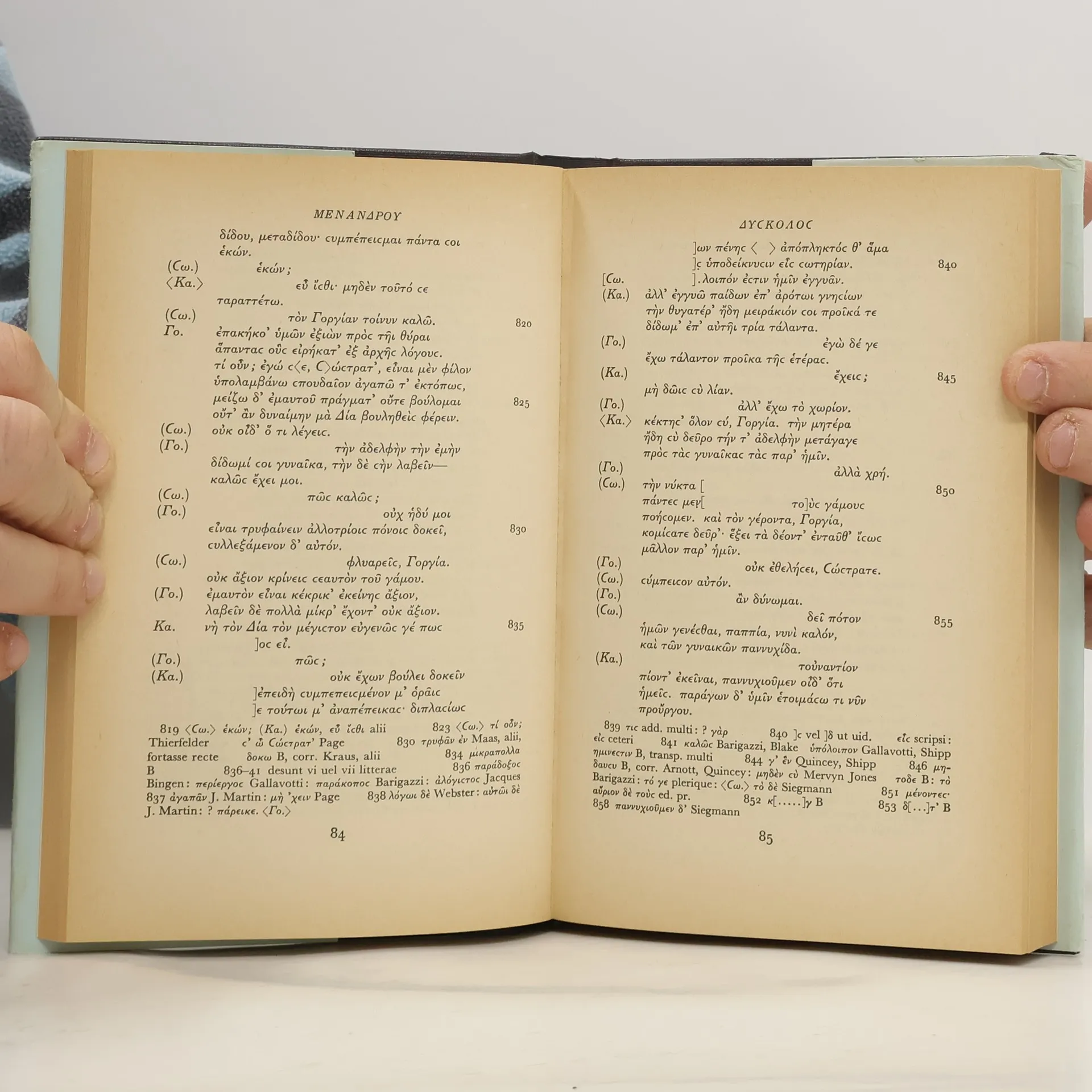
Menander was the greatest writer of Attic New Comedy in the late fourth century B.C., yet it was not until the twentieth century and the discoveries of papyri in Egypt that even a sizable fragment of his work became available for study. Today, one complete play, the Dyskolos ("The Bad Tempered Man"), and considerable fragments from fourteen other plays survive. This revised edition of Sandbach's Oxford Classical Text (first published in 1972) contains all the extant fragments of Menander's work, including all fragments recovered from quotation, and has been brought completely up to date with the inclusion of an appendix detailing the latest discoveries. "The numerous virtues of the first edition...happily remain and will continue to win the gratitude of scholars.....Unlikely to be equalled any time soon."--Classical World
Zakup książki
Reliquiae selectae, F. H. Sandbach
- Język


- Rok wydania
- 1972
- Oprawa
- (twarda)
Metody płatności
Brakuje nam tutaj Twojej recenzji.
- Tytuł
- Reliquiae selectae
- Język
- angielski, łacina
- Autorzy
- F. H. Sandbach
- Wydawca
- Oxford University Press
- Rok wydania
- 1972
- Oprawa
- twarda
- Liczba stron
- 340
- ISBN10
- 0198145713
- ISBN13
- 9780198145714
- Seria
- Ocena
- 3 z 5
- Opis
- Menander was the greatest writer of Attic New Comedy in the late fourth century B.C., yet it was not until the twentieth century and the discoveries of papyri in Egypt that even a sizable fragment of his work became available for study. Today, one complete play, the Dyskolos ("The Bad Tempered Man"), and considerable fragments from fourteen other plays survive. This revised edition of Sandbach's Oxford Classical Text (first published in 1972) contains all the extant fragments of Menander's work, including all fragments recovered from quotation, and has been brought completely up to date with the inclusion of an appendix detailing the latest discoveries. "The numerous virtues of the first edition...happily remain and will continue to win the gratitude of scholars.....Unlikely to be equalled any time soon."--Classical World