

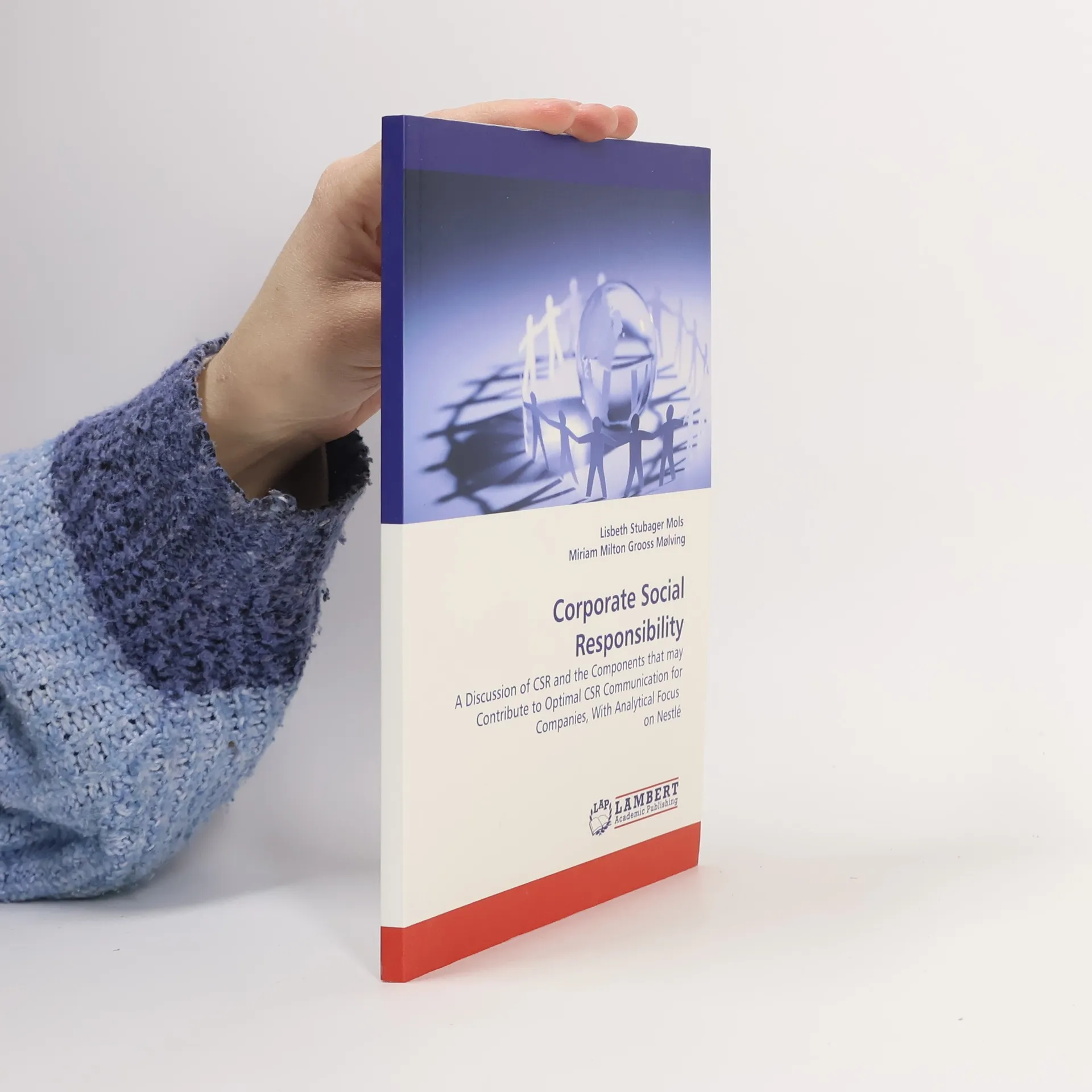


Więcej o książce
Corporate Social Responsibility (CSR) has become an important part of most companies' activities, and the need for knowledge about the concept and the communication of it has increased. The communication of CSR is essential as it is the relation between a company and its stakeholders, and hence the way the stakeholders are informed about the companies' CSR efforts. This book discusses the concept of CSR, which serves as a foundation for communicating CSR most optimal. The discussion about CSR communication turns to the development of the RAU Communication Model that further is applied in the empirical analysis of Nestle's CSR initiative 'The Cocoa Plan'. Through the documentary 'Does Your Favourite Chocolate Have a Bitter Taste' Nestle's credibility is questioned, as the documentary proves how Nestle buys cocoa beans from suppliers that make use of child labour and trafficking of children. A company can foster an identity, and professionally communicate it to its stakeholders, but Nestle's true commitment to CSR is challenged.
Zakup książki
Corporate Social Responsibility, Lisbeth Stubager Mols, Miriam Milton Grooss Mølving
- Język

- Rok wydania
- 2011
- Oprawa
- (miękka)
Metody płatności
Nikt jeszcze nie ocenił.
- Tytuł
- Corporate Social Responsibility
- Język
- angielski
- Rok wydania
- 2011
- Oprawa
- miękka
- Liczba stron
- 100
- ISBN10
- 384432674X
- ISBN13
- 9783844326741
- Seria
- Tagi
- Biznes, Komunikacja
- Opis
- Corporate Social Responsibility (CSR) has become an important part of most companies' activities, and the need for knowledge about the concept and the communication of it has increased. The communication of CSR is essential as it is the relation between a company and its stakeholders, and hence the way the stakeholders are informed about the companies' CSR efforts. This book discusses the concept of CSR, which serves as a foundation for communicating CSR most optimal. The discussion about CSR communication turns to the development of the RAU Communication Model that further is applied in the empirical analysis of Nestle's CSR initiative 'The Cocoa Plan'. Through the documentary 'Does Your Favourite Chocolate Have a Bitter Taste' Nestle's credibility is questioned, as the documentary proves how Nestle buys cocoa beans from suppliers that make use of child labour and trafficking of children. A company can foster an identity, and professionally communicate it to its stakeholders, but Nestle's true commitment to CSR is challenged.