

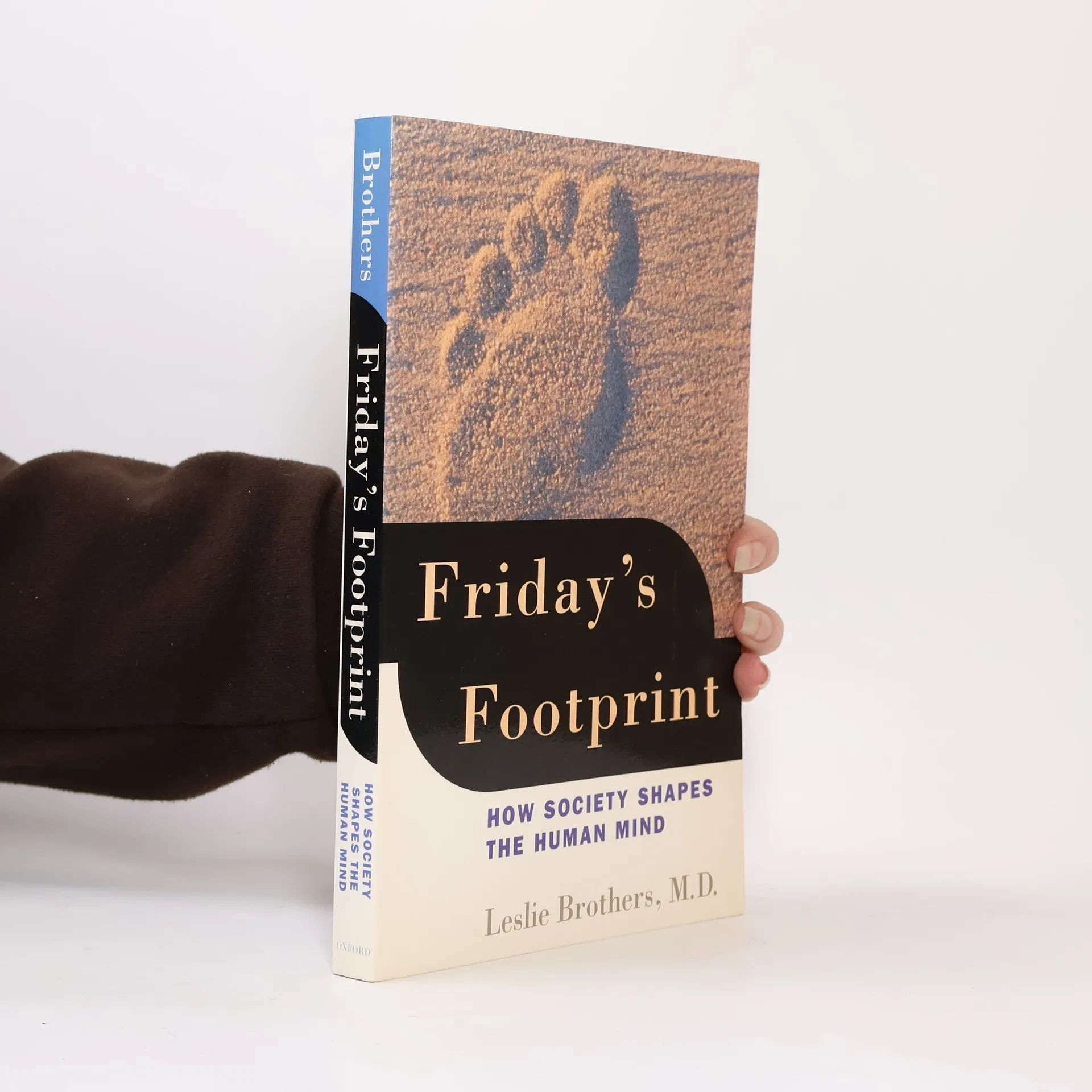
Więcej o książce
A psychiatrist recognized for her research on primate social cognition presents a compelling argument about the social dimension of the human brain, drawing from her work and extensive research across various fields. Using Robinson Crusoe as a metaphor, she critiques the flawed notion of isolation in neuroscience, emphasizing that humans are inherently social beings. Our brains have evolved to communicate and connect with others, evident in their sensitivity to facial expressions and gestures, as well as their ability to attribute mental states to physical bodies—an often overlooked capability. Brothers shares intriguing case studies demonstrating how specific brain damage can impair the ability to interpret faces, leading to a perception of others as "zombies." She delves into the activity of individual neurons in response to social interactions. Most significantly, she bridges neuroscience, psychiatry, and sociology, illustrating how our interactions shape a structured social world that fosters meaningful behavior and thought. Our emotions and sense of self are deeply rooted in social contexts. Conducted with grace and style, this groundbreaking work enhances our understanding of the human mind by broadening our perspective on the brain's role in social connectivity.
Zakup książki
Friday's Footprint, Leslie Brothers
- Język

- Rok wydania
- 2001
- Oprawa
- (miękka)
Metody płatności
Brakuje nam tutaj Twojej recenzji.
- Tytuł
- Friday's Footprint
- Podtytuł
- How Society Shapes the Human Mind
- Język
- angielski
- Autorzy
- Leslie Brothers
- Wydawca
- Oxford University Press
- Rok wydania
- 2001
- Oprawa
- miękka
- Liczba stron
- 204
- ISBN10
- 0195147049
- ISBN13
- 9780195147049
- Seria
- Tagi
- Nauka, USA, Tematyka medyczna, Ewolucja, Neurobiologia, Mózg, Neurologia, Psychologia społeczna, Neuropsychologia, Biologia ewolucyjna, Neurobiologia
- Ocena
- 3 z 5
- Opis
- A psychiatrist recognized for her research on primate social cognition presents a compelling argument about the social dimension of the human brain, drawing from her work and extensive research across various fields. Using Robinson Crusoe as a metaphor, she critiques the flawed notion of isolation in neuroscience, emphasizing that humans are inherently social beings. Our brains have evolved to communicate and connect with others, evident in their sensitivity to facial expressions and gestures, as well as their ability to attribute mental states to physical bodies—an often overlooked capability. Brothers shares intriguing case studies demonstrating how specific brain damage can impair the ability to interpret faces, leading to a perception of others as "zombies." She delves into the activity of individual neurons in response to social interactions. Most significantly, she bridges neuroscience, psychiatry, and sociology, illustrating how our interactions shape a structured social world that fosters meaningful behavior and thought. Our emotions and sense of self are deeply rooted in social contexts. Conducted with grace and style, this groundbreaking work enhances our understanding of the human mind by broadening our perspective on the brain's role in social connectivity.