



Więcej o książce
This book explains and analyses the ways in which economists have conceived of industries as collections of firms interacting with each other and firms interacting as a group with consumers and other producer groups. It concentrates on a discussion of the theory in this area, yet without being overly technical or formal. In recent years, industrial economics (or industrial organization) has undergone substantial changes. Probably one of the most fundamental is the way in which economic theorists have moved into the area. As a consequence, the range of models used in positive analysis has been extended and normative analysis has become markedly more explicit. A body of theory has achieved common currency, but remains beyond most intermediate microeconomics texts. A major feature of this book is that, through its detailed coverage of materials relatively neglected in many industrial economics texts, it provides the link between intermediate microeconomics and current debates in the area. Prime examples are the modern theories of product differentiation, advertising, and vertical integration, also recent developments in entry barrier theory.
Zakup książki
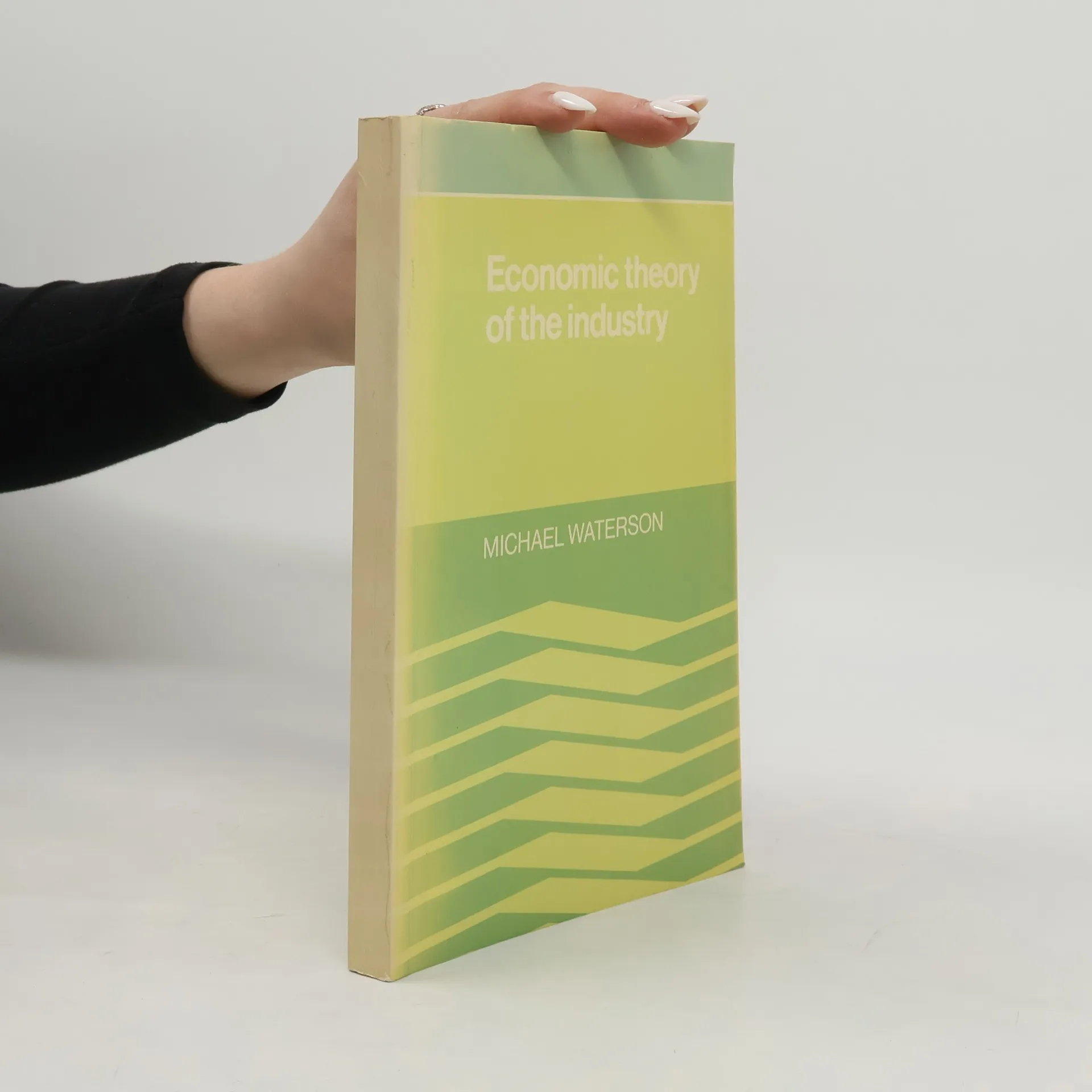
Economic Theory of the Industry, Michael Waterson
- Język

- Rok wydania
- 1984
- Oprawa
- (miękka)
Metody płatności
Nikt jeszcze nie ocenił.
- Tytuł
- Economic Theory of the Industry
- Język
- angielski
- Autorzy
- Michael Waterson
- Wydawca
- Cambridge University Press
- Rok wydania
- 1984
- Oprawa
- miękka
- Liczba stron
- 260
- ISBN10
- 0521286867
- ISBN13
- 9780521286862
- Seria
- Opis
- This book explains and analyses the ways in which economists have conceived of industries as collections of firms interacting with each other and firms interacting as a group with consumers and other producer groups. It concentrates on a discussion of the theory in this area, yet without being overly technical or formal. In recent years, industrial economics (or industrial organization) has undergone substantial changes. Probably one of the most fundamental is the way in which economic theorists have moved into the area. As a consequence, the range of models used in positive analysis has been extended and normative analysis has become markedly more explicit. A body of theory has achieved common currency, but remains beyond most intermediate microeconomics texts. A major feature of this book is that, through its detailed coverage of materials relatively neglected in many industrial economics texts, it provides the link between intermediate microeconomics and current debates in the area. Prime examples are the modern theories of product differentiation, advertising, and vertical integration, also recent developments in entry barrier theory.