


Więcej o książce
This book differs from other introductions to pragmatics by approaching the problems of interpreting language use in terms of interpersonal modeling of beliefs and intentions. It aims to make issues involved in language understanding, such as speech, text, and discourse, accessible to a broad audience, including scholars and researchers whose work depends on a useful model of how communicative agents understand utterances and expect their own utterances to be understood. Explanations in every chapter have been improved and updated, with extensive revisions concerning the relevance of technical notions of mutual and normal belief, and the futility of using the notion 'null context' to describe meaning. Additionally, the discussion of implicature includes an extended explication of "Grice's Cooperative Principle," attempting to contextualize it within his theory of meaning and rationality, and to preclude misinterpretations that it has suffered over the years. The revised chapter utilizes the notion of normal belief to enhance the account of conversational implicature.
Zakup książki
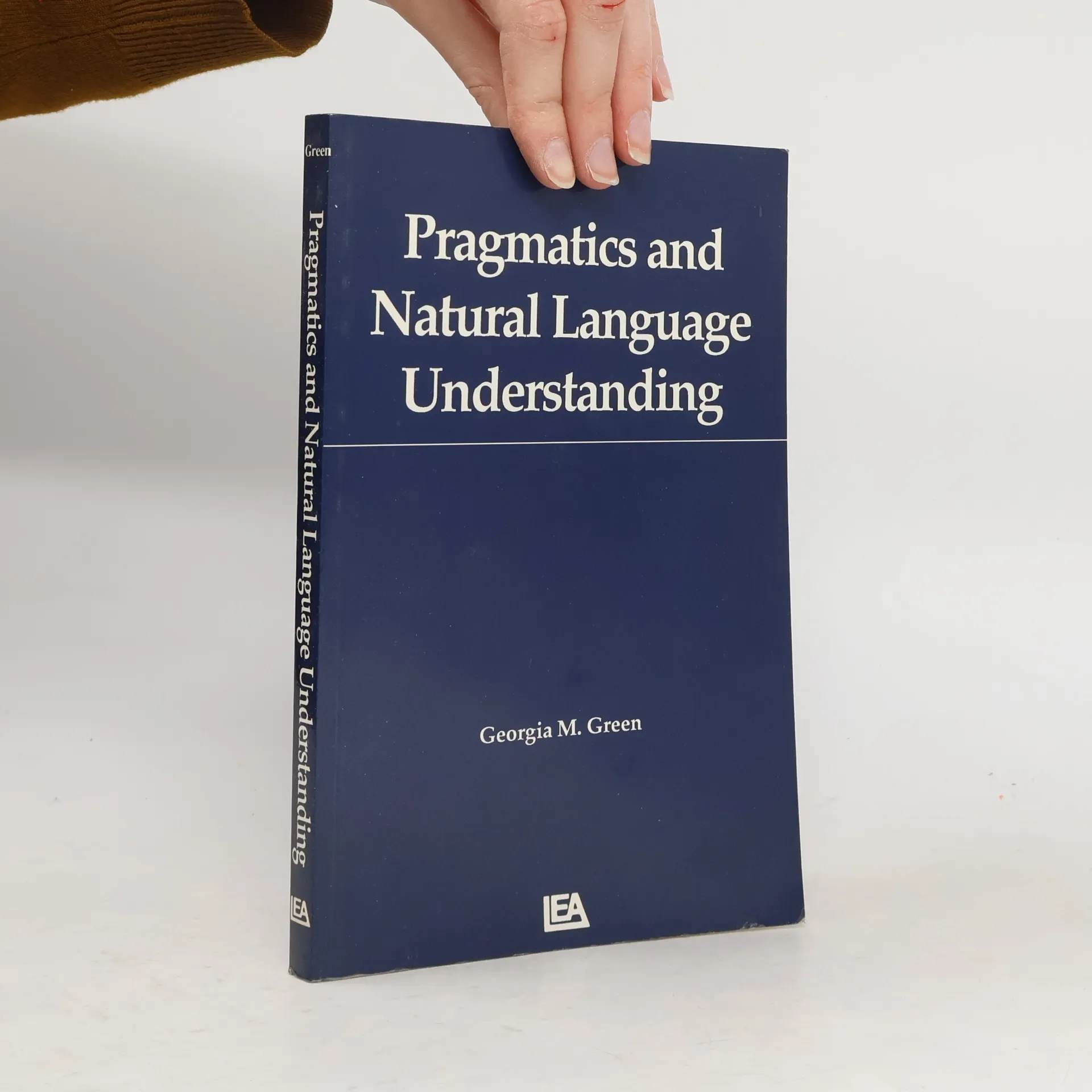
Pragmatics and natural language understanding, G. M. Green
- Język

- Rok wydania
- 1989
- Oprawa
- (miękka)
Metody płatności
Nikt jeszcze nie ocenił.
- Tytuł
- Pragmatics and natural language understanding
- Język
- angielski
- Autorzy
- G. M. Green
- Wydawca
- L. Erlbaum
- Rok wydania
- 1989
- Oprawa
- miękka
- ISBN10
- 0805803610
- ISBN13
- 9780805803617
- Seria
- Kategorie
- Tagi
- Poradniki, Lingwistyka
- Opis
- This book differs from other introductions to pragmatics by approaching the problems of interpreting language use in terms of interpersonal modeling of beliefs and intentions. It aims to make issues involved in language understanding, such as speech, text, and discourse, accessible to a broad audience, including scholars and researchers whose work depends on a useful model of how communicative agents understand utterances and expect their own utterances to be understood. Explanations in every chapter have been improved and updated, with extensive revisions concerning the relevance of technical notions of mutual and normal belief, and the futility of using the notion 'null context' to describe meaning. Additionally, the discussion of implicature includes an extended explication of "Grice's Cooperative Principle," attempting to contextualize it within his theory of meaning and rationality, and to preclude misinterpretations that it has suffered over the years. The revised chapter utilizes the notion of normal belief to enhance the account of conversational implicature.