

Więcej o książce
The original concept likely stems from a pre-Islamic Persian prototype, influenced by Indian elements, and was compiled over centuries by various authors and scholars across the Middle East and North Africa. The tales have roots in ancient and medieval Arabic, Persian, Indian, Egyptian, and Mesopotamian folklore. Many stories originated from the Caliphate era, while the frame story is believed to derive from the Pahlavi Persian work Hazār Afsān. Although the oldest Arabic manuscript dates to the 14th century, the collection's genesis is generally dated to around the 9th century. Iconic tales such as "Aladdin's Wonderful Lamp," "Ali Baba and the Forty Thieves," and "The Seven Voyages of Sinbad the Sailor" were not part of the original Arabic versions but were added by early European translators. The collection features a rich tapestry of narratives told by the sultana Scheherazade to entertain her jealous husband, blending fantastical elements with complex themes addressing moral, social, and political issues. Despite early Islamic criticism, the tales have been celebrated in the West for their humor and inventiveness since their 18th-century translations. They now stand alongside classic works in the Western literary canon. Muhsin J. Al-Musawi, a prominent scholar in Arabic Studies, has contributed significantly to the field through his extensive writings and editorial work.
Zakup książki
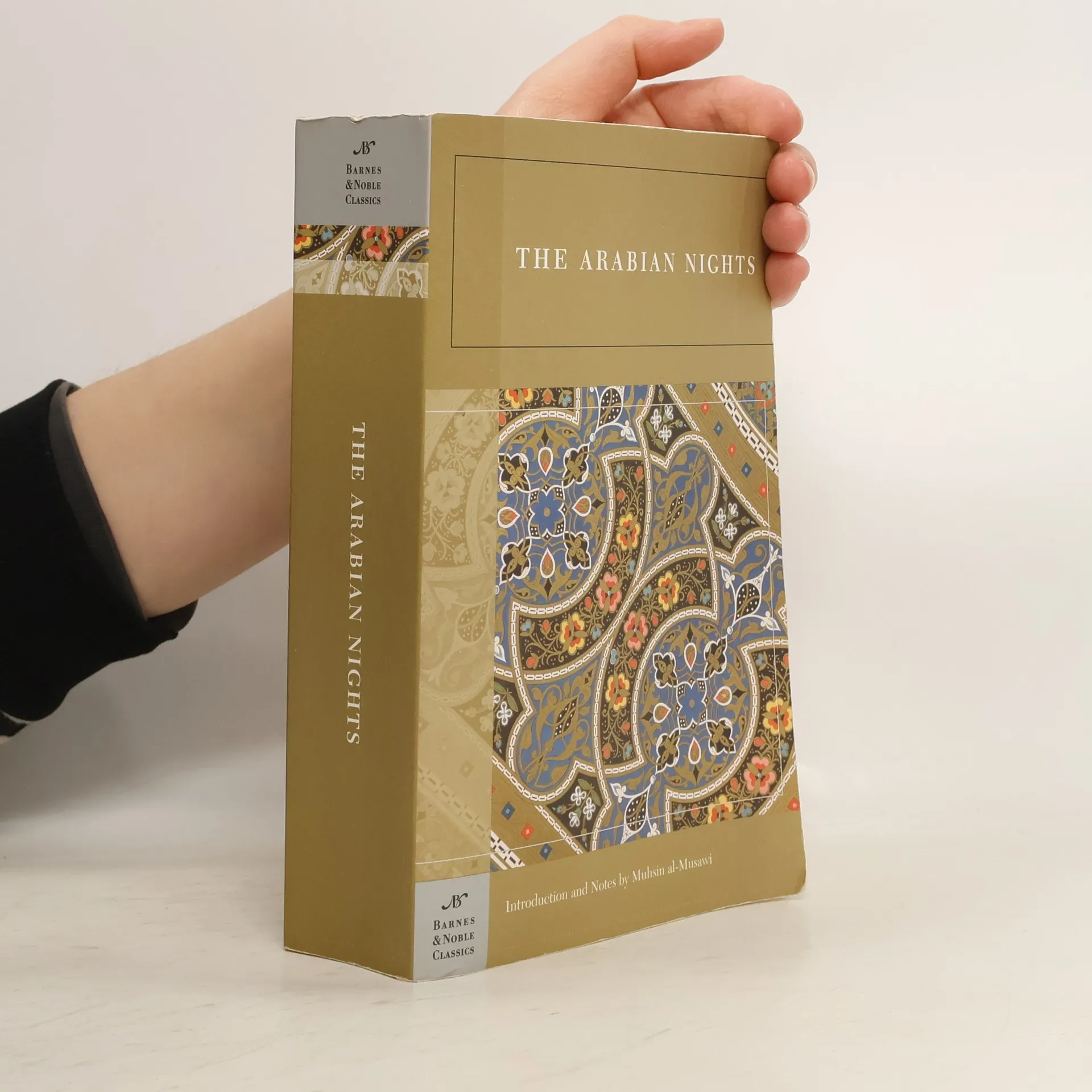
Barnes & Noble Classics: The Arabian Nights, H. W. Dulcken, Muhsin J. al-Musawi, Antoine Galland
- Język

- Rok wydania
- 2007
- Oprawa
- (miękka)
Metody płatności
Brakuje nam tutaj Twojej recenzji.
- Tytuł
- Barnes & Noble Classics: The Arabian Nights
- Język
- angielski
- Wydawca
- Barnes & Noble Classics
- Rok wydania
- 2007
- Oprawa
- miękka
- Liczba stron
- 680
- ISBN10
- 1593082819
- ISBN13
- 9781593082819
- Seria
- Tagi
- Opowiadania, Mitologia
- Ocena
- 3,85 z 5
- Opis
- The original concept likely stems from a pre-Islamic Persian prototype, influenced by Indian elements, and was compiled over centuries by various authors and scholars across the Middle East and North Africa. The tales have roots in ancient and medieval Arabic, Persian, Indian, Egyptian, and Mesopotamian folklore. Many stories originated from the Caliphate era, while the frame story is believed to derive from the Pahlavi Persian work Hazār Afsān. Although the oldest Arabic manuscript dates to the 14th century, the collection's genesis is generally dated to around the 9th century. Iconic tales such as "Aladdin's Wonderful Lamp," "Ali Baba and the Forty Thieves," and "The Seven Voyages of Sinbad the Sailor" were not part of the original Arabic versions but were added by early European translators. The collection features a rich tapestry of narratives told by the sultana Scheherazade to entertain her jealous husband, blending fantastical elements with complex themes addressing moral, social, and political issues. Despite early Islamic criticism, the tales have been celebrated in the West for their humor and inventiveness since their 18th-century translations. They now stand alongside classic works in the Western literary canon. Muhsin J. Al-Musawi, a prominent scholar in Arabic Studies, has contributed significantly to the field through his extensive writings and editorial work.