

Wyprzedane, ale poszukiwane!


Więcej o książce
Professors Merrill and Grofman develop a unified model that incorporates voter motivations and assesses its empirical predictions--for both voter choice and candidate strategy--in the United States, Norway, and France. The analyses show that a combination of proximity, direction, discounting, and party ID are compatible with the mildly but not extremely divergent policies that are characteristic of many two-party and multiparty electorates. All of these motivations are necessary to understand the linkage between candidate issue positions and voter preferences.
Zakup książki
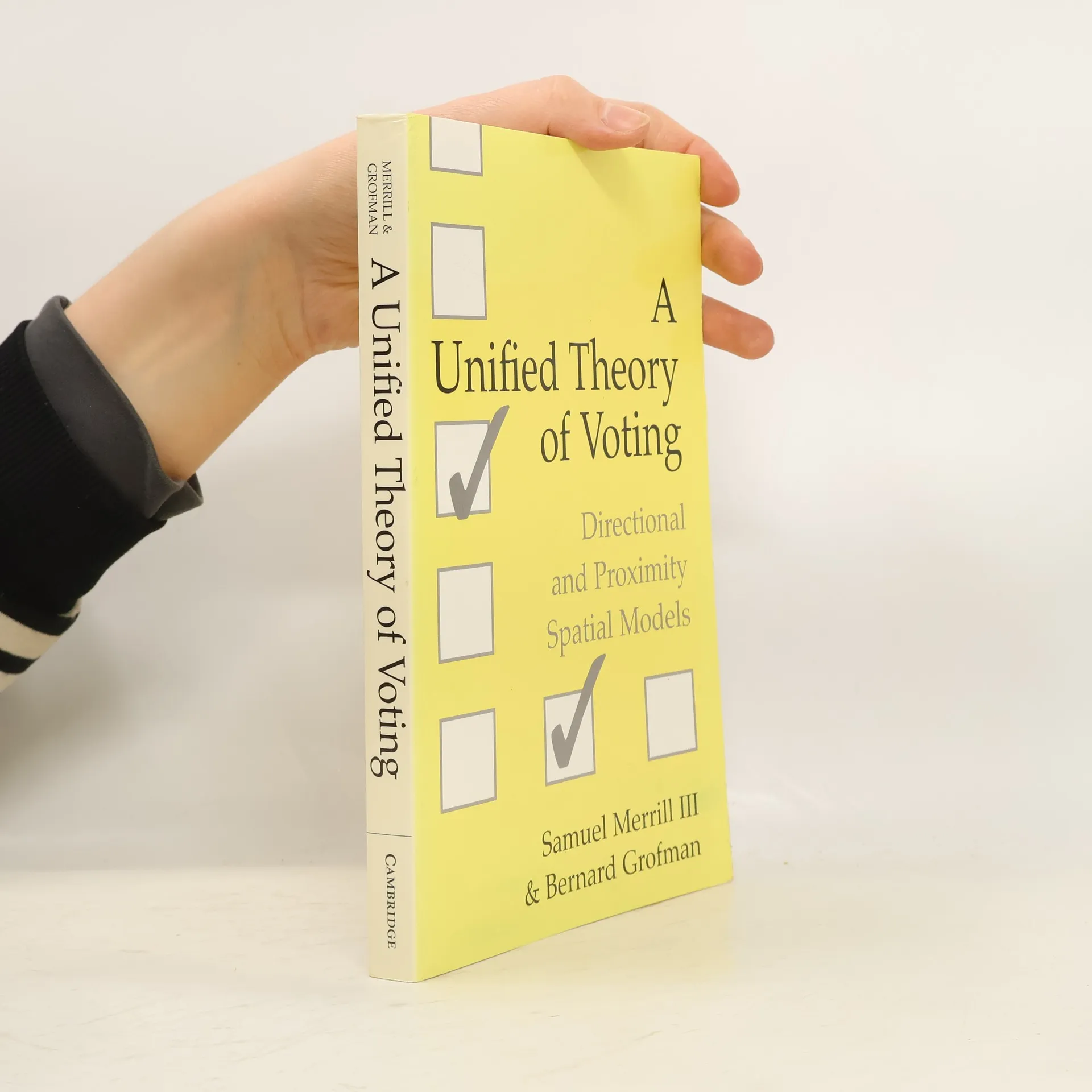
A Unified Theory of Voting, Samuel Merrill, III, Bernard Grofman
- Język

- Rok wydania
- 1999
- Oprawa
- (miękka)
Jak tylko się pojawi, wyślemy Ci wiadomość e-mail.
Metody płatności
Brakuje nam tutaj Twojej recenzji.
- Tytuł
- A Unified Theory of Voting
- Podtytuł
- Directional and Proximity Spatial Models
- Język
- angielski
- Autorzy
- Samuel Merrill, III, Bernard Grofman
- Wydawca
- Cambridge University Press
- Rok wydania
- 1999
- Oprawa
- miękka
- Liczba stron
- 230
- ISBN10
- 0521665493
- ISBN13
- 9780521665490
- Seria
- Tagi
- Polityka, USA, Teorie polityczne
- Ocena
- 4 z 5
- Opis
- Professors Merrill and Grofman develop a unified model that incorporates voter motivations and assesses its empirical predictions--for both voter choice and candidate strategy--in the United States, Norway, and France. The analyses show that a combination of proximity, direction, discounting, and party ID are compatible with the mildly but not extremely divergent policies that are characteristic of many two-party and multiparty electorates. All of these motivations are necessary to understand the linkage between candidate issue positions and voter preferences.