

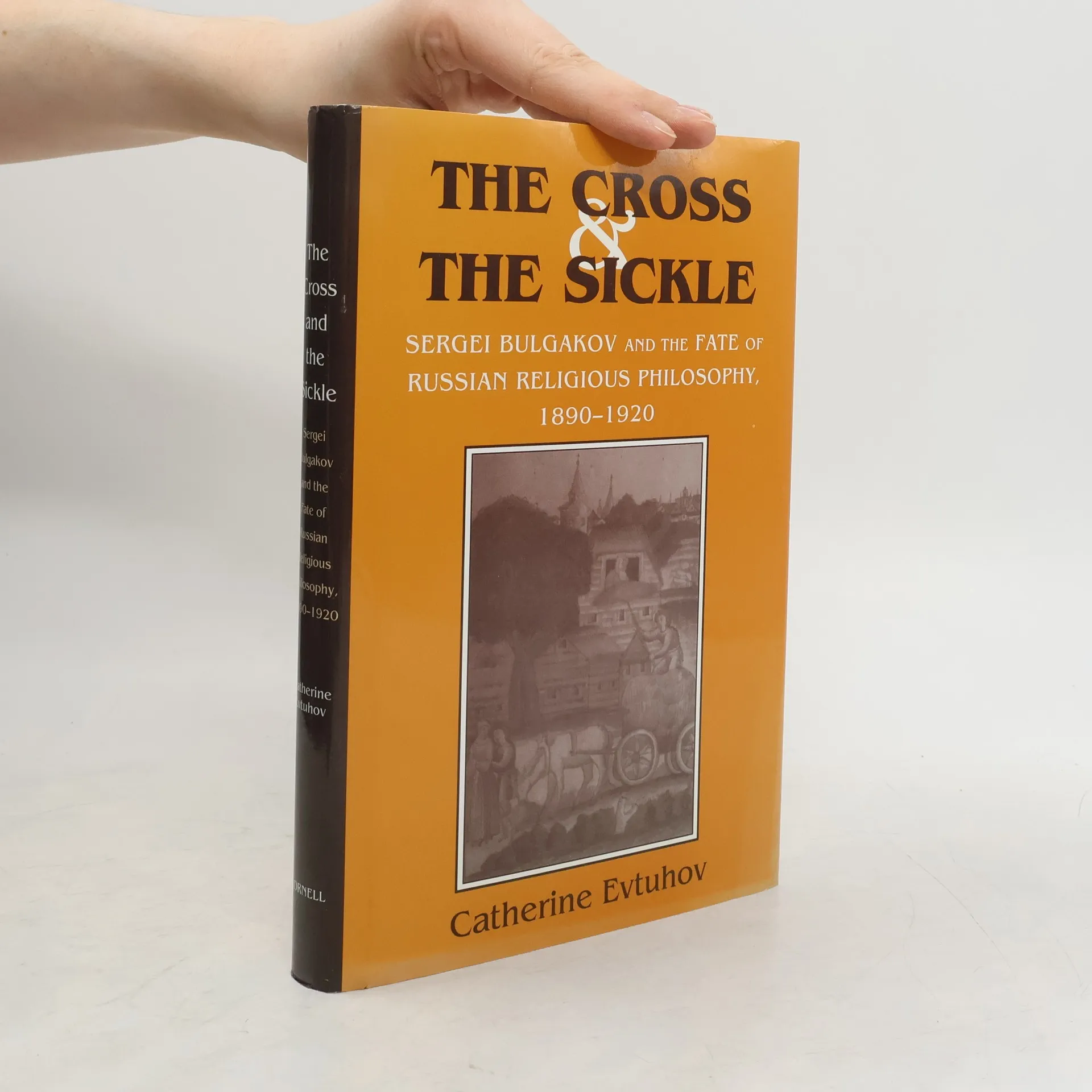

The Cross and the Sickle
Sergei Bulgakov And The Fate Of Russian Religious Philosophy, 1890–1920
Autorzy
Ocena książki
Więcej o książce
Catherine Evtuhov resurrects the brilliant and contradictory currents of turn-of-the-century Kiev, Moscow, and St. Petersburg through an intellectual biography of Sergei Bulgakov (1871–1944), one of the central figures of the Silver Age. The son of a provincial priest, Bulgakov served first as one of Russia's most original and influential interpreters of Marx, and then went on to become the century's most important theologian of the Orthodox faith. As Evtuhov recounts the story of Bulgakov's spiritual evolution, she traces the impact of seemingly opposed philosophical and religious world views on one another and on the course of political events. In the first comprehensive analysis of Bulgakov's most important religious-philosophical work, Philosophy of Economy , Evtuhov identifies a "perceptual revolution" in Russian thinking about economy, a significant contribution to European modernist thought which both shaped and grew out of contemporary debates over land reforms. She reconstructs Bulgakov's vision of an Orthodox, constitutional Russia, shows how he tried to put it into practice in the wake of the February Revolution, and demonstrates its importance for a large and influential portion of Russian society.
Zakup książki
The Cross and the Sickle, Catherine Evtuhov
- Język

- Rok wydania
- 1997
- Oprawa
- (twarda)
Metody płatności
Brakuje nam tutaj Twojej recenzji.
- Tytuł
- The Cross and the Sickle
- Podtytuł
- Sergei Bulgakov And The Fate Of Russian Religious Philosophy, 1890–1920
- Język
- angielski
- Autorzy
- Catherine Evtuhov
- Wydawca
- Cornell University Press
- Rok wydania
- 1997
- Oprawa
- twarda
- Liczba stron
- 320
- ISBN10
- 0801431921
- ISBN13
- 9780801431920
- Seria
- Tagi
- Tematy historyczne, Tematy religijne, Tematyka filozoficzna, Tematy chrześcijańskie, Teologia, Rosja, Europa Wschodnia, Teologia chrześcijańska
- Ocena
- 4,35 z 5
- Opis
- Catherine Evtuhov resurrects the brilliant and contradictory currents of turn-of-the-century Kiev, Moscow, and St. Petersburg through an intellectual biography of Sergei Bulgakov (1871–1944), one of the central figures of the Silver Age. The son of a provincial priest, Bulgakov served first as one of Russia's most original and influential interpreters of Marx, and then went on to become the century's most important theologian of the Orthodox faith. As Evtuhov recounts the story of Bulgakov's spiritual evolution, she traces the impact of seemingly opposed philosophical and religious world views on one another and on the course of political events. In the first comprehensive analysis of Bulgakov's most important religious-philosophical work, Philosophy of Economy , Evtuhov identifies a "perceptual revolution" in Russian thinking about economy, a significant contribution to European modernist thought which both shaped and grew out of contemporary debates over land reforms. She reconstructs Bulgakov's vision of an Orthodox, constitutional Russia, shows how he tried to put it into practice in the wake of the February Revolution, and demonstrates its importance for a large and influential portion of Russian society.