

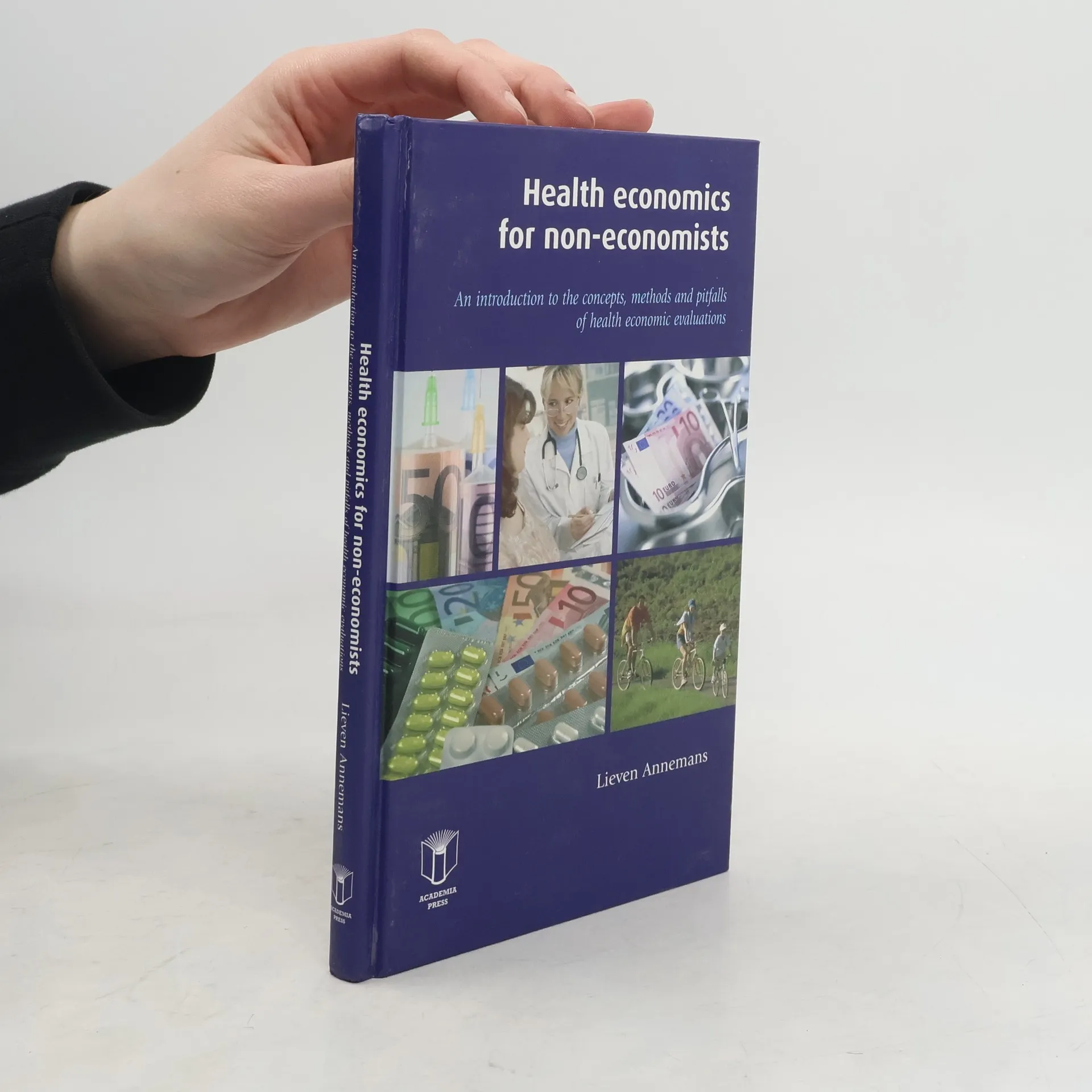


Health Economics for Non-Economists
An Introduction to the Concepts, Methods and Pitfalls of Health Economic Evaluations
Autorzy
Ocena książki
Więcej o książce
All too often, economics is seen as a synonym for savings and financial pressure. However, what it really aims to do is find the best possible way to spend the available financial means. In order to apply economic thinking to healthcare, Annemans argues, the health sector should be viewed as a productive sector whose aim is to produce health, by ensuring that people live longer and more healthily. As productive goes hand in hand with productivity, society must try to gain as much health as possible with the available means. Therefore, priority must be given to interventions (both preventive and curative) which result in the greatest amount of health for the money that is invested. These choices can be made by means of health economic evaluation. Hence, the second goal of this book is to explore the methods of health economic evaluation and explain them. Non-economists are frequently confronted with the results of such evaluations, for example in articles in medical journals, but often ignore them because they are not familiar with the terminology and techniques. This book aims to equip non-economists with enough knowledge to participate in the choices that are made in health care."
Zakup książki
Health Economics for Non-Economists, Lieven Annemans
- Język

- Rok wydania
- 2008
- Oprawa
- (twarda)
Metody płatności
Brakuje nam tutaj Twojej recenzji.
- Tytuł
- Health Economics for Non-Economists
- Podtytuł
- An Introduction to the Concepts, Methods and Pitfalls of Health Economic Evaluations
- Język
- angielski
- Autorzy
- Lieven Annemans
- Wydawca
- Academia Press
- Rok wydania
- 2008
- Oprawa
- twarda
- Liczba stron
- 106
- ISBN10
- 9038212747
- ISBN13
- 9789038212746
- Seria
- Tagi
- Biznes, Tematyka medyczna
- Ocena
- 4,15 z 5
- Opis
- All too often, economics is seen as a synonym for savings and financial pressure. However, what it really aims to do is find the best possible way to spend the available financial means. In order to apply economic thinking to healthcare, Annemans argues, the health sector should be viewed as a productive sector whose aim is to produce health, by ensuring that people live longer and more healthily. As productive goes hand in hand with productivity, society must try to gain as much health as possible with the available means. Therefore, priority must be given to interventions (both preventive and curative) which result in the greatest amount of health for the money that is invested. These choices can be made by means of health economic evaluation. Hence, the second goal of this book is to explore the methods of health economic evaluation and explain them. Non-economists are frequently confronted with the results of such evaluations, for example in articles in medical journals, but often ignore them because they are not familiar with the terminology and techniques. This book aims to equip non-economists with enough knowledge to participate in the choices that are made in health care."