

Więcej o książce
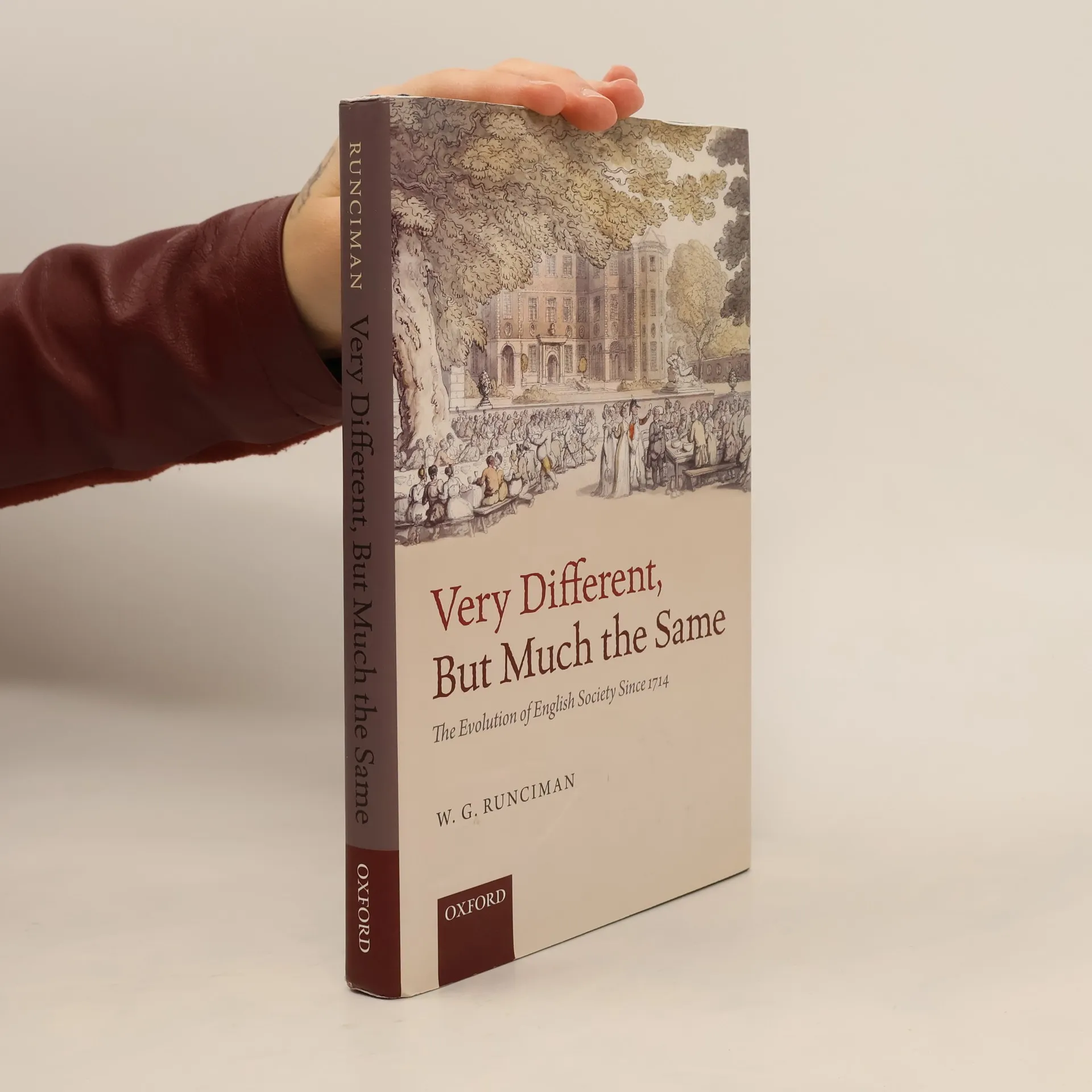
Very Different, but Much the Same takes as its starting point the distribution of political, ideological, and economic power between English society's constituent roles from the time when Daniel Defoe was writing Robinson Crusoe, and argues that Defoe would find it remarkably similar three centuries later despite all the changes in technology, lifestyles, amenities, beliefs, attitudes, norms, and values by which he would no doubt be astonished. The disjunction between the two is explained by bringing to bear the approach of current evolutionary sociological theory in which the reproduction or extinction of a society's institutional practices is traced to selective environmental pressures which are independent of the personal motives and subjective experiences of the individuals whose practices they are. It is further argued that the rates of high absolute and low relative social mobility that sociologists have documented in detail for the twentieth century are likely to have been much the same during the eighteenth and nineteenth centuries. The conclusion drawn is that for as long as the country was not defeated in a European war, the probability of a radical change in institutional distribution of power was extremely low throughout, however much contemporary observers or later historians would have either welcomed or deplored it.
Zakup książki
Very Different, But Much the Same, Walter Garrison Runciman
- Język

- Rok wydania
- 2015
- Oprawa
- (twarda)
Metody płatności
Nikt jeszcze nie ocenił.
- Tytuł
- Very Different, But Much the Same
- Podtytuł
- The Evolution of English Society Since 1714
- Język
- angielski
- Autorzy
- Walter Garrison Runciman
- Wydawca
- Oxford University Press
- Rok wydania
- 2015
- Oprawa
- twarda
- Liczba stron
- 200
- ISBN10
- 0198712421
- ISBN13
- 9780198712428
- Seria
- Opis
- Very Different, but Much the Same takes as its starting point the distribution of political, ideological, and economic power between English society's constituent roles from the time when Daniel Defoe was writing Robinson Crusoe, and argues that Defoe would find it remarkably similar three centuries later despite all the changes in technology, lifestyles, amenities, beliefs, attitudes, norms, and values by which he would no doubt be astonished. The disjunction between the two is explained by bringing to bear the approach of current evolutionary sociological theory in which the reproduction or extinction of a society's institutional practices is traced to selective environmental pressures which are independent of the personal motives and subjective experiences of the individuals whose practices they are. It is further argued that the rates of high absolute and low relative social mobility that sociologists have documented in detail for the twentieth century are likely to have been much the same during the eighteenth and nineteenth centuries. The conclusion drawn is that for as long as the country was not defeated in a European war, the probability of a radical change in institutional distribution of power was extremely low throughout, however much contemporary observers or later historians would have either welcomed or deplored it.