


Więcej o książce
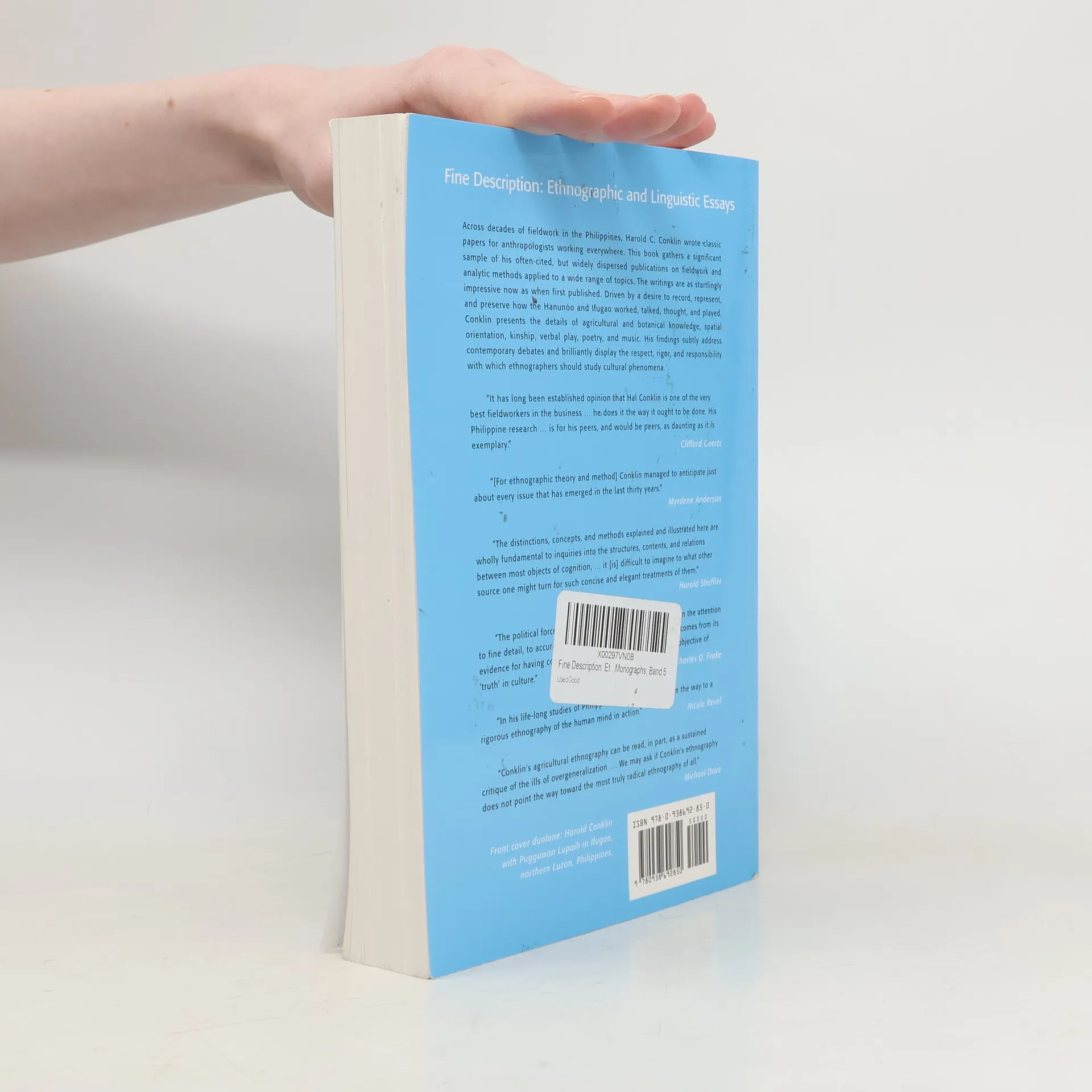
Across decades of fieldwork in the Philippines, Harold C. Conklin wrote classic papers for anthropologists working everywhere. This book gathers a significant sample of his often-cited, but widely dispersed publications on fieldwork and analytic methods applied to a wide range of topics. The writings are as startlingly impressive now as when first published. Driven by a desire to record, represent, and preserve how the Hanunóo and Ifugao worked, talked, thought, and played, Conklin presents the details of agricultural and botanical knowledge, spatial orientation, kinship, verbal play, poetry, and music. His findings subtly address contemporary debates and brilliantly display the respect, rigor, and responsibility with which ethnographers should study cultural phenomena.
Zakup książki
Southeast Asia Studies Monograph Series - 56: Fine Description, Harold C. Conklin, Joel C. Kuipers, Raymond McDermott
- Język

- Rok wydania
- 2007
- Oprawa
- (miękka)
Metody płatności
Nikt jeszcze nie ocenił.
- Tytuł
- Southeast Asia Studies Monograph Series - 56: Fine Description
- Podtytuł
- Ethnographic and Linguistic Essays
- Język
- angielski
- Rok wydania
- 2007
- Oprawa
- miękka
- Liczba stron
- 532
- ISBN10
- 0938692852
- ISBN13
- 9780938692850
- Seria
- Tagi
- Tematy historyczne, Niemcy, Europa
- Opis
- Across decades of fieldwork in the Philippines, Harold C. Conklin wrote classic papers for anthropologists working everywhere. This book gathers a significant sample of his often-cited, but widely dispersed publications on fieldwork and analytic methods applied to a wide range of topics. The writings are as startlingly impressive now as when first published. Driven by a desire to record, represent, and preserve how the Hanunóo and Ifugao worked, talked, thought, and played, Conklin presents the details of agricultural and botanical knowledge, spatial orientation, kinship, verbal play, poetry, and music. His findings subtly address contemporary debates and brilliantly display the respect, rigor, and responsibility with which ethnographers should study cultural phenomena.