

Więcej o książce
From the Publisher's Plato's writing is refreshing, as well as stimulating, because he avoids the dryness we have come to associate with philosophic discourse. Instead of the emphatic pronouncements of his Western imitators, Plato exhibits the relaxed suppleness of a mind unwilling to let itself be controlled by the current philosophical systems.The present volume includes the Symposium and two other dialogues that between them embody the essence of Plato's thoughts on friendship and love. Like most of his dialogues, the Lysis and the Phaedrus are named for the principal character involved in the discussion with Socrates. It is otherwise with our chief dialogue. Though today a symposium is a meeting to discuss a particular subject, the word originally meant an after-dinner drinking party enlivened with conversation, music, and dancing. And such, in fact, is the setting of Plato's Symposium , which is considered the most perfect in form of all his works. In his comment on this dialogue, Benjamin Jowett declares that in both style and subject it is more Greek than any of the others, having a beauty "as of a statue."The translation is Jowett's, accompanied by his prefatory analyses and marginal notes. These translations, though made a hundred years ago, are still acclaimed for their accuracy and style.
Zakup książki
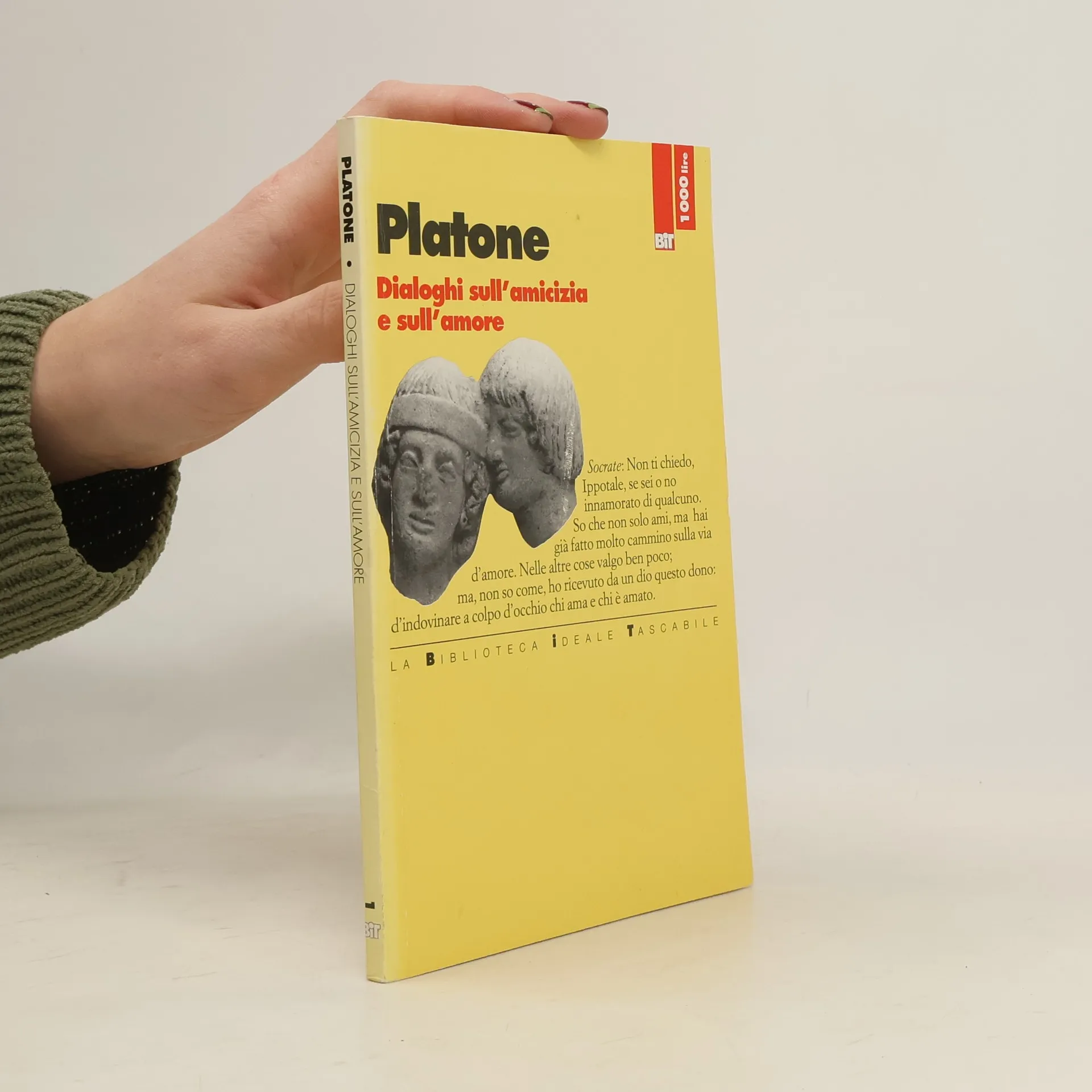
Dialoghi sull'amicizia e sull'amore, Platone Platon, Elmo Totti, Emidio Martini
- Język

- Rok wydania
- 1995
- Oprawa
- (miękka)
Metody płatności
Brakuje nam tutaj Twojej recenzji.
- Tytuł
- Dialoghi sull'amicizia e sull'amore
- Język
- włoski
- Autorzy
- Platone Platon, Elmo Totti, Emidio Martini
- Wydawca
- Editoriale Opportunity Books
- Rok wydania
- 1995
- Oprawa
- miękka
- Liczba stron
- 95
- ISBN10
- 8881110016
- ISBN13
- 9788881110018
- Seria
- Ocena
- 3,65 z 5
- Opis
- From the Publisher's Plato's writing is refreshing, as well as stimulating, because he avoids the dryness we have come to associate with philosophic discourse. Instead of the emphatic pronouncements of his Western imitators, Plato exhibits the relaxed suppleness of a mind unwilling to let itself be controlled by the current philosophical systems.The present volume includes the Symposium and two other dialogues that between them embody the essence of Plato's thoughts on friendship and love. Like most of his dialogues, the Lysis and the Phaedrus are named for the principal character involved in the discussion with Socrates. It is otherwise with our chief dialogue. Though today a symposium is a meeting to discuss a particular subject, the word originally meant an after-dinner drinking party enlivened with conversation, music, and dancing. And such, in fact, is the setting of Plato's Symposium , which is considered the most perfect in form of all his works. In his comment on this dialogue, Benjamin Jowett declares that in both style and subject it is more Greek than any of the others, having a beauty "as of a statue."The translation is Jowett's, accompanied by his prefatory analyses and marginal notes. These translations, though made a hundred years ago, are still acclaimed for their accuracy and style.