

Więcej o książce
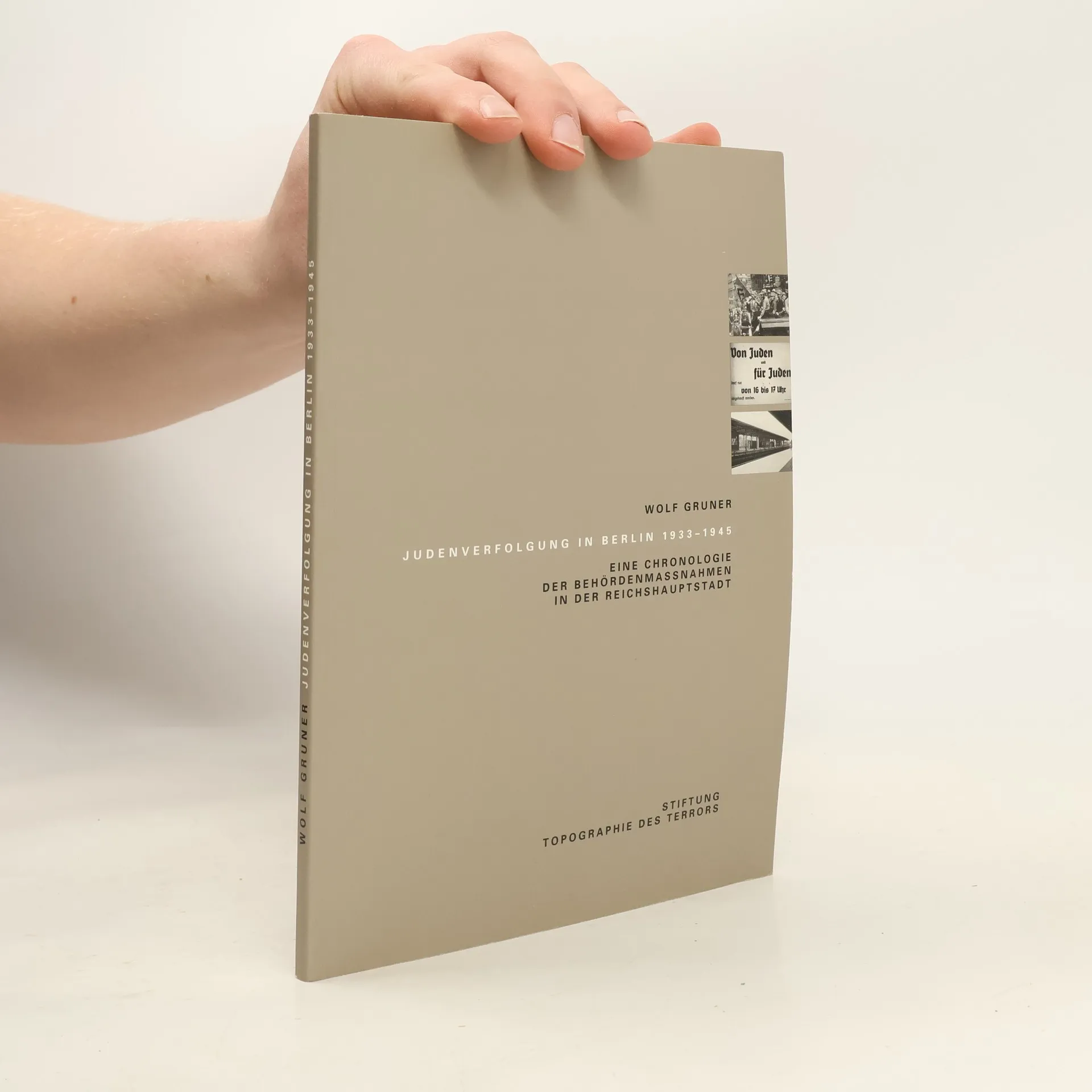
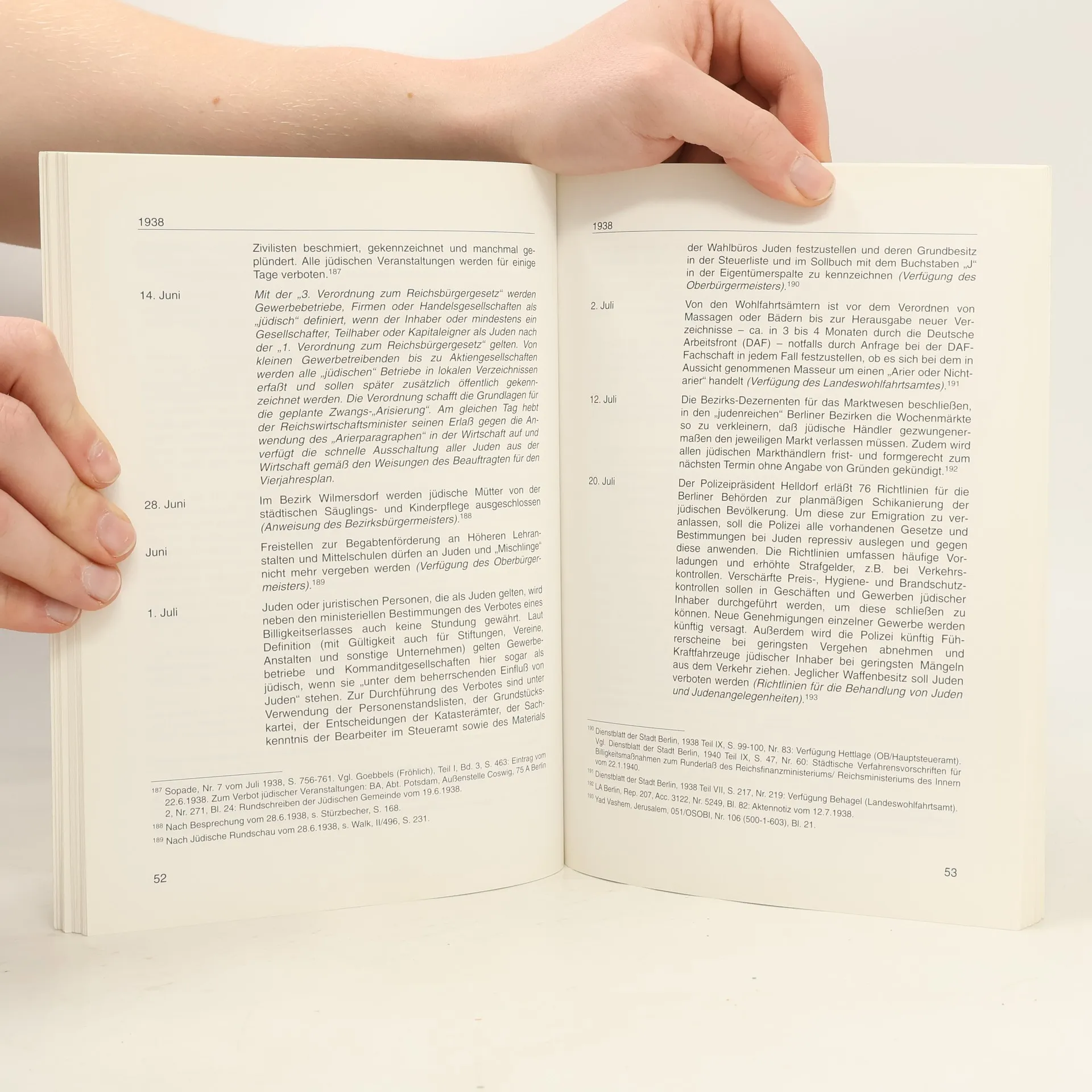
A chronology of the measures taken by the Nazi authorities in Berlin between 1933-45 against the Jews, based on material collected for the exhibition "Jüdische Geschichte in Berlin" in 1995. Stresses the active participation of the municipality, which influenced and accelerated the planning of discriminatory steps. Surveys the gradual deterioration of the situation of the Jews: the boycott, the Nuremberg Laws, the "Kristallnacht" pogrom, forced labor, resettlement in "Jewish houses", the yellow star, and deportations. In 1933, 160,564 Jews lived in Berlin; 80,000 managed to emigrate by 1939. In 1945, with the liberation, ca. 7,000 Jews lived in Berlin, among them 4,000 partners in mixed marriages, 1,900 survivors from the camps, and 1,400 who survived in hiding in Berlin.
Zakup książki
Judenverfolgung in Berlin 1933-1945, Wolf Gruner
- Język

- Rok wydania
- 1996
- Oprawa
- (miękka)
Metody płatności
Nikt jeszcze nie ocenił.
- Tytuł
- Judenverfolgung in Berlin 1933-1945
- Podtytuł
- Eine Chronologie der Behördenmassnahmen in der Reichshauptstadt
- Język
- niemiecki
- Autorzy
- Wolf Gruner
- Wydawca
- Ed. Hentrich
- Rok wydania
- 1996
- Oprawa
- miękka
- Liczba stron
- 110
- ISBN10
- 3894682388
- ISBN13
- 9783894682385
- Seria
- Kategorie
- Tagi
- Tematy historyczne, Berlin, Żydzi, NSDAP
- Opis
- A chronology of the measures taken by the Nazi authorities in Berlin between 1933-45 against the Jews, based on material collected for the exhibition "Jüdische Geschichte in Berlin" in 1995. Stresses the active participation of the municipality, which influenced and accelerated the planning of discriminatory steps. Surveys the gradual deterioration of the situation of the Jews: the boycott, the Nuremberg Laws, the "Kristallnacht" pogrom, forced labor, resettlement in "Jewish houses", the yellow star, and deportations. In 1933, 160,564 Jews lived in Berlin; 80,000 managed to emigrate by 1939. In 1945, with the liberation, ca. 7,000 Jews lived in Berlin, among them 4,000 partners in mixed marriages, 1,900 survivors from the camps, and 1,400 who survived in hiding in Berlin.