

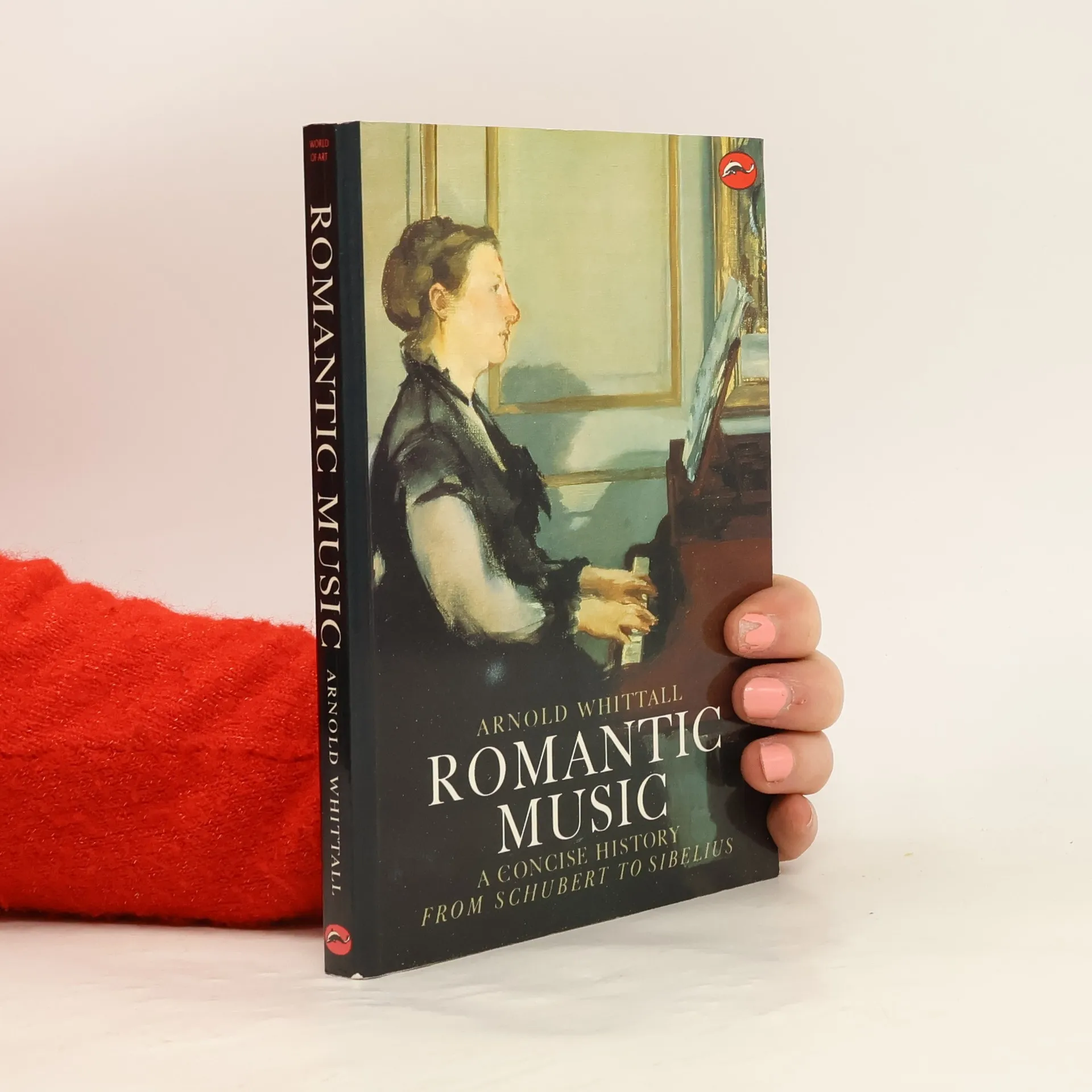
World of Art: Romantic Music
A Concise History from Schubert to Sibelius: With 51 Illustrations
Autorzy
Ocena książki
Więcej o książce
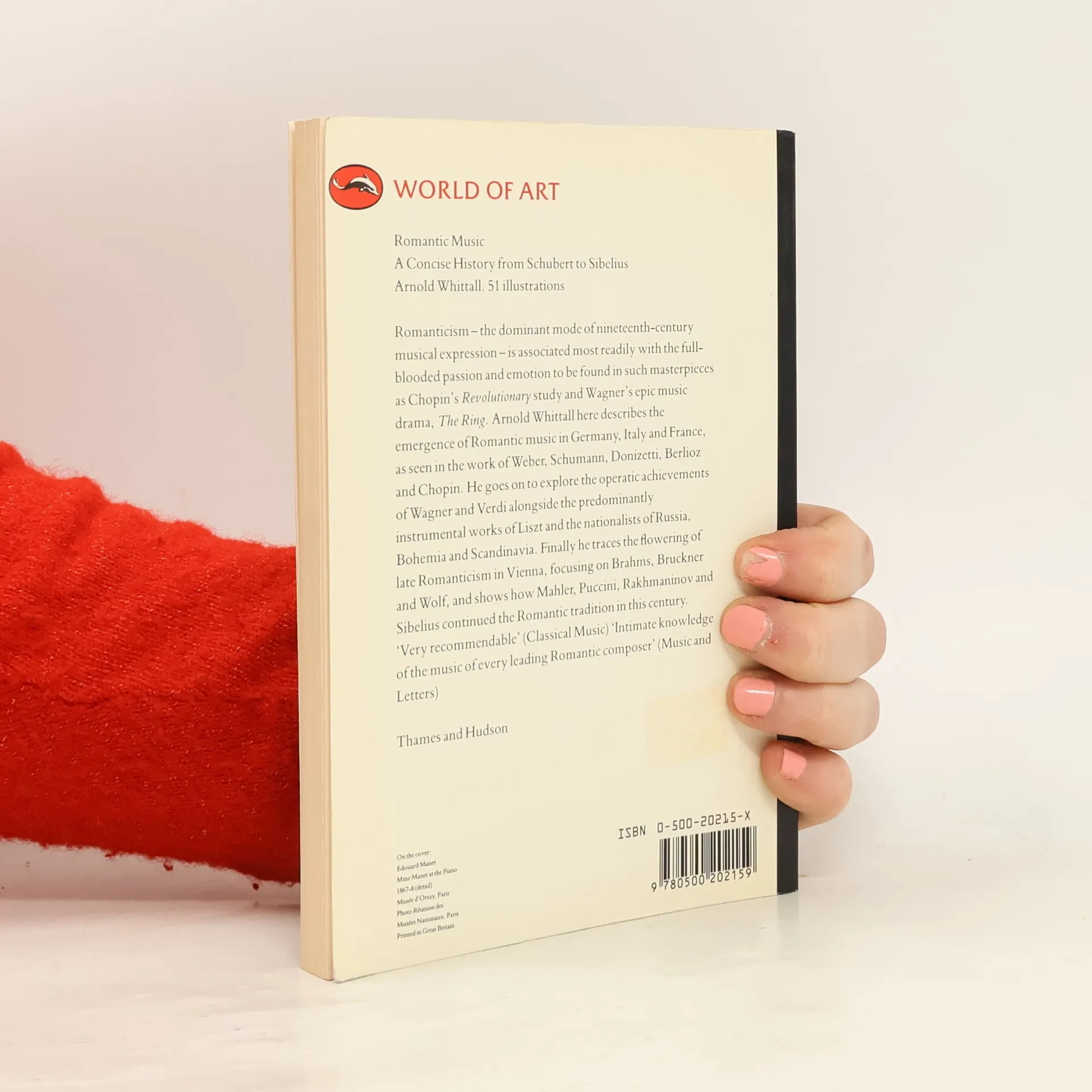
Romanticism, the dominant mode of nineteenth-century musical expression, is associated most readily with the full-blooded passion and emotion to be found in such masterpieces as Chopin's "Revolutionary" Study and Wagner's epic music drama, the "Ring." Arnold Whittall explains how Romantic composers were faced with the challenge of devising appropriate and adequately coherent structures out of those often felt to be old-fashioned and restrictive. He covers the emergence of Romantic music in Germany, Italy and France as seen in the work of such composers as Weber, Schumann, Donizetti, Berlioz and Chopin, and then goes on to explore the operatic achievements of Wagner and Verdi alongside the predominantly instrumental programmatic works of Liszt and the nationalists of Russia, Bohemia and Scandinavia. The last part of the book traces the flowering of late Romanticism in Vienna, focusing on Brahms, Bruckner and Wolf, and shows how Mahler, Puccini, Rakhmaninov and Sibelius have continued the Romantic tradition in this century. 51 illus.
Zakup książki
World of Art: Romantic Music, Arnold Whittall
- Język

- Rok wydania
- 1987
- Oprawa
- (miękka)
Metody płatności
Brakuje nam tutaj Twojej recenzji.
- Tytuł
- World of Art: Romantic Music
- Podtytuł
- A Concise History from Schubert to Sibelius: With 51 Illustrations
- Język
- angielski
- Autorzy
- Arnold Whittall
- Wydawca
- Thames & Hudson
- Rok wydania
- 1987
- Oprawa
- miękka
- Liczba stron
- 192
- ISBN10
- 050020215X
- ISBN13
- 9780500202159
- Seria
- Ocena
- 3,45 z 5
- Opis
- Romanticism, the dominant mode of nineteenth-century musical expression, is associated most readily with the full-blooded passion and emotion to be found in such masterpieces as Chopin's "Revolutionary" Study and Wagner's epic music drama, the "Ring." Arnold Whittall explains how Romantic composers were faced with the challenge of devising appropriate and adequately coherent structures out of those often felt to be old-fashioned and restrictive. He covers the emergence of Romantic music in Germany, Italy and France as seen in the work of such composers as Weber, Schumann, Donizetti, Berlioz and Chopin, and then goes on to explore the operatic achievements of Wagner and Verdi alongside the predominantly instrumental programmatic works of Liszt and the nationalists of Russia, Bohemia and Scandinavia. The last part of the book traces the flowering of late Romanticism in Vienna, focusing on Brahms, Bruckner and Wolf, and shows how Mahler, Puccini, Rakhmaninov and Sibelius have continued the Romantic tradition in this century. 51 illus.