



Parametry
- 344 strony
- 13 godzin czytania
Więcej o książce
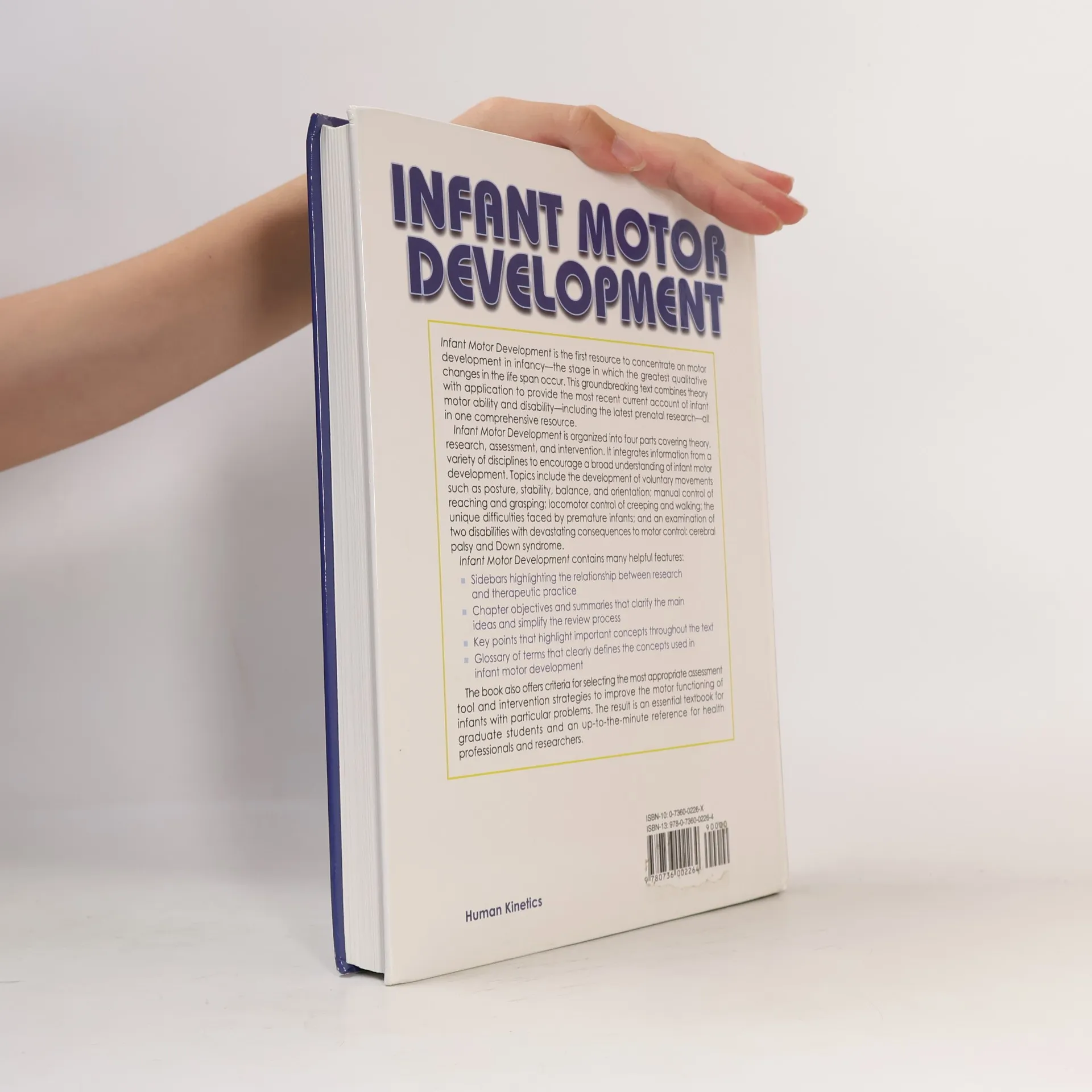
This text focuses on motor development during infancy, a critical period marked by significant qualitative changes. It serves as a comprehensive introduction to key issues faced by researchers, clinicians, and parents. Combining theory with practical application, it offers the latest insights into infant motor abilities and disabilities, including recent prenatal research. The book presents criteria for selecting appropriate assessment tools and intervention strategies to enhance motor functioning in infants with specific challenges, making it an essential resource for graduate students and a current reference for health professionals and researchers. Organized into four parts—covering theory, research, assessment, and intervention—it integrates information from various disciplines to foster a broad understanding of infant motor development. Topics include voluntary movements like posture, stability, balance, and orientation; manual control for reaching and grasping; locomotor control for creeping and walking; challenges faced by premature infants; and an exploration of disabilities such as cerebral palsy and Down syndrome. Additionally, the text features helpful sidebars linking research to therapeutic practice, chapter objectives and summaries for clarity, key points emphasizing important concepts, and a glossary defining terms used in the field. This resource equips students with diverse perspectives, researchers with the
Zakup książki
Infant Motor Development, Jan P. Piek
- Język

- Rok wydania
- 2005
- Oprawa
- (twarda)
Metody płatności
Brakuje nam tutaj Twojej recenzji.
- Tytuł
- Infant Motor Development
- Język
- angielski
- Autorzy
- Jan P. Piek
- Wydawca
- Human Kinetics
- Rok wydania
- 2005
- Oprawa
- twarda
- Liczba stron
- 344
- ISBN10
- 073600226X
- ISBN13
- 9780736002264
- Seria
- Tagi
- Tematyka psychologiczna, USA, Edukacja & Szkolnictwo, Psychologia rozwojowa, Fizjologia, Neuropsychologia, Niemowlęta
- Ocena
- 3,5 z 5
- Opis
- This text focuses on motor development during infancy, a critical period marked by significant qualitative changes. It serves as a comprehensive introduction to key issues faced by researchers, clinicians, and parents. Combining theory with practical application, it offers the latest insights into infant motor abilities and disabilities, including recent prenatal research. The book presents criteria for selecting appropriate assessment tools and intervention strategies to enhance motor functioning in infants with specific challenges, making it an essential resource for graduate students and a current reference for health professionals and researchers. Organized into four parts—covering theory, research, assessment, and intervention—it integrates information from various disciplines to foster a broad understanding of infant motor development. Topics include voluntary movements like posture, stability, balance, and orientation; manual control for reaching and grasping; locomotor control for creeping and walking; challenges faced by premature infants; and an exploration of disabilities such as cerebral palsy and Down syndrome. Additionally, the text features helpful sidebars linking research to therapeutic practice, chapter objectives and summaries for clarity, key points emphasizing important concepts, and a glossary defining terms used in the field. This resource equips students with diverse perspectives, researchers with the