



Parametry
- 583 strony
- 21 godzin czytania
Więcej o książce
This text emerged from a 2003 conference in Washington, D.C., focusing on the interplay of work, family, health, and well-being, sponsored by the National Institutes of Health (NIH). It examines various dimensions of health and well-being for workers, their families, and communities. Research into the socioeconomic gradient in health across occupational categories raises critical questions about how working conditions and employment factors, like wages and job security, influence health outcomes. The work is organized into seven parts, providing an overview of changes in work and family time use, with a dedicated section on employers and workplaces. It explores various disciplinary perspectives on the interconnectedness of work, family, health, and well-being. A significant focus is on the relationship between parental employment—especially maternal employment—and child well-being. It also delves into gender differences in labor division, the impact of marriage on health, the evolving nature of caregiving, and how work affects health and well-being outcomes. Additionally, it reviews occupational health literature and addresses the unique work-family challenges faced by low-income families and low-wage workers. This text is relevant for professionals in psychology, sociology, family studies, demographics, economics, anthropology, and social work.
Zakup książki
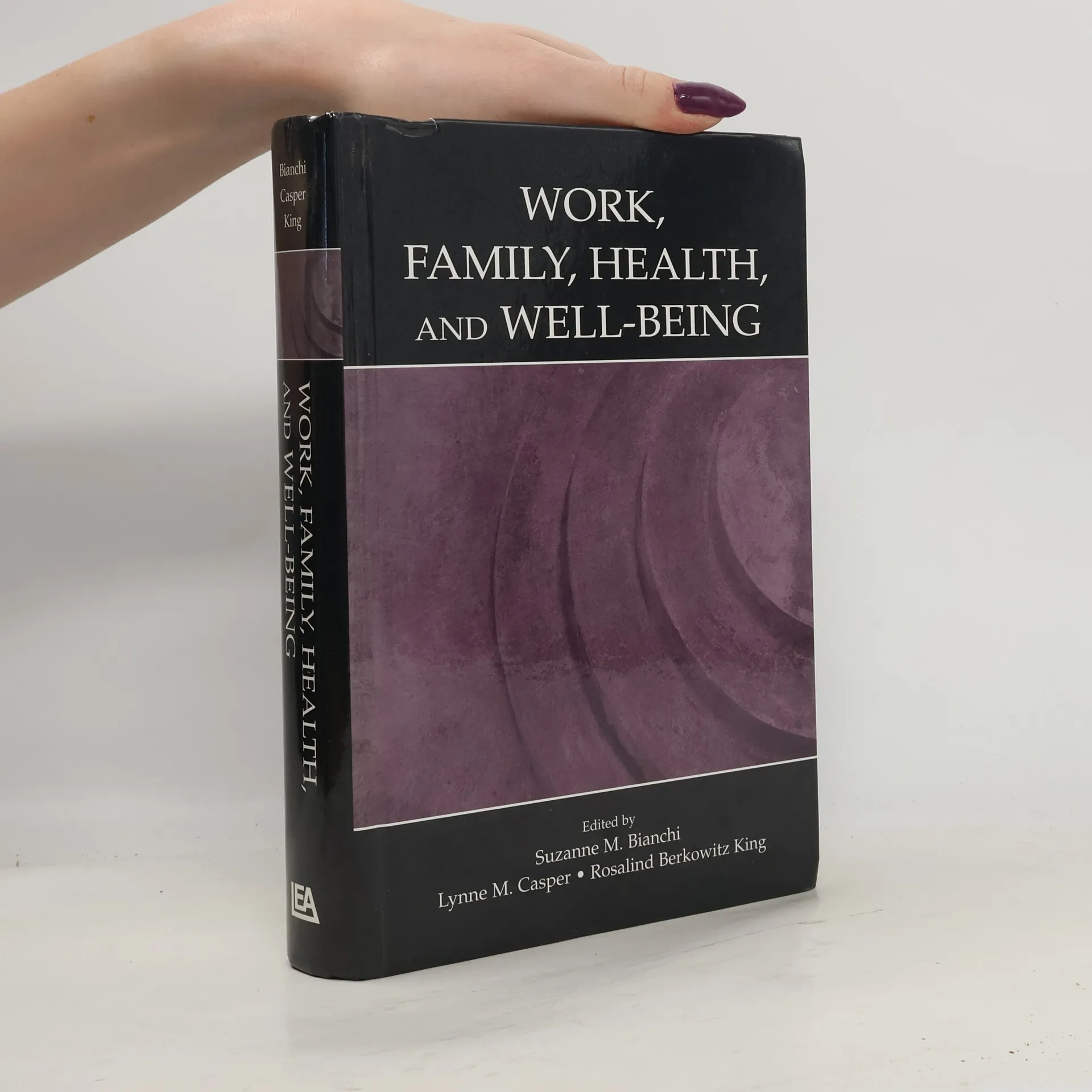
Work, Family, Health, and Well-Being, Suzanne M. Bianchi, Lynne M. Casper, Rosalind Berkowitz King
- Język

- Rok wydania
- 2005
- Oprawa
- (twarda)
Metody płatności
Brakuje nam tutaj Twojej recenzji.
- Tytuł
- Work, Family, Health, and Well-Being
- Język
- angielski
- Wydawca
- Routledge
- Rok wydania
- 2005
- Oprawa
- twarda
- Liczba stron
- 583
- ISBN10
- 0805852549
- ISBN13
- 9780805852547
- Seria
- Kategorie
- Tagi
- Tematyka psychologiczna, Rodzina, USA, Badania naukowe, Zatrudnienie, Konflikty, Zmiana społeczna
- Ocena
- 2 z 5
- Opis
- This text emerged from a 2003 conference in Washington, D.C., focusing on the interplay of work, family, health, and well-being, sponsored by the National Institutes of Health (NIH). It examines various dimensions of health and well-being for workers, their families, and communities. Research into the socioeconomic gradient in health across occupational categories raises critical questions about how working conditions and employment factors, like wages and job security, influence health outcomes. The work is organized into seven parts, providing an overview of changes in work and family time use, with a dedicated section on employers and workplaces. It explores various disciplinary perspectives on the interconnectedness of work, family, health, and well-being. A significant focus is on the relationship between parental employment—especially maternal employment—and child well-being. It also delves into gender differences in labor division, the impact of marriage on health, the evolving nature of caregiving, and how work affects health and well-being outcomes. Additionally, it reviews occupational health literature and addresses the unique work-family challenges faced by low-income families and low-wage workers. This text is relevant for professionals in psychology, sociology, family studies, demographics, economics, anthropology, and social work.