



Więcej o książce
The presence of unintelligent behavior in animals, such as insects, raises questions about the existence of consciousness and intentionality in their actions. While ethologists could identify maladaptive behaviors in humans, these do not imply a lack of awareness in our species. Currently, there is no definitive evidence to confirm that insects or other animals possess consciousness or plan their actions, yet we also lack evidence to dismiss the possibility. This gap in knowledge can lead to a dogmatic negativity that hinders scientific exploration and discovery. Many researchers suggest starting from our understanding of human thinking, subjective feelings, and consciousness, then exploring whether other species might share similar experiences. This approach, once deemed anthropomorphic, is gaining acceptance as it challenges the assumption that conscious thought is solely a human trait. The critique of anthropomorphism often reflects a prior belief in human uniqueness, making it a circular argument rather than a valid objection. By opening this inquiry, we may uncover significant insights into the mental experiences of other species.
Zakup książki
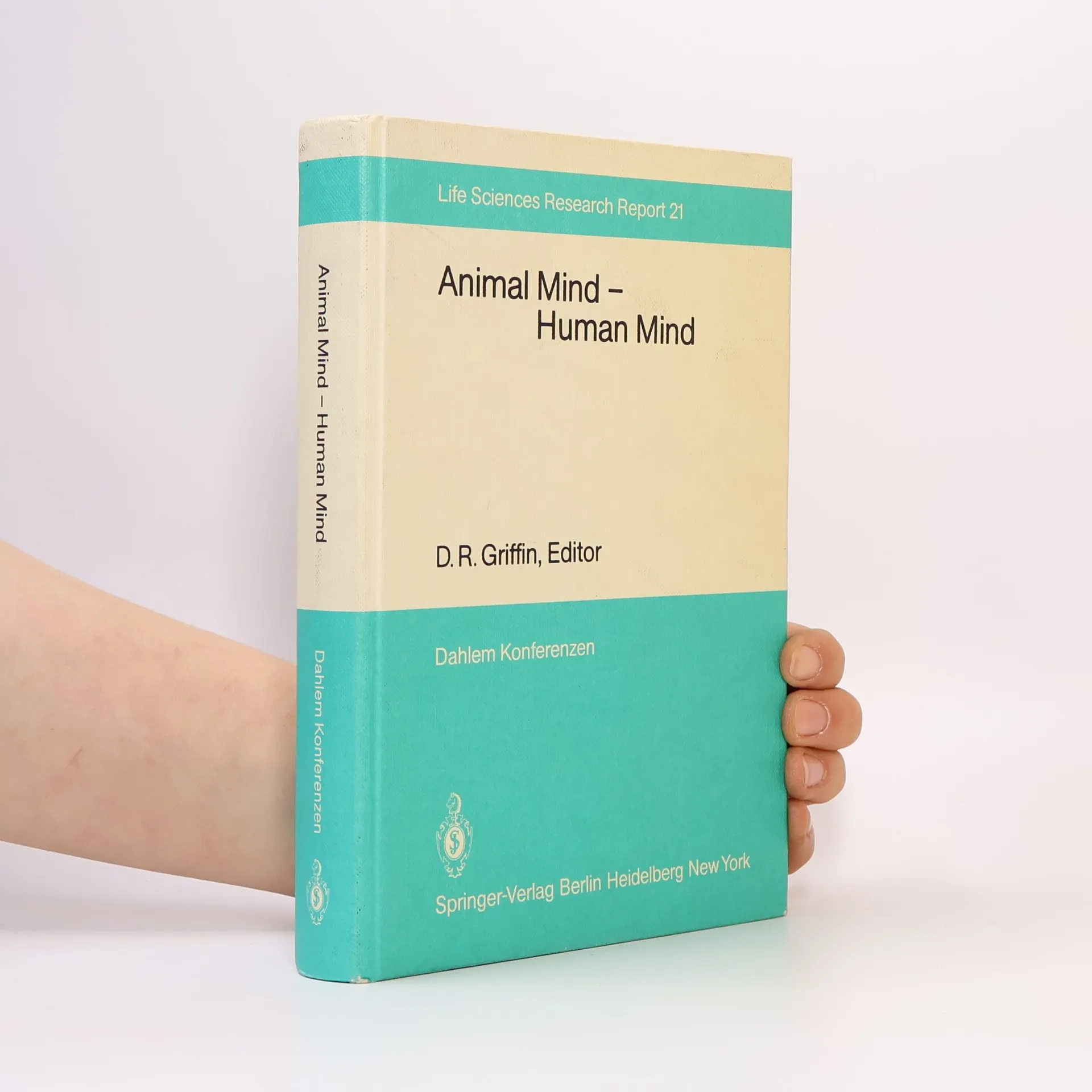
Dahlem Workshop Report - 21: Animal Mind ― Human Mind, Donald R. Griffin, S. A. Hillyard, Walter Kintsch, P. R. Marler
- Język

- Rok wydania
- 1982
- Oprawa
- (twarda)
Metody płatności
Nikt jeszcze nie ocenił.
- Tytuł
- Dahlem Workshop Report - 21: Animal Mind ― Human Mind
- Podtytuł
- Report of the Dahlem Workshop on Animal Mind ― Human Mind, Berlin 1981, March 22–27
- Język
- angielski
- Wydawca
- Springer-Verlag
- Rok wydania
- 1982
- Oprawa
- twarda
- Liczba stron
- 427
- ISBN10
- 3540113304
- ISBN13
- 9783540113300
- Seria
- Tagi
- Nauki przyrodnicze, Tematyka psychologiczna, Zwierzęta, Nauka, Tematyka medyczna, Ewolucja, Neurobiologia, Zoologia, Mózg, Owady
- Opis
- The presence of unintelligent behavior in animals, such as insects, raises questions about the existence of consciousness and intentionality in their actions. While ethologists could identify maladaptive behaviors in humans, these do not imply a lack of awareness in our species. Currently, there is no definitive evidence to confirm that insects or other animals possess consciousness or plan their actions, yet we also lack evidence to dismiss the possibility. This gap in knowledge can lead to a dogmatic negativity that hinders scientific exploration and discovery. Many researchers suggest starting from our understanding of human thinking, subjective feelings, and consciousness, then exploring whether other species might share similar experiences. This approach, once deemed anthropomorphic, is gaining acceptance as it challenges the assumption that conscious thought is solely a human trait. The critique of anthropomorphism often reflects a prior belief in human uniqueness, making it a circular argument rather than a valid objection. By opening this inquiry, we may uncover significant insights into the mental experiences of other species.