

Więcej o książce
What is the nature of the relationship of Jacques Derrida and deconstruction to Edmund Husserl and phenomenology? Is deconstruction a radical departure from phenomenology or does it trace its origins to the phenomenological project? In Derrida and Husserl, Leonard Lawlor illuminates Husserl’s influence on the French philosophical tradition that inspired Derrida’s thought. Beginning with Eugen Fink’s pivotal essay on Husserl’s philosophy, Lawlor carefully reconstructs the conceptual context in which Derrida developed his interpretation of Husserl. Lawlor’s investigations of the work of Jean Cavaillès, Tran-Duc-Thao, and Jean Hyppolite, as well as recent texts by Derrida, reveal the depth of Derrida’s relationship to Husserl’s phenomenology. Along the way, Lawlor revisits and sheds light on the origin of many important Derridean concepts, such as deconstruction, the metaphysics of presence, différance, intentionality, the trace, and spectrality.
Zakup książki
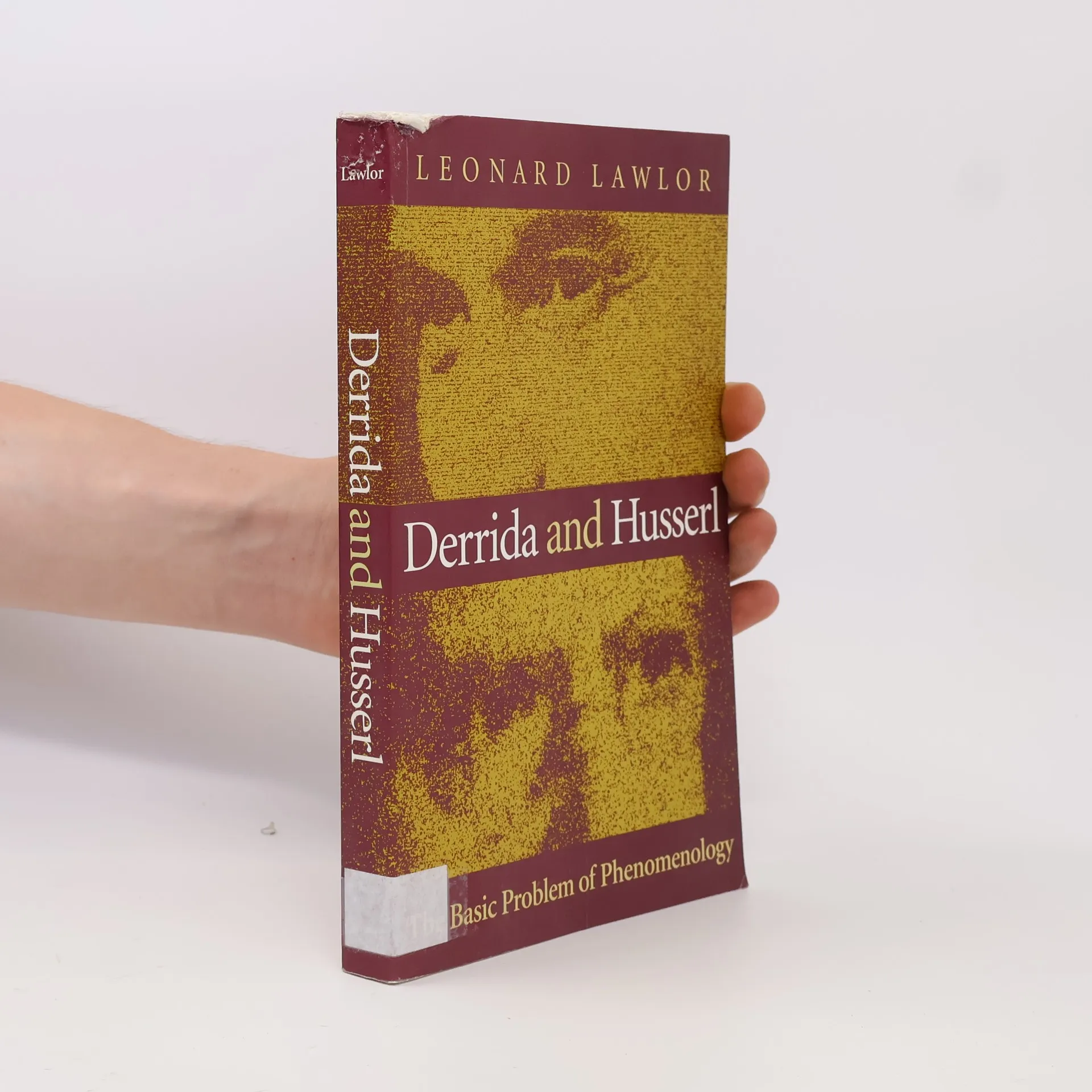
Derrida and Husserl, Leonard Lawlor
- Język

- Rok wydania
- 2002
- Oprawa
- (miękka)
Metody płatności
Brakuje nam tutaj Twojej recenzji.
- Tytuł
- Derrida and Husserl
- Podtytuł
- The Basic Problem of Phenomenology
- Język
- angielski
- Autorzy
- Leonard Lawlor
- Wydawca
- Indiana University Press
- Rok wydania
- 2002
- Oprawa
- miękka
- Liczba stron
- 280
- ISBN10
- 0253215080
- ISBN13
- 9780253215086
- Kategorie
- Tagi
- USA, XX wiek, Lingwistyka, Krytyka literacka, Egzystencjalizm, Fenomenologia, Fonetyka, Fonologia
- Ocena
- 3,8 z 5
- Opis
- What is the nature of the relationship of Jacques Derrida and deconstruction to Edmund Husserl and phenomenology? Is deconstruction a radical departure from phenomenology or does it trace its origins to the phenomenological project? In Derrida and Husserl, Leonard Lawlor illuminates Husserl’s influence on the French philosophical tradition that inspired Derrida’s thought. Beginning with Eugen Fink’s pivotal essay on Husserl’s philosophy, Lawlor carefully reconstructs the conceptual context in which Derrida developed his interpretation of Husserl. Lawlor’s investigations of the work of Jean Cavaillès, Tran-Duc-Thao, and Jean Hyppolite, as well as recent texts by Derrida, reveal the depth of Derrida’s relationship to Husserl’s phenomenology. Along the way, Lawlor revisits and sheds light on the origin of many important Derridean concepts, such as deconstruction, the metaphysics of presence, différance, intentionality, the trace, and spectrality.