



Parametry
- 392 strony
- 14 godzin czytania
Więcej o książce
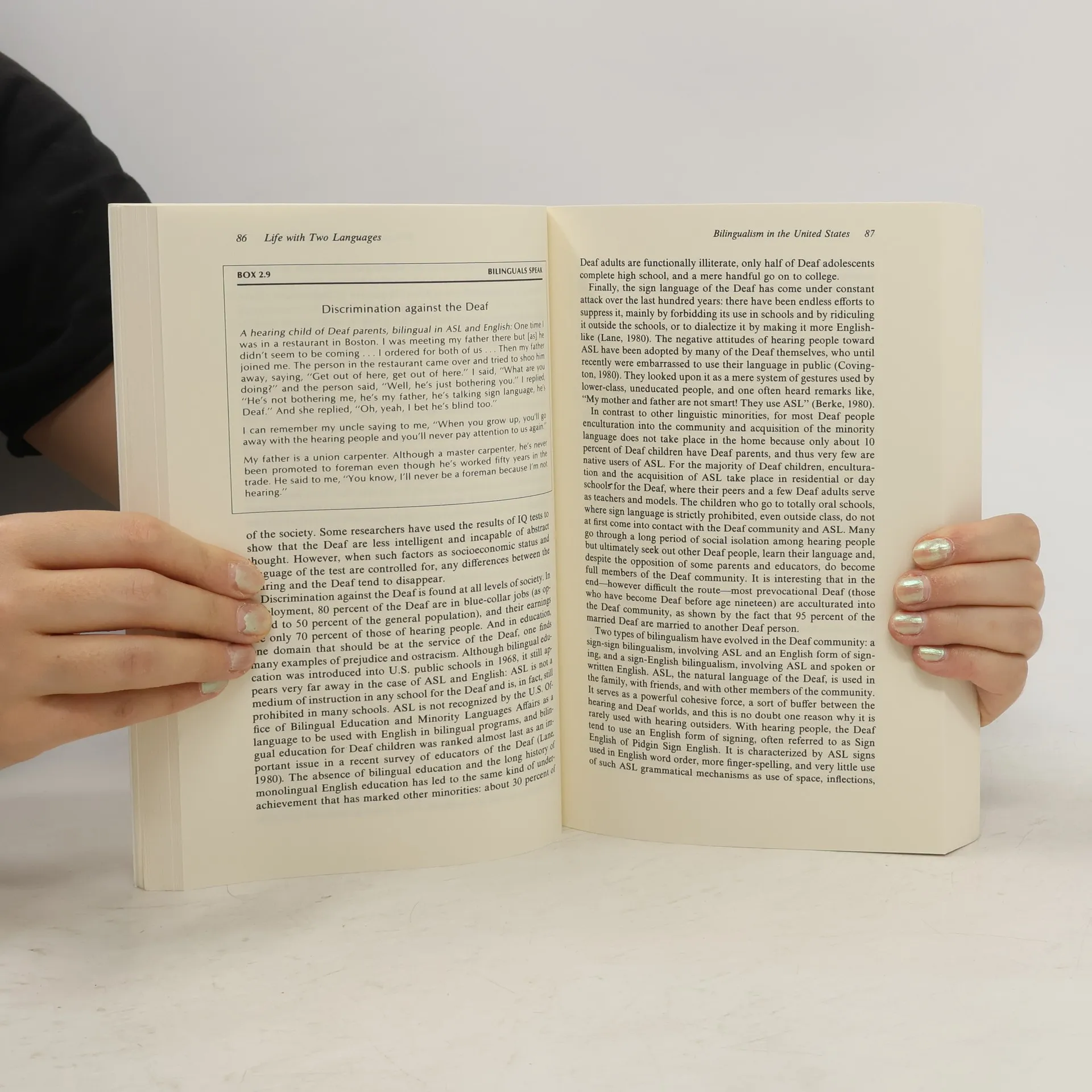
Many view bilinguals as exceptional, yet nearly half the global population speaks multiple languages. This book offers a comprehensive look at the bilingual experience. Franois Grosjean, a bilingual himself, explores the topic from various perspectives to provide a balanced introduction. He addresses the political and social dynamics that arise when languages intersect and the policies nations implement regarding linguistic minorities in education and governance. Notably, he delves into the psychological and social factors influencing a bilingual's choice of language in conversations with other bilinguals, including the intriguing practice of code-switching. Grosjean explains how children can become bilingual as swiftly as they do monolingual, examines the organization of languages in the bilingual brain, and discusses the impact of bilingualism on language, such as word borrowings. Central to the narrative is the emphasis on the bilingual individual; first-hand accounts throughout the book reveal the experiences of living with two languages, highlighting their educational and social journeys. Written in an accessible style, this work will engage professionals and students in linguistics, education, sociology, and psychology, as well as those with a casual interest in the subject.
Zakup książki
Life with Two Languages, François Grosjean
- Język

- Rok wydania
- 1982
- Oprawa
- (miękka)
Metody płatności
Brakuje nam tutaj Twojej recenzji.
- Tytuł
- Life with Two Languages
- Podtytuł
- An Introduction to Bilingualism
- Język
- angielski
- Autorzy
- François Grosjean
- Wydawca
- Harvard University Press
- Rok wydania
- 1982
- Oprawa
- miękka
- Liczba stron
- 392
- ISBN10
- 0674530926
- ISBN13
- 9780674530928
- Seria
- Tagi
- Podręczniki, Podręczniki językowe & Słowniki, Tematyka psychologiczna, USA, Edukacja & Szkolnictwo, Podręczniki językowe, Lingwistyka
- Ocena
- 4,05 z 5
- Opis
- Many view bilinguals as exceptional, yet nearly half the global population speaks multiple languages. This book offers a comprehensive look at the bilingual experience. Franois Grosjean, a bilingual himself, explores the topic from various perspectives to provide a balanced introduction. He addresses the political and social dynamics that arise when languages intersect and the policies nations implement regarding linguistic minorities in education and governance. Notably, he delves into the psychological and social factors influencing a bilingual's choice of language in conversations with other bilinguals, including the intriguing practice of code-switching. Grosjean explains how children can become bilingual as swiftly as they do monolingual, examines the organization of languages in the bilingual brain, and discusses the impact of bilingualism on language, such as word borrowings. Central to the narrative is the emphasis on the bilingual individual; first-hand accounts throughout the book reveal the experiences of living with two languages, highlighting their educational and social journeys. Written in an accessible style, this work will engage professionals and students in linguistics, education, sociology, and psychology, as well as those with a casual interest in the subject.