

Parametry
- 168 stron
- 6 godzin czytania
Więcej o książce
Japan's foremost clinical psychiatrist explores the role of the individual in a society that often seems disconnected from personal identity. The author challenges both self-perceptions and stereotypes about the Japanese, defending the unique strengths of their culture. Drawing from a rich understanding of Japanese traditions and influences from Freud, Weber, Max Picard, and George Orwell, he presents a comprehensive analysis. This work is a sequel to his acclaimed bestseller, where he introduced his theory of passive, dependent love as essential to understanding the Japanese psyche, captivating over 100,000 foreign readers. In this new exploration, the focus remains on the Japanese individual and their relationship with society, emphasizing the duality of public and private perceptions. Doi examines how individuals navigate behaviors that reflect two contradictory modes of perception, contrasting this with Western psychology's view of trauma stemming from such splits. He suggests that, for the Japanese, maturity involves recognizing and reconciling these differences. The text also delves into historical and psychological references, encouraging reflection on Freudian concepts of the unconscious, ultimately enriching the discourse on identity within Japanese culture.
Zakup książki
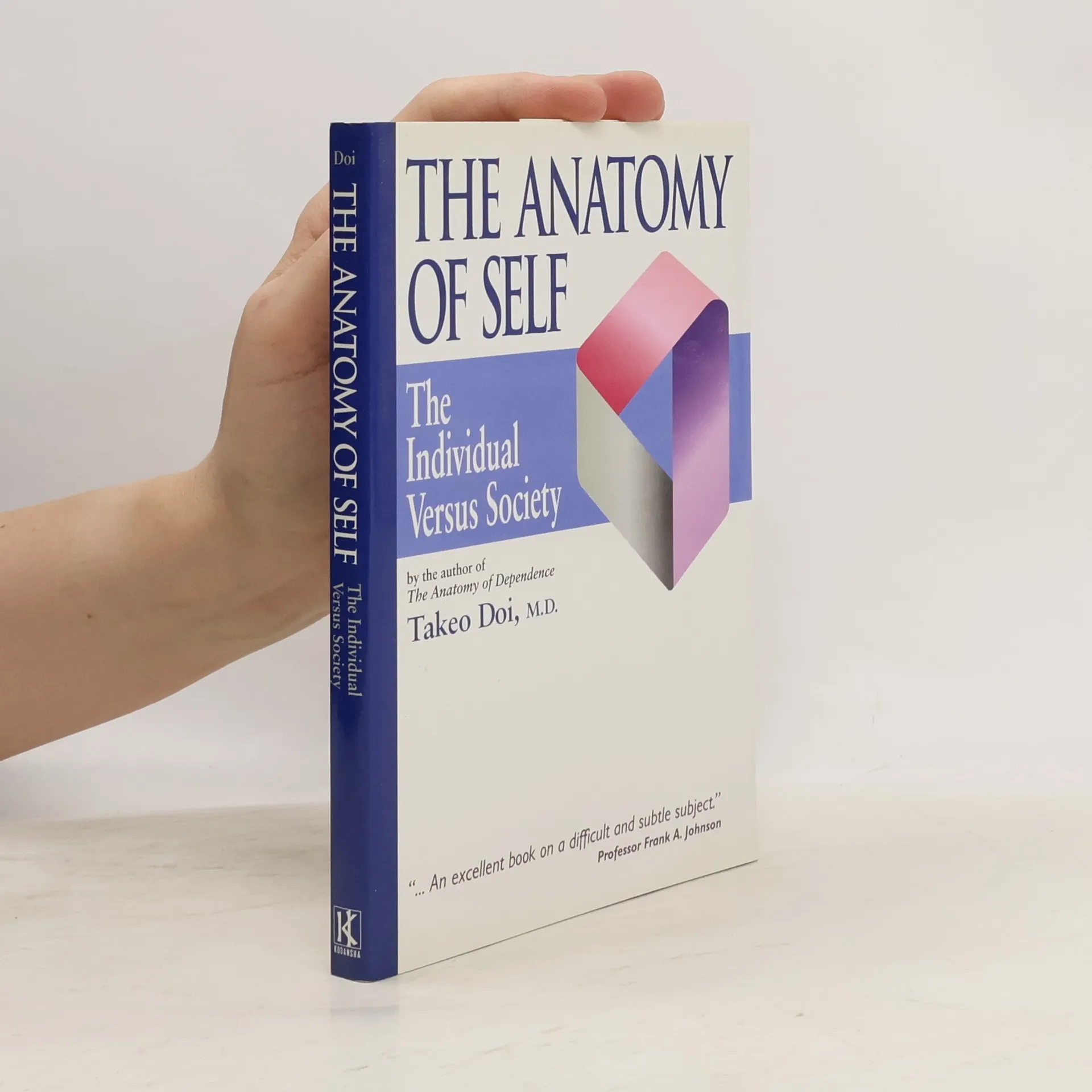
The Anatomy of Self, Takeo Doi
- Język

- Rok wydania
- 2001
- Oprawa
- (miękka)
Metody płatności
Brakuje nam tutaj Twojej recenzji.
- Tytuł
- The Anatomy of Self
- Podtytuł
- The Individual Versus Society
- Język
- angielski
- Autorzy
- Takeo Doi
- Wydawca
- Kodansha USA
- Rok wydania
- 2001
- Oprawa
- miękka
- Liczba stron
- 168
- ISBN10
- 4770027796
- ISBN13
- 9784770027795
- Seria
- Ocena
- 4 z 5
- Opis
- Japan's foremost clinical psychiatrist explores the role of the individual in a society that often seems disconnected from personal identity. The author challenges both self-perceptions and stereotypes about the Japanese, defending the unique strengths of their culture. Drawing from a rich understanding of Japanese traditions and influences from Freud, Weber, Max Picard, and George Orwell, he presents a comprehensive analysis. This work is a sequel to his acclaimed bestseller, where he introduced his theory of passive, dependent love as essential to understanding the Japanese psyche, captivating over 100,000 foreign readers. In this new exploration, the focus remains on the Japanese individual and their relationship with society, emphasizing the duality of public and private perceptions. Doi examines how individuals navigate behaviors that reflect two contradictory modes of perception, contrasting this with Western psychology's view of trauma stemming from such splits. He suggests that, for the Japanese, maturity involves recognizing and reconciling these differences. The text also delves into historical and psychological references, encouraging reflection on Freudian concepts of the unconscious, ultimately enriching the discourse on identity within Japanese culture.