

Parametry
- 850 stron
- 30 godzin czytania
Więcej o książce
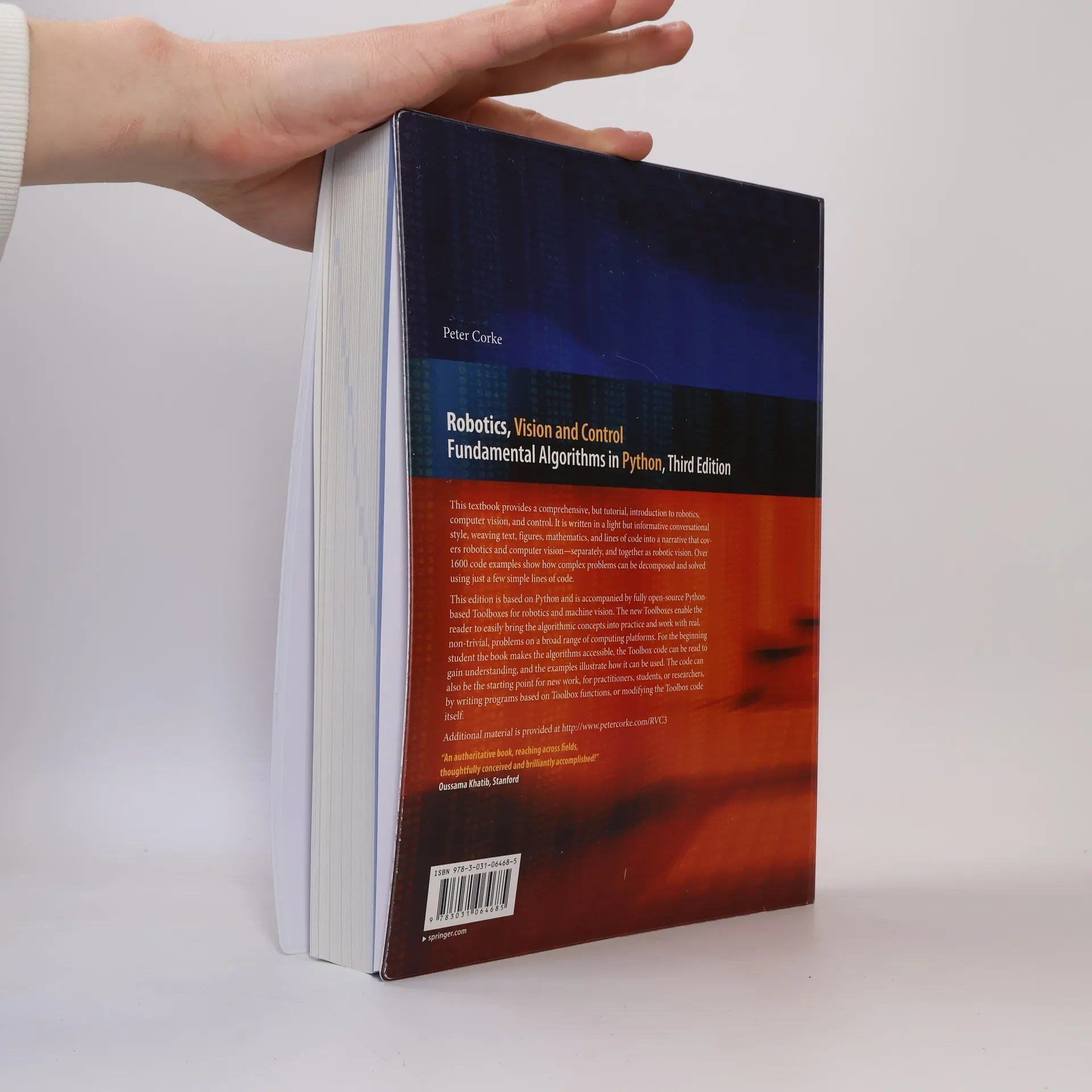
This textbook provides a comprehensive, but tutorial, introduction to robotics, computer vision, and control. It is written in a light but informative conversational style, weaving text, figures, mathematics, and lines of code into a narrative that covers robotics and computer vision—separately, and together as robotic vision. Over 1600 code examples show how complex problems can be decomposed and solved using just a few simple lines of code. This edition is based on Python and is accompanied by fully open-source Python-based Toolboxes for robotics and machine vision. The new Toolboxes enable the reader to easily bring the algorithmic concepts into practice and work with real, non-trivial, problems on a broad range of computing platforms. For the beginning student the book makes the algorithms accessible, the Toolbox code can be read to gain understanding, and the examples illustrate how it can be used. The code can also be the starting point for new work, for practitioners, students, or researchers, by writing programs based on Toolbox functions, or modifying the Toolbox code itself.
Zakup książki
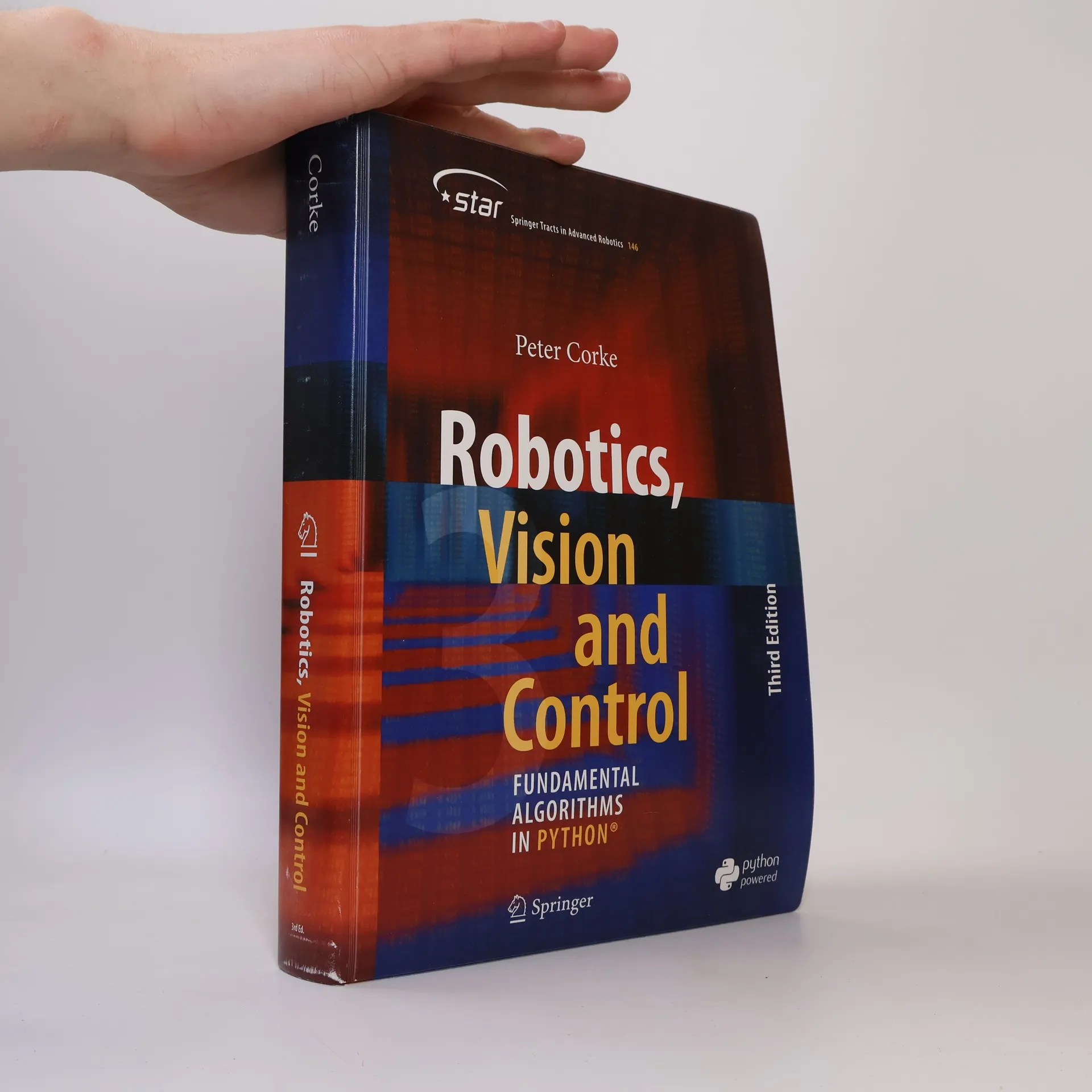
Springer Tracts in Advanced Robotics - 146: Robotics, Vision and Control, Peter I. Corke
- Język

- Rok wydania
- 2022
- Oprawa
- (miękka)
Metody płatności
Nikt jeszcze nie ocenił.
- Tytuł
- Springer Tracts in Advanced Robotics - 146: Robotics, Vision and Control
- Podtytuł
- Fundamental Algorithms in Python® - Third Edition
- Język
- angielski
- Autorzy
- Peter I. Corke
- Wydawca
- Springer
- Rok wydania
- 2022
- Oprawa
- miękka
- Liczba stron
- 850
- ISBN10
- 3031064682
- ISBN13
- 9783031064685
- Seria
- Kategorie
- Tagi
- Podręczniki, Tematyka psychologiczna, Nauka, Technologia, Sztuczna inteligencja, Elektronika, Kartografia, Automatyzacja, Nawigacja, Robotyka
- Opis
- This textbook provides a comprehensive, but tutorial, introduction to robotics, computer vision, and control. It is written in a light but informative conversational style, weaving text, figures, mathematics, and lines of code into a narrative that covers robotics and computer vision—separately, and together as robotic vision. Over 1600 code examples show how complex problems can be decomposed and solved using just a few simple lines of code. This edition is based on Python and is accompanied by fully open-source Python-based Toolboxes for robotics and machine vision. The new Toolboxes enable the reader to easily bring the algorithmic concepts into practice and work with real, non-trivial, problems on a broad range of computing platforms. For the beginning student the book makes the algorithms accessible, the Toolbox code can be read to gain understanding, and the examples illustrate how it can be used. The code can also be the starting point for new work, for practitioners, students, or researchers, by writing programs based on Toolbox functions, or modifying the Toolbox code itself.