

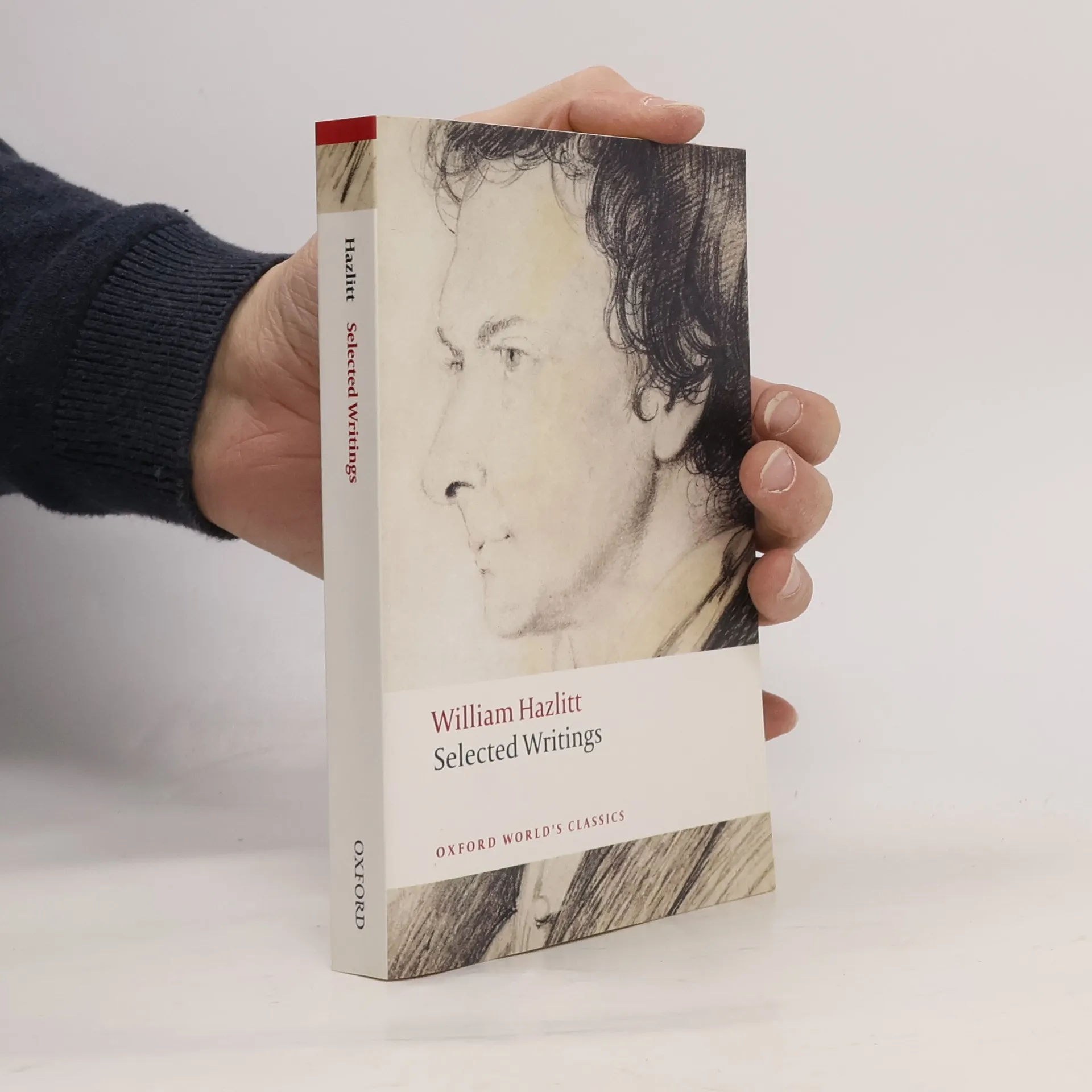
Parametry
- 423 strony
- 15 godzin czytania
Więcej o książce
William Hazlitt (1778-1830) developed a variety of identities as a writer: essayist, philosopher, critic of literature, drama, and painting, biographer, political commentator, and polemicist. What unites this variety is his dramatic and passionate intelligence, his unswerving commitment to individual and political liberty, and his courageous opposition to established political and cultural power. Hailed in 1819 as `one of the ablest and most eloquent critics of our nation', Hazlitt was also reviled for his political radicalism by the conservative press of the period. His writing engages with many of the important cultural and political debates of a revolutionary period, and retains its power both to provoke and move the reader.
Zakup książki
Oxford World's Classics: Selected Writings, William Hazlitt, Jon Cook
- Język

- Rok wydania
- 2009
- Oprawa
- (miękka)
Metody płatności
Brakuje nam tutaj Twojej recenzji.
- Tytuł
- Oxford World's Classics: Selected Writings
- Język
- angielski
- Autorzy
- William Hazlitt, Jon Cook
- Wydawca
- Oxford University Press
- Rok wydania
- 2009
- Oprawa
- miękka
- Liczba stron
- 423
- ISBN10
- 0199552525
- ISBN13
- 9780199552528
- Seria
- Tagi
- Literatura światowa, Tematyka filozoficzna, XIX wiek, Wielka Brytania, Prace zebrane, Krytyka, Język ojczysty
- Ocena
- 3,8 z 5
- Opis
- William Hazlitt (1778-1830) developed a variety of identities as a writer: essayist, philosopher, critic of literature, drama, and painting, biographer, political commentator, and polemicist. What unites this variety is his dramatic and passionate intelligence, his unswerving commitment to individual and political liberty, and his courageous opposition to established political and cultural power. Hailed in 1819 as `one of the ablest and most eloquent critics of our nation', Hazlitt was also reviled for his political radicalism by the conservative press of the period. His writing engages with many of the important cultural and political debates of a revolutionary period, and retains its power both to provoke and move the reader.