

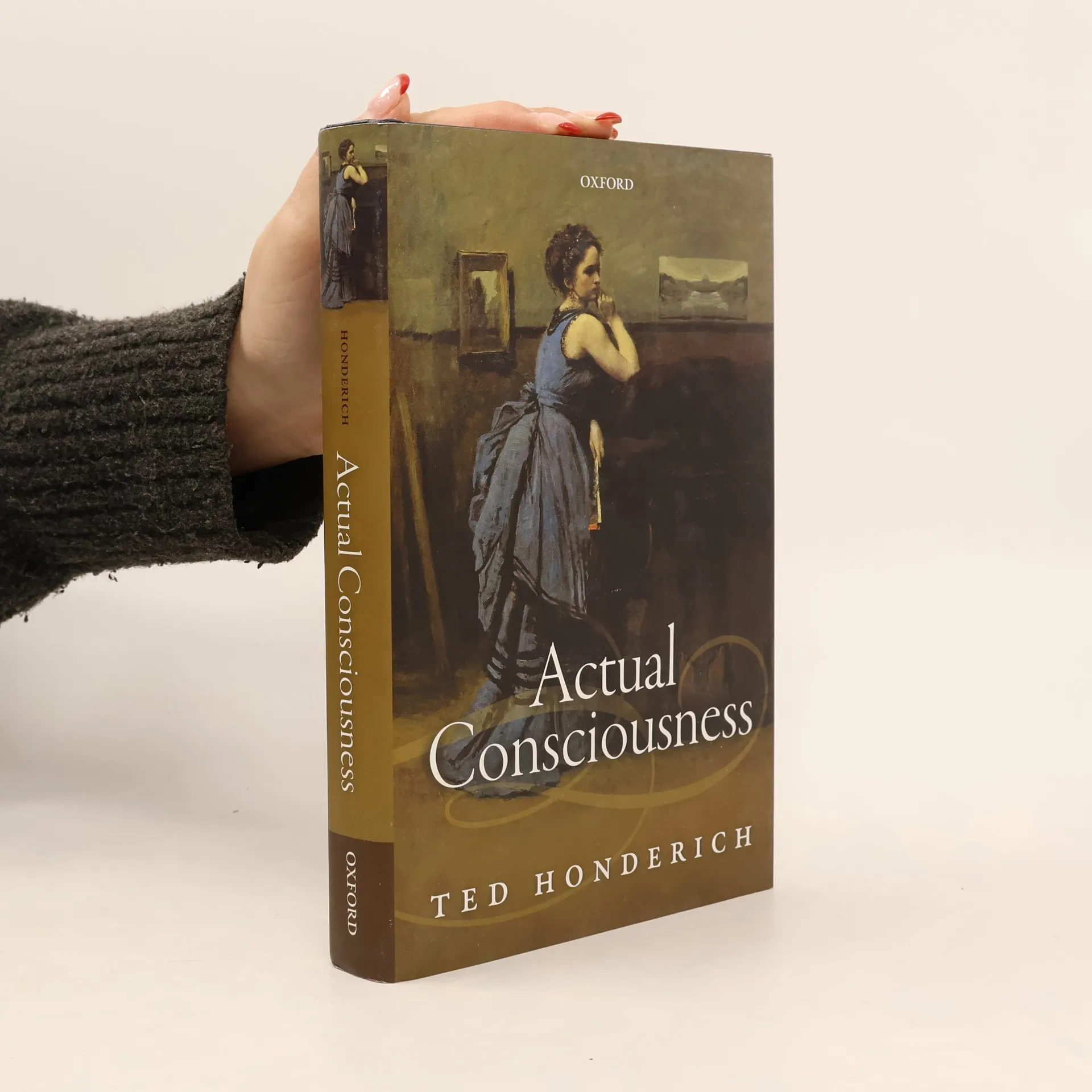


Więcej o książce
What does it mean to be conscious? This question remains a mystery in philosophy, with no consensus on the subject. In Actual Consciousness, Ted Honderich aims to move beyond dualisms, objective physicalism, and other prevailing theories. He introduces Actualism, an unprecedented theory characterized by nine key aspects. First, it begins with gathered data to clarify consciousness in its ordinary sense, defined as something's being actual. Second, like basic science, it transitions from metaphorical beginnings to literal, explicit answers regarding what is actual. Third, it acknowledges the diverse forms of consciousness, including perception, generic thinking, and wanting. Fourth, it posits that perceptual consciousness relates to a subjective physical world, distinct from the objective physical world. Fifth, it exhaustively characterizes the nature of subjective physical worlds. Sixth, cognitive and affective consciousness involves affirmed representations that are subjectively physical. Seventh, Actualism uniquely combines externalism for perceptual consciousness with internalism for cognitive and affective aspects. Eighth, it meets rigorous criteria derived from existing theories' failures, particularly regarding subjectivity and individuality. Finally, it advocates for a fresh start in understanding consciousness, aligning philosophy with the clarity and rigor of science.
Zakup książki
Actual Consciousness, Ted Honderich
- Język

- Rok wydania
- 2014
- Oprawa
- (twarda)
Metody płatności
Brakuje nam tutaj Twojej recenzji.
- Tytuł
- Actual Consciousness
- Język
- angielski
- Autorzy
- Ted Honderich
- Wydawca
- Oxford University Press
- Rok wydania
- 2014
- Oprawa
- twarda
- Liczba stron
- 430
- ISBN10
- 0198714386
- ISBN13
- 9780198714385
- Seria
- Ocena
- 3 z 5
- Opis
- What does it mean to be conscious? This question remains a mystery in philosophy, with no consensus on the subject. In Actual Consciousness, Ted Honderich aims to move beyond dualisms, objective physicalism, and other prevailing theories. He introduces Actualism, an unprecedented theory characterized by nine key aspects. First, it begins with gathered data to clarify consciousness in its ordinary sense, defined as something's being actual. Second, like basic science, it transitions from metaphorical beginnings to literal, explicit answers regarding what is actual. Third, it acknowledges the diverse forms of consciousness, including perception, generic thinking, and wanting. Fourth, it posits that perceptual consciousness relates to a subjective physical world, distinct from the objective physical world. Fifth, it exhaustively characterizes the nature of subjective physical worlds. Sixth, cognitive and affective consciousness involves affirmed representations that are subjectively physical. Seventh, Actualism uniquely combines externalism for perceptual consciousness with internalism for cognitive and affective aspects. Eighth, it meets rigorous criteria derived from existing theories' failures, particularly regarding subjectivity and individuality. Finally, it advocates for a fresh start in understanding consciousness, aligning philosophy with the clarity and rigor of science.