



Więcej o książce
The Metaphysics of Knowledge argues that knowledge is a fundamental relation essential to metaphysics, philosophical logic, and the philosophy of mind and language. Traditionally viewed as a propositional attitude like belief, Keith Hossack contends that knowledge is a relation to a fact rather than to content. This perspective enables a clearer explanation of various philosophical concepts through the lens of knowledge. Hossack develops a theory of facts as structured combinations of particulars and universals, and defines content as a property of a mental act that influences its knowledge value. He also presents a theory of representation where the conceptual structure of content mirrors the fact it represents, allowing for definitions of reference, truth, and necessity in terms of knowledge. In exploring the metaphysics of mind and language, Hossack posits that a conscious state is identical to knowledge of its occurrence, which helps characterize subjectivity and enhances our understanding of the 'I'-concept and personhood. Language is framed as a tool for communities to exchange knowledge through testimony. Ultimately, the work concludes that knowledge is too fundamental to be defined by other states, such as functional or physical conditions; while these may influence knowledge, they do not constitute it.
Zakup książki
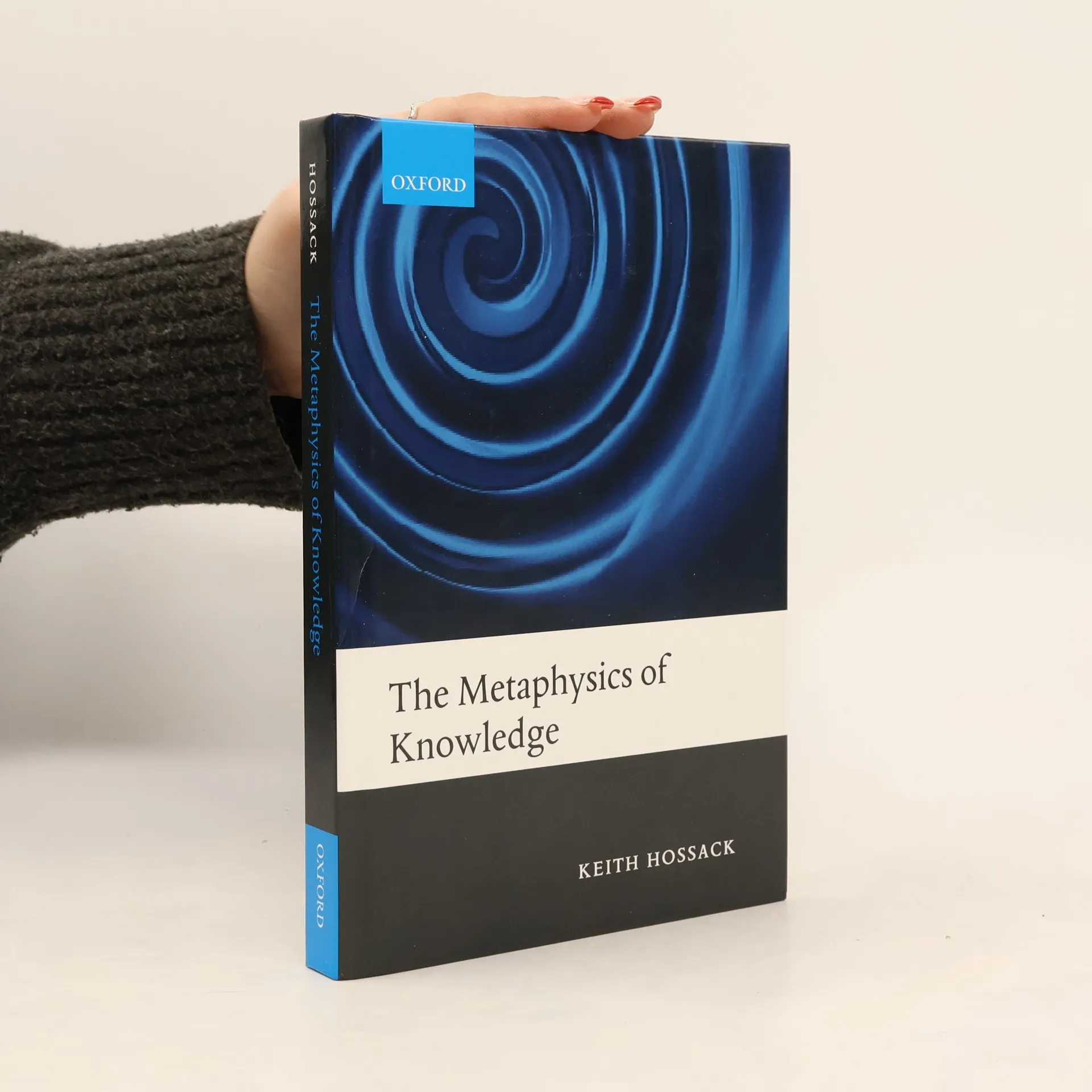
The Metaphysics of Knowledge, Keith Hossack
- Język

- Rok wydania
- 2007
- Oprawa
- (twarda)
Metody płatności
Brakuje nam tutaj Twojej recenzji.
- Tytuł
- The Metaphysics of Knowledge
- Język
- angielski
- Autorzy
- Keith Hossack
- Wydawca
- Oxford University Press
- Rok wydania
- 2007
- Oprawa
- twarda
- Liczba stron
- 328
- ISBN10
- 0199206724
- ISBN13
- 9780199206728
- Seria
- Ocena
- 4,5 z 5
- Opis
- The Metaphysics of Knowledge argues that knowledge is a fundamental relation essential to metaphysics, philosophical logic, and the philosophy of mind and language. Traditionally viewed as a propositional attitude like belief, Keith Hossack contends that knowledge is a relation to a fact rather than to content. This perspective enables a clearer explanation of various philosophical concepts through the lens of knowledge. Hossack develops a theory of facts as structured combinations of particulars and universals, and defines content as a property of a mental act that influences its knowledge value. He also presents a theory of representation where the conceptual structure of content mirrors the fact it represents, allowing for definitions of reference, truth, and necessity in terms of knowledge. In exploring the metaphysics of mind and language, Hossack posits that a conscious state is identical to knowledge of its occurrence, which helps characterize subjectivity and enhances our understanding of the 'I'-concept and personhood. Language is framed as a tool for communities to exchange knowledge through testimony. Ultimately, the work concludes that knowledge is too fundamental to be defined by other states, such as functional or physical conditions; while these may influence knowledge, they do not constitute it.