

Więcej o książce
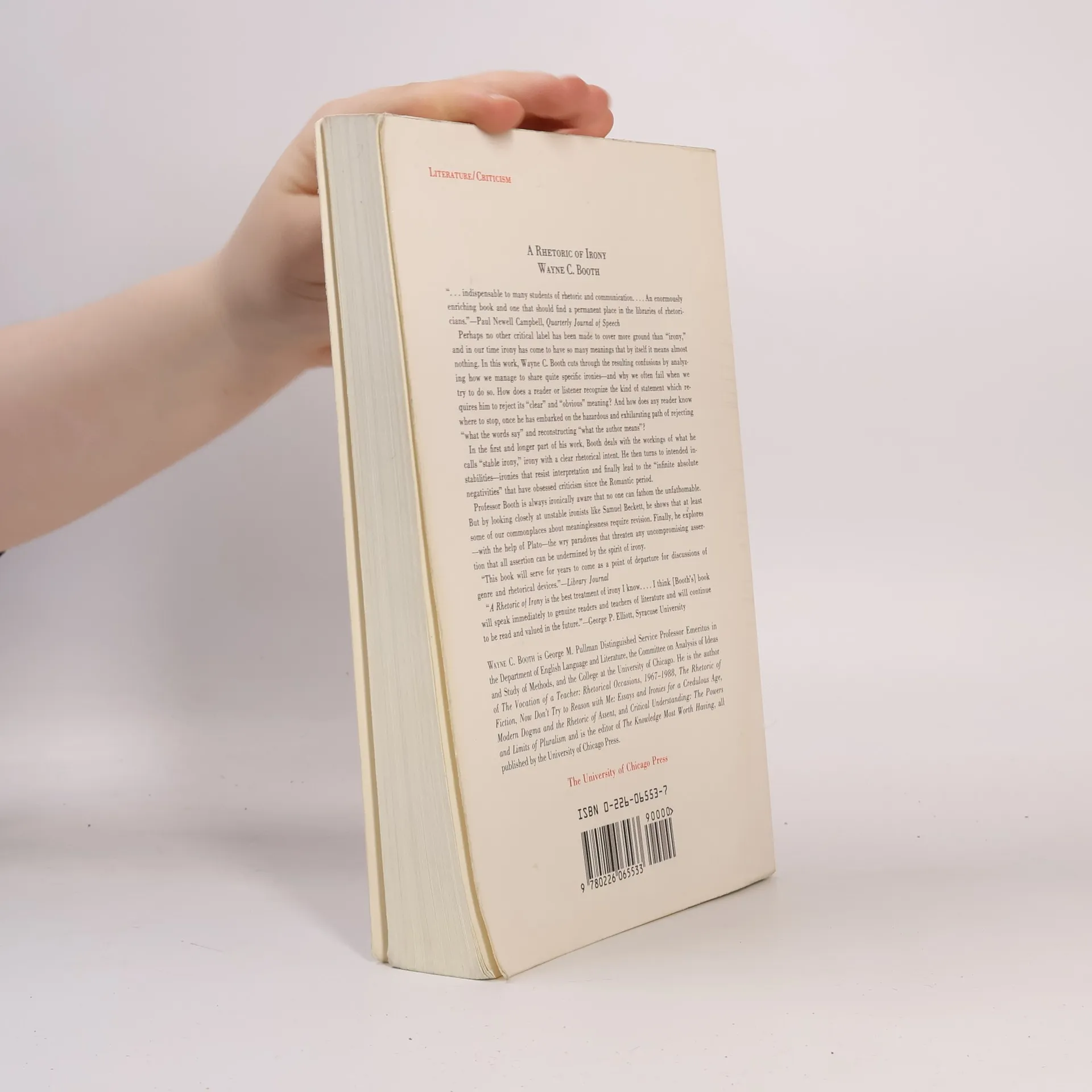
Perhaps no other critical label has been made to cover more ground than "irony," and in our time irony has come to have so many meanings that by itself it means almost nothing. In this work, Wayne C. Booth cuts through the resulting confusions by analyzing how we manage to share quite specific ironies—and why we often fail when we try to do so. How does a reader or listener recognize the kind of statement which requires him to reject its "clear" and "obvious" meaning? And how does any reader know where to stop, once he has embarked on the hazardous and exhilarating path of rejecting "what the words say" and reconstructing "what the author means"? In the first and longer part of his work, Booth deals with the workings of what he calls "stable irony," irony with a clear rhetorical intent. He then turns to intended instabilities—ironies that resist interpretation and finally lead to the "infinite absolute negativities" that have obsessed criticism since the Romantic period. Professor Booth is always ironically aware that no one can fathom the unfathomable. But by looking closely at unstable ironists like Samuel Becket, he shows that at least some of our commonplaces about meaninglessness require revision. Finally, he explores—with the help of Plato—the wry paradoxes that threaten any uncompromising assertion that all assertion can be undermined by the spirit of irony.
Zakup książki
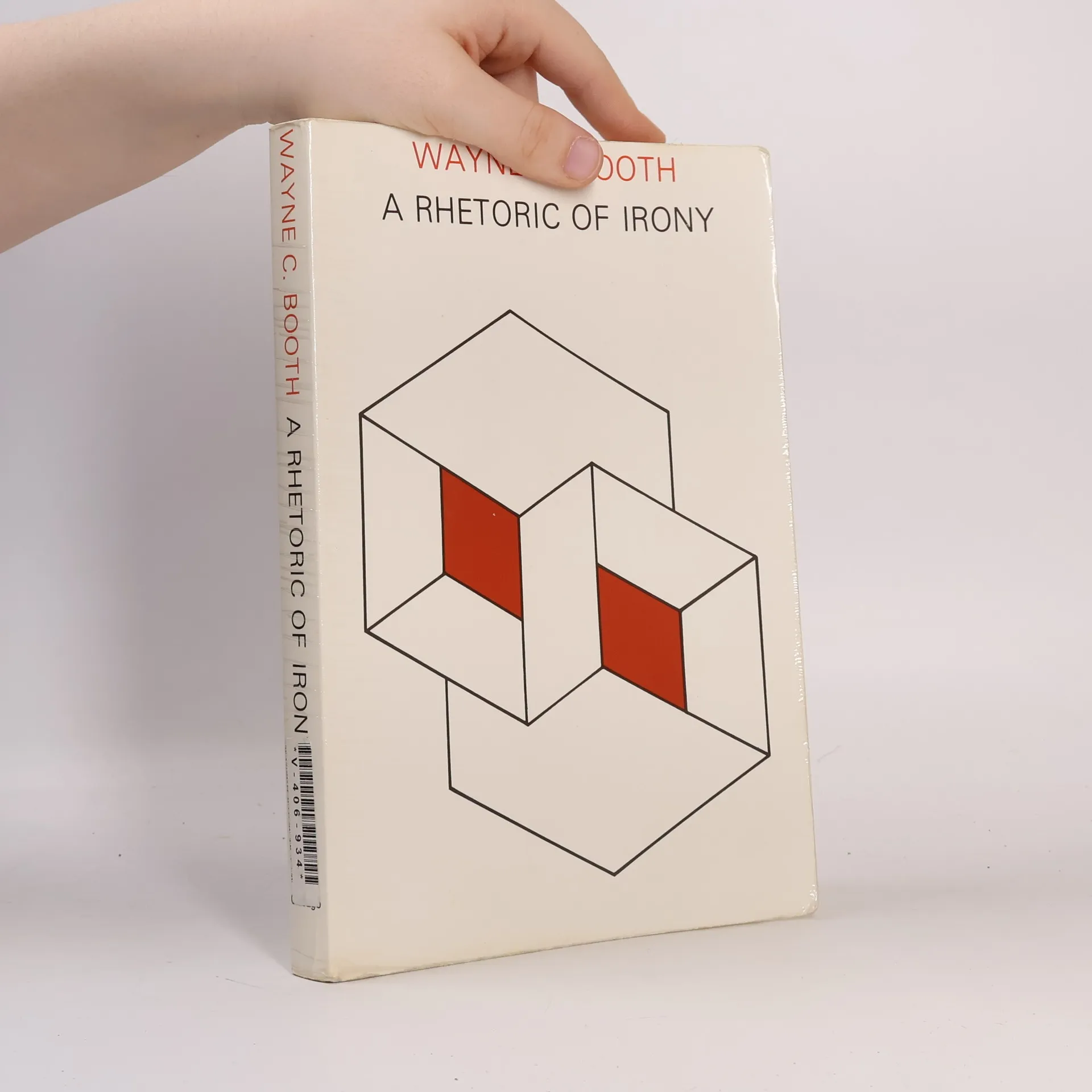
A Rhetoric of Irony, Wayne C. Booth
- Język

- Rok wydania
- 1974
- Oprawa
- (miękka)
Metody płatności
Brakuje nam tutaj Twojej recenzji.
- Tytuł
- A Rhetoric of Irony
- Język
- angielski
- Autorzy
- Wayne C. Booth
- Rok wydania
- 1974
- Oprawa
- miękka
- Liczba stron
- 310
- ISBN10
- 0226065537
- ISBN13
- 9780226065533
- Seria
- Tagi
- Tematyka filozoficzna, Lingwistyka, Krytyka literacka, Pisanie, Krytyka, Teoria literatury, Retoryka, Semantyka
- Ocena
- 3,95 z 5
- Opis
- Perhaps no other critical label has been made to cover more ground than "irony," and in our time irony has come to have so many meanings that by itself it means almost nothing. In this work, Wayne C. Booth cuts through the resulting confusions by analyzing how we manage to share quite specific ironies—and why we often fail when we try to do so. How does a reader or listener recognize the kind of statement which requires him to reject its "clear" and "obvious" meaning? And how does any reader know where to stop, once he has embarked on the hazardous and exhilarating path of rejecting "what the words say" and reconstructing "what the author means"? In the first and longer part of his work, Booth deals with the workings of what he calls "stable irony," irony with a clear rhetorical intent. He then turns to intended instabilities—ironies that resist interpretation and finally lead to the "infinite absolute negativities" that have obsessed criticism since the Romantic period. Professor Booth is always ironically aware that no one can fathom the unfathomable. But by looking closely at unstable ironists like Samuel Becket, he shows that at least some of our commonplaces about meaninglessness require revision. Finally, he explores—with the help of Plato—the wry paradoxes that threaten any uncompromising assertion that all assertion can be undermined by the spirit of irony.