

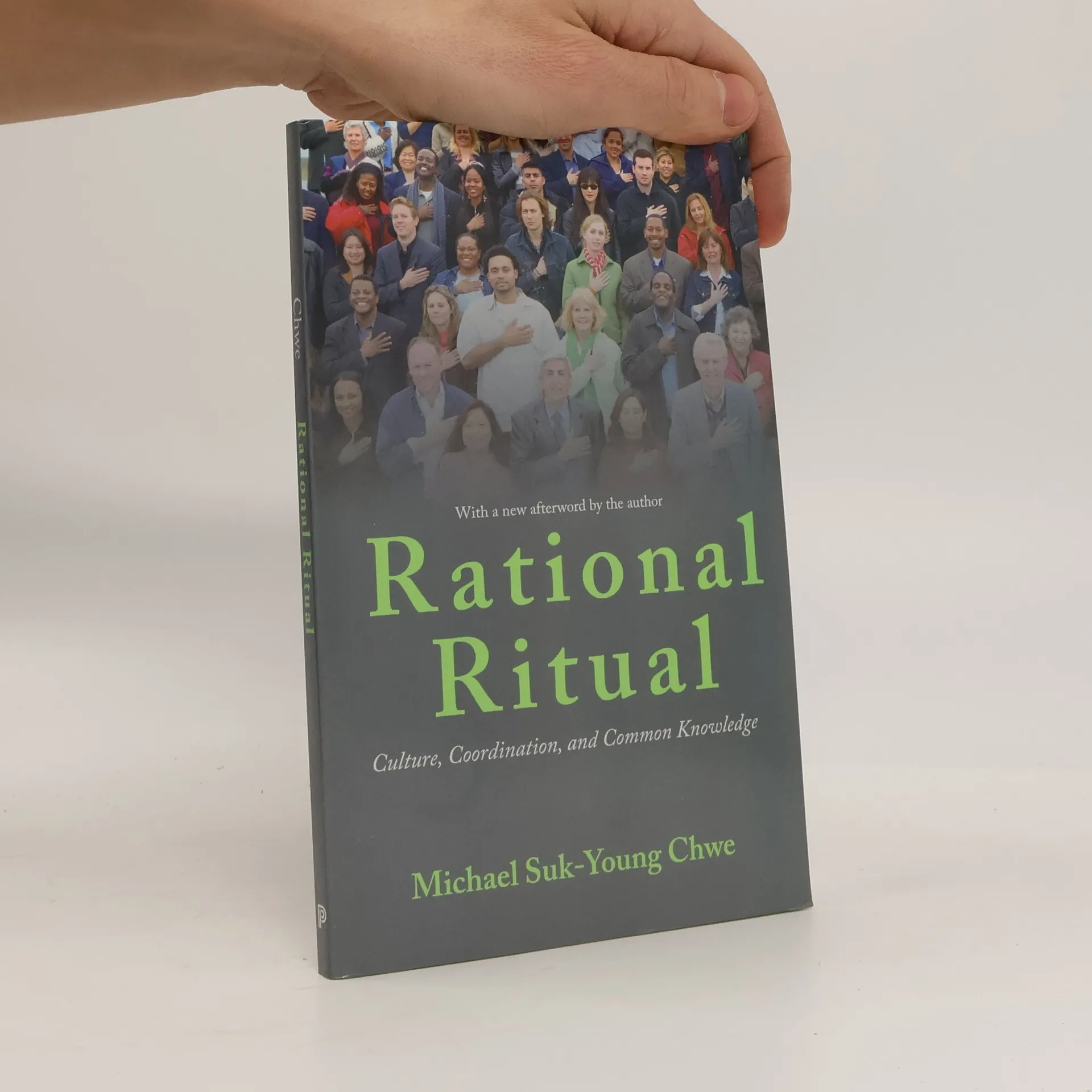

Rational Ritual
Culture, Coordination, and Common Knowledge - With a New Afterword by the Author
Autorzy
Ocena książki
Parametry
- 152 strony
- 6 godzin czytania
Więcej o książce
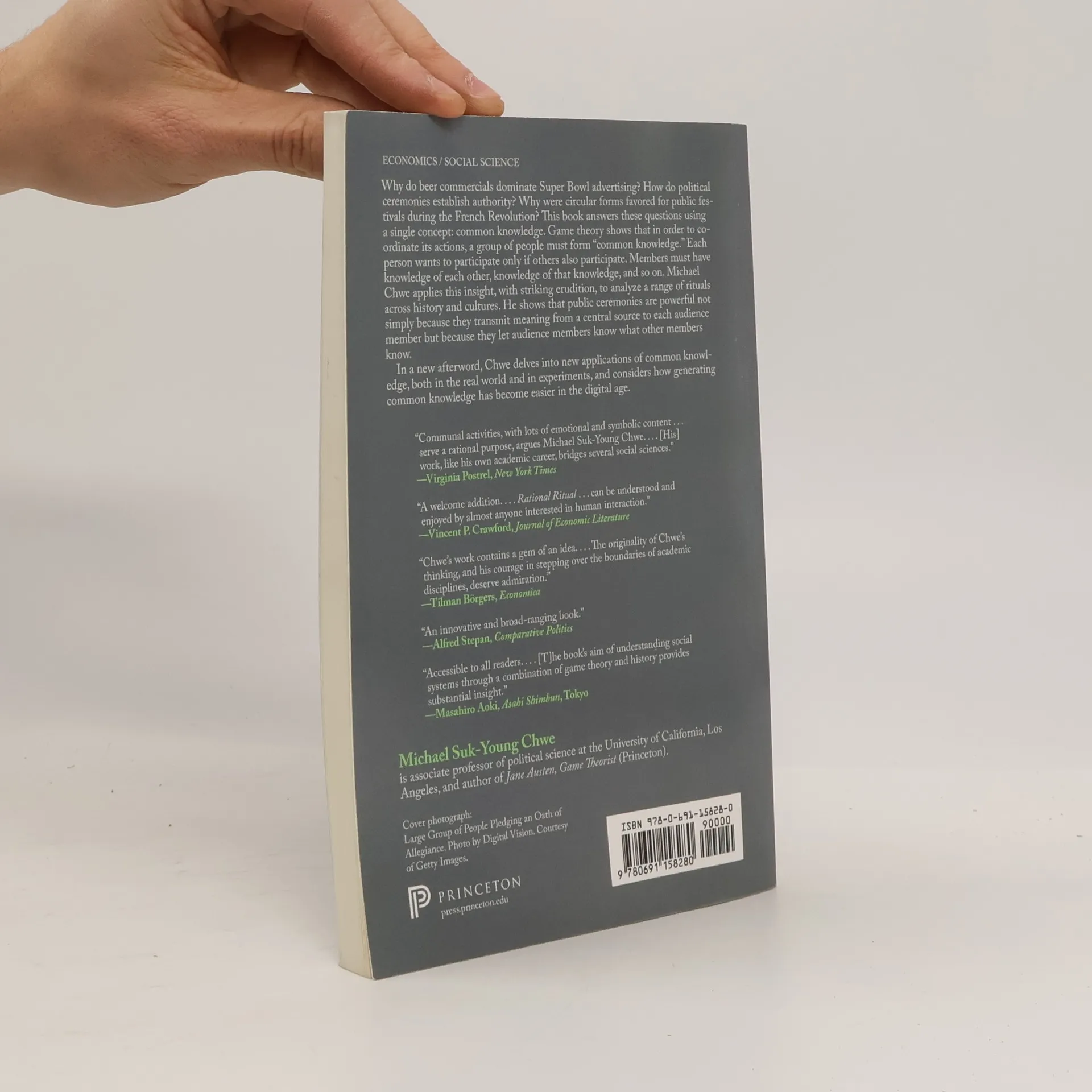
"Why do beer commercials dominate Super Bowl advertising? How do political ceremonies establish authority? Why were circular forms favored for public festivals during the French Revolution? This book answers these questions using a single concept: common knowledge. Game theory shows that in order to coordinate its actions, a group of people must form "common knowledge." Each person wants to participate only if others also participate. Members must have knowledge of each other, knowledge of that knowledge, and so on. Michael Chwe applies this insight, with striking erudition, to analyze a range of rituals across history and cultures. He shows that public ceremonies are powerful not simply because they transmit meaning from a central source to each audience member but because they let audience members know what other members know. In a new afterword, Chwe delves into new applications of common knowledge, both in the real world and in experiments, and considers how generating common knowledge has become easier in the digital age." -- From the jacket.
Zakup książki
Rational Ritual, Michael Suk-Young Chwe
- Język

- Rok wydania
- 2013
- Oprawa
- (miękka)
Metody płatności
Brakuje nam tutaj Twojej recenzji.
- Tytuł
- Rational Ritual
- Podtytuł
- Culture, Coordination, and Common Knowledge - With a New Afterword by the Author
- Język
- angielski
- Autorzy
- Michael Suk-Young Chwe
- Wydawca
- Princeton University Press
- Rok wydania
- 2013
- Oprawa
- miękka
- Liczba stron
- 152
- ISBN10
- 0691158282
- ISBN13
- 9780691158280
- Seria
- Kategorie
- Tagi
- Biznes, Tematyka psychologiczna, Tematyka filozoficzna, Społeczeństwo, Kultura & Społeczeństwo, Teorie polityczne, Logika, Teoria gier
- Ocena
- 3,7 z 5
- Opis
- "Why do beer commercials dominate Super Bowl advertising? How do political ceremonies establish authority? Why were circular forms favored for public festivals during the French Revolution? This book answers these questions using a single concept: common knowledge. Game theory shows that in order to coordinate its actions, a group of people must form "common knowledge." Each person wants to participate only if others also participate. Members must have knowledge of each other, knowledge of that knowledge, and so on. Michael Chwe applies this insight, with striking erudition, to analyze a range of rituals across history and cultures. He shows that public ceremonies are powerful not simply because they transmit meaning from a central source to each audience member but because they let audience members know what other members know. In a new afterword, Chwe delves into new applications of common knowledge, both in the real world and in experiments, and considers how generating common knowledge has become easier in the digital age." -- From the jacket.