

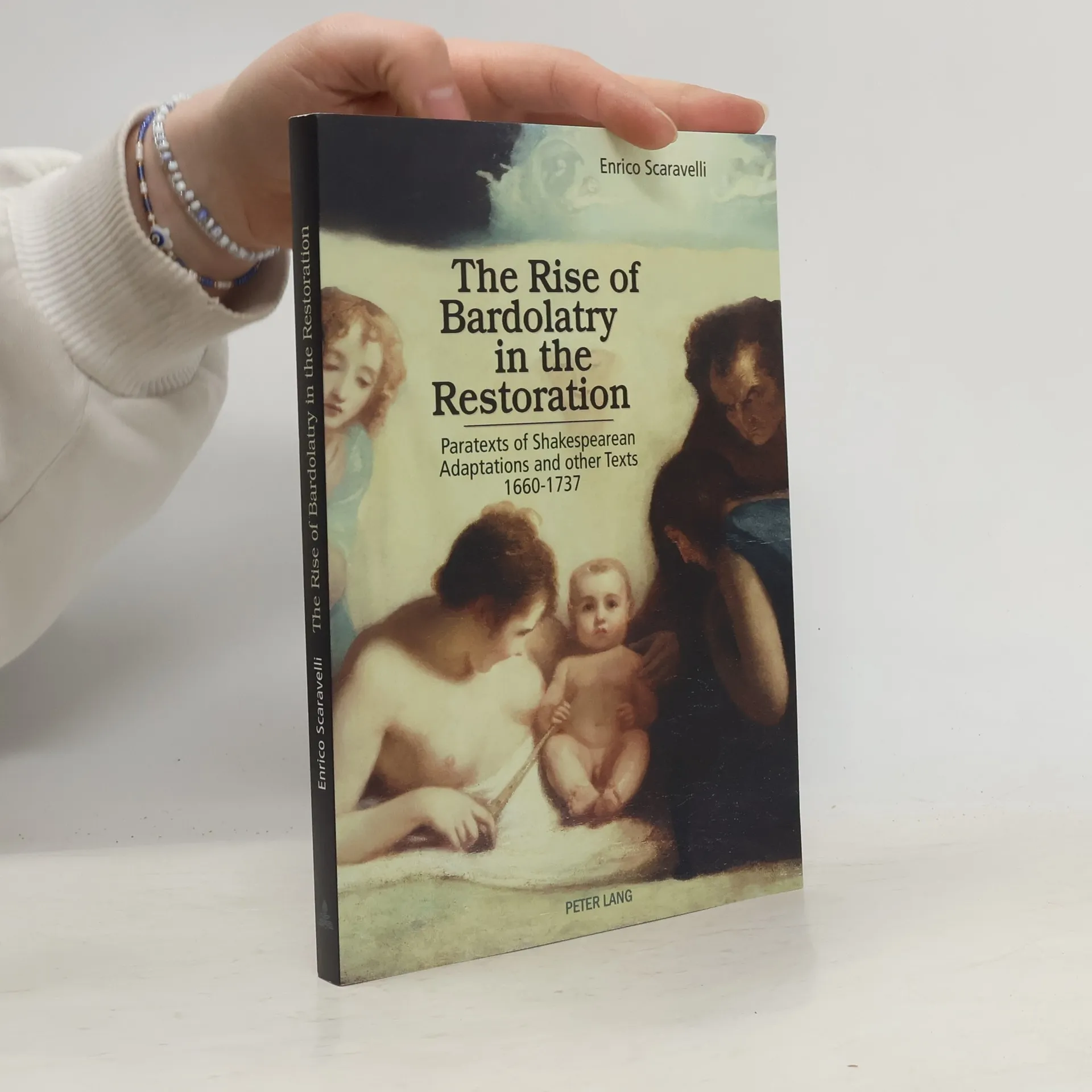
The Rise of Bardolatry in the Restoration
Paratexts of Shakespearean Adaptations and Other Texts 1660–1737
Autorzy
Ocena książki
Parametry
- 261 stron
- 10 godzin czytania
Więcej o książce
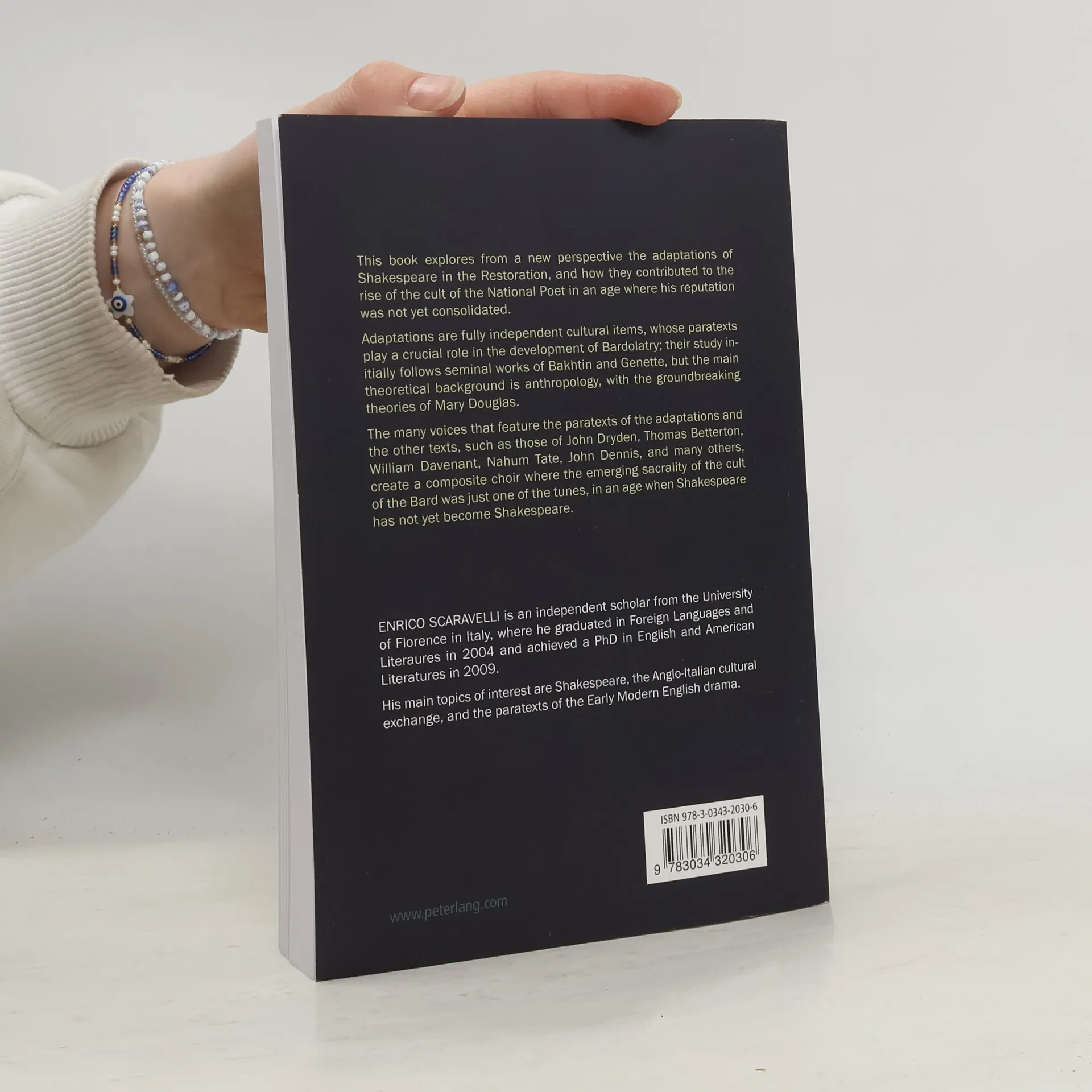
This book explores from a new perspective the adaptations of Shakespeare in the Restoration, and how they contributed to the rise of the cult of the National Poet in an age where his reputation was not yet consolidated. Adaptations are fully independent cultural items, whose paratexts play a crucial role in the development of Bardolatry; their study initially follows seminal works of Bakhtin and Genette, but the main theoretical background is anthropology, with the groundbreaking theories of Mary Douglas. The many voices that feature the paratexts of the adaptations and the other texts, such as those of John Dryden, Thomas Betterton, William Davenant, Nahum Tate, John Dennis, and many others, create a composite choir where the emerging sacrality of the cult of the Bard was just one of the tunes, in an age when Shakespeare has not yet become Shakespeare.
Zakup książki
The Rise of Bardolatry in the Restoration, Enrico Scaravelli
- Język

- Rok wydania
- 2016
- Oprawa
- (miękka),
- Stan książki
- Bardzo dobry
- Cena
- 23 zł
Metody płatności
Brakuje nam tutaj Twojej recenzji.
- Tytuł
- The Rise of Bardolatry in the Restoration
- Podtytuł
- Paratexts of Shakespearean Adaptations and Other Texts 1660–1737
- Język
- angielski
- Autorzy
- Enrico Scaravelli
- Wydawca
- Peter Lang
- Rok wydania
- 2016
- Oprawa
- miękka
- Liczba stron
- 261
- ISBN10
- 3034320302
- ISBN13
- 9783034320306
- Seria
- Kategorie
- Tagi
- Tematy historyczne, Teatr, Wielka Brytania, Literatura angielska, Krytyka literacka, Barok, Restauracja
- Ocena
- 4 z 5
- Opis
- This book explores from a new perspective the adaptations of Shakespeare in the Restoration, and how they contributed to the rise of the cult of the National Poet in an age where his reputation was not yet consolidated. Adaptations are fully independent cultural items, whose paratexts play a crucial role in the development of Bardolatry; their study initially follows seminal works of Bakhtin and Genette, but the main theoretical background is anthropology, with the groundbreaking theories of Mary Douglas. The many voices that feature the paratexts of the adaptations and the other texts, such as those of John Dryden, Thomas Betterton, William Davenant, Nahum Tate, John Dennis, and many others, create a composite choir where the emerging sacrality of the cult of the Bard was just one of the tunes, in an age when Shakespeare has not yet become Shakespeare.