

Więcej o książce
In this interdisciplinary study, Robert Sokolowski employs phenomenology to explore Christian beliefs, focusing on the Eucharist while addressing various theological and cultural issues raised by modernity. He examines key concepts such as the understanding of God, Creation, the Incarnation, Redemption, and biblical Revelation. Sokolowski introduces "the theology of disclosures," which analyzes the structures of appearance, distinguishing it from positive and scholastic theology. He views appearances as objective disclosures rather than mere psychological events. In discussing the Eucharist, he highlights its use of quotation and its connection to the temporal dimensions of human existence, reenacting Christ's sacrifice before the eternal Father. The author also contrasts Christian belief with other religions and modern atheism, arguing that Christianity represents a unique truth of religion. He posits that the Eucharist cannot be fully understood without the context of the Christian understanding of God as eternal, Creator, and Redeemer. This comprehensive theological treatment engages with contemporary intellectual and cultural contexts, drawing on classical and modern theologians, particularly Hans Urs von Balthasar. The study significantly contributes to speculative theology and Eucharistic studies, serving as a valuable resource for theologians, philosophers, and students of Christian philosophy.
Zakup książki
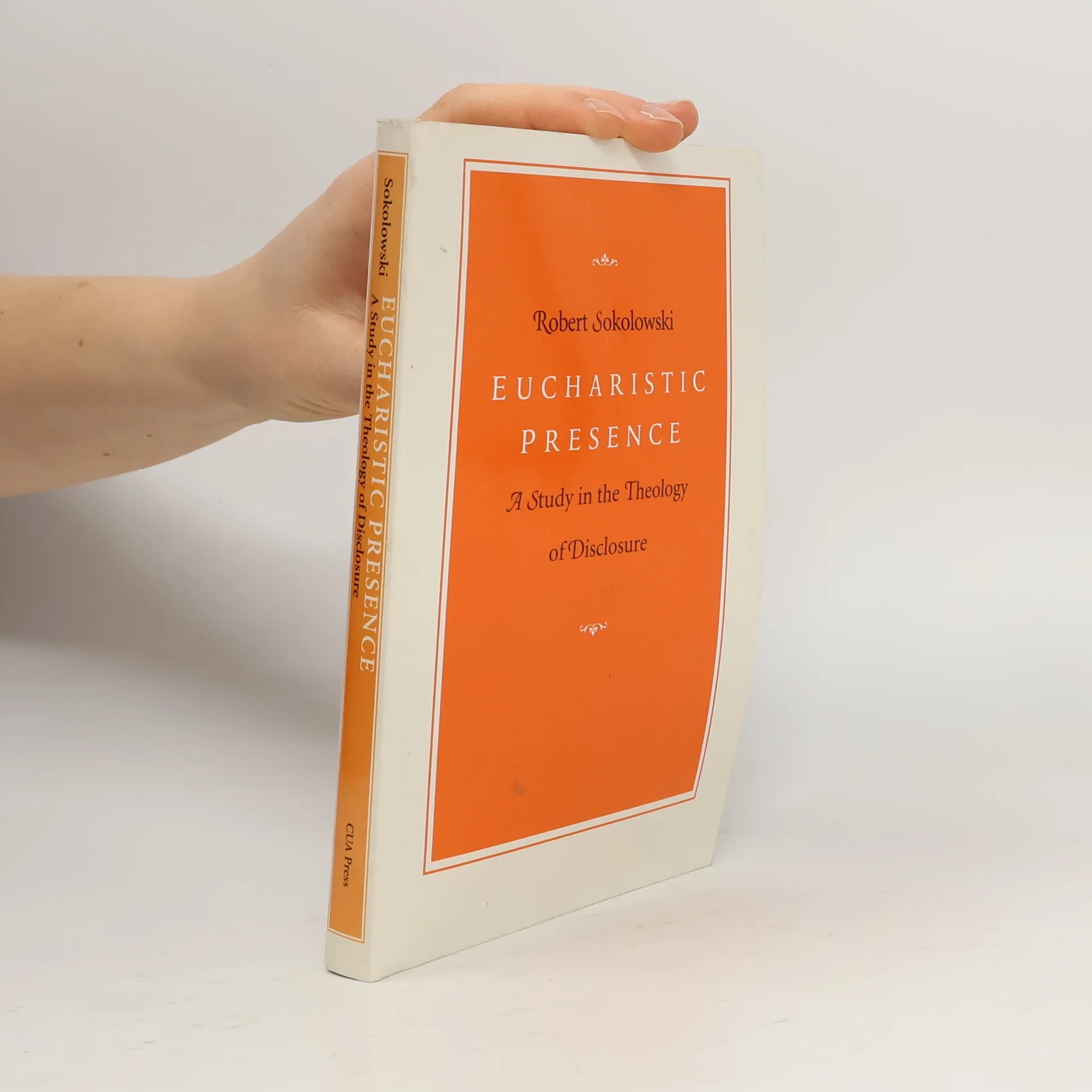
Eucharistic Presence, Robert Sokolowski
- Język

- Rok wydania
- 1994
- Oprawa
- (miękka)
Metody płatności
Brakuje nam tutaj Twojej recenzji.
- Tytuł
- Eucharistic Presence
- Podtytuł
- A Study in the Theology of Disclosure
- Język
- angielski
- Autorzy
- Robert Sokolowski
- Rok wydania
- 1994
- Oprawa
- miękka
- Liczba stron
- 247
- ISBN10
- 0813207894
- ISBN13
- 9780813207896
- Seria
- Tagi
- Tematy religijne, Tematyka filozoficzna, Tematy chrześcijańskie, USA, Teologia, Kościół katolicki, Teologia chrześcijańska, Msza
- Ocena
- 4 z 5
- Opis
- In this interdisciplinary study, Robert Sokolowski employs phenomenology to explore Christian beliefs, focusing on the Eucharist while addressing various theological and cultural issues raised by modernity. He examines key concepts such as the understanding of God, Creation, the Incarnation, Redemption, and biblical Revelation. Sokolowski introduces "the theology of disclosures," which analyzes the structures of appearance, distinguishing it from positive and scholastic theology. He views appearances as objective disclosures rather than mere psychological events. In discussing the Eucharist, he highlights its use of quotation and its connection to the temporal dimensions of human existence, reenacting Christ's sacrifice before the eternal Father. The author also contrasts Christian belief with other religions and modern atheism, arguing that Christianity represents a unique truth of religion. He posits that the Eucharist cannot be fully understood without the context of the Christian understanding of God as eternal, Creator, and Redeemer. This comprehensive theological treatment engages with contemporary intellectual and cultural contexts, drawing on classical and modern theologians, particularly Hans Urs von Balthasar. The study significantly contributes to speculative theology and Eucharistic studies, serving as a valuable resource for theologians, philosophers, and students of Christian philosophy.