

Parametry
- 287 stron
- 11 godzin czytania
Więcej o książce
Since it was introduced to the English-speaking world in 1962, Lev Vygotsky's highly original exploration of human mental development has become recognized as a classic foundational work of cognitive science. Vygotsky analyzes the relationship between words and consciousness, arguing that speech is social in its origins and that only as children develop does it become internalized verbal thought. Now Alex Kozulin has created a new edition of the original MIT Press translation by Eugenia Hanfmann and Gertrude Vakar that restores the work's complete text and adds materials that will help readers better understand Vygotsky's meaning and intentions. Kozulin has also contributed an introductory essay that offers new insight into the author's life, intellectual milieu, and research methods.
Zakup książki
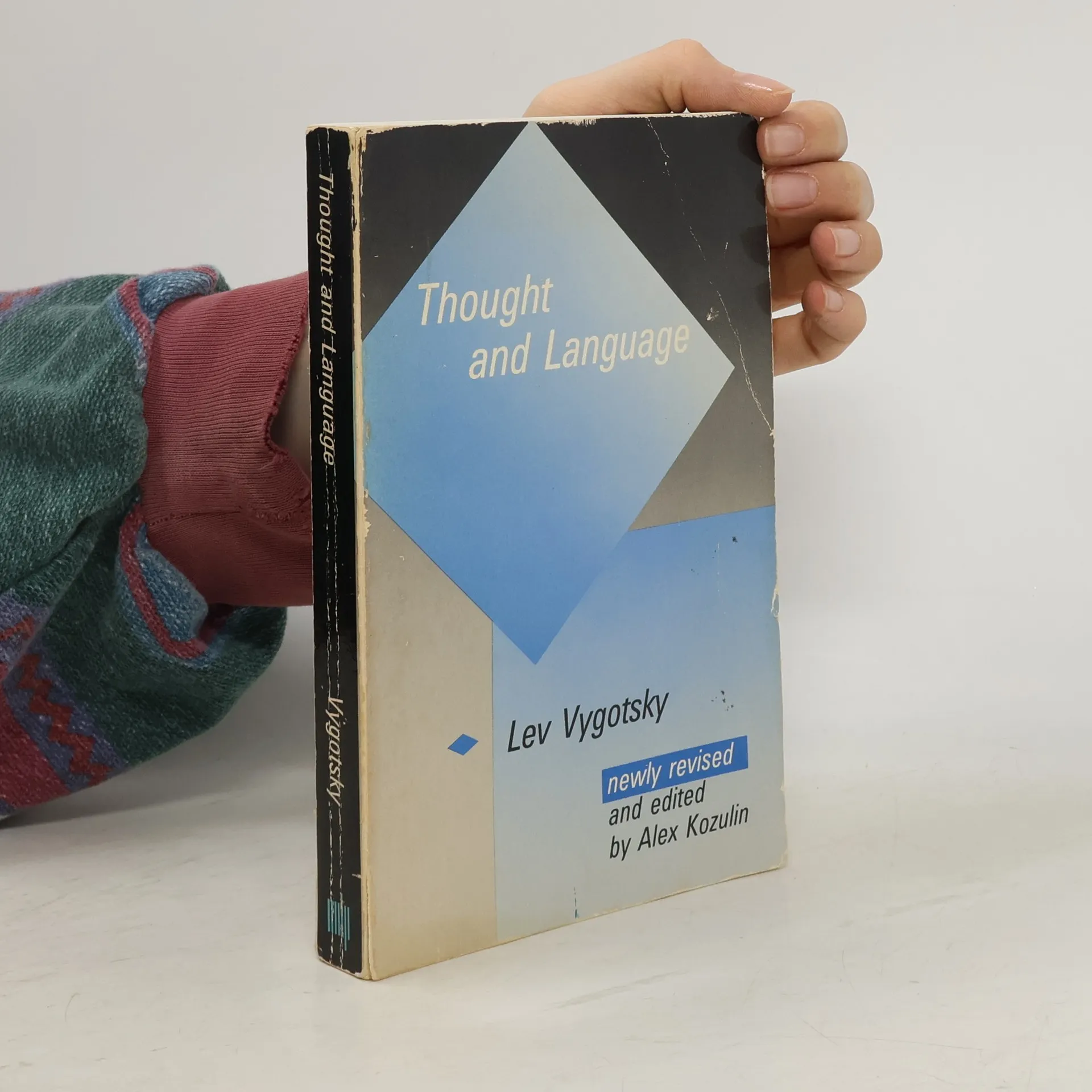
Thought and Language: Newly Revised and Edited by Alex Kozulin, Lev Semyonovich Vygotsky, Alex Kozulin
- Język

- Rok wydania
- 1984
- Oprawa
- (twarda)
Metody płatności
Brakuje nam tutaj Twojej recenzji.
- Tytuł
- Thought and Language: Newly Revised and Edited by Alex Kozulin
- Język
- angielski
- Autorzy
- Lev Semyonovich Vygotsky, Alex Kozulin
- Wydawca
- MIT Press
- Rok wydania
- 1984
- Oprawa
- twarda
- Liczba stron
- 287
- ISBN10
- 0262220296
- ISBN13
- 9780262220293
- Seria
- Kategorie
- Tagi
- Tematyka psychologiczna, Tematyka filozoficzna, Nauka, Edukacja & Szkolnictwo, Lingwistyka, Psychologia dziecięca, Psycholingwistyka
- Ocena
- 3,6 z 5
- Opis
- Since it was introduced to the English-speaking world in 1962, Lev Vygotsky's highly original exploration of human mental development has become recognized as a classic foundational work of cognitive science. Vygotsky analyzes the relationship between words and consciousness, arguing that speech is social in its origins and that only as children develop does it become internalized verbal thought. Now Alex Kozulin has created a new edition of the original MIT Press translation by Eugenia Hanfmann and Gertrude Vakar that restores the work's complete text and adds materials that will help readers better understand Vygotsky's meaning and intentions. Kozulin has also contributed an introductory essay that offers new insight into the author's life, intellectual milieu, and research methods.