

Parametry
- 404 strony
- 15 godzin czytania
Więcej o książce
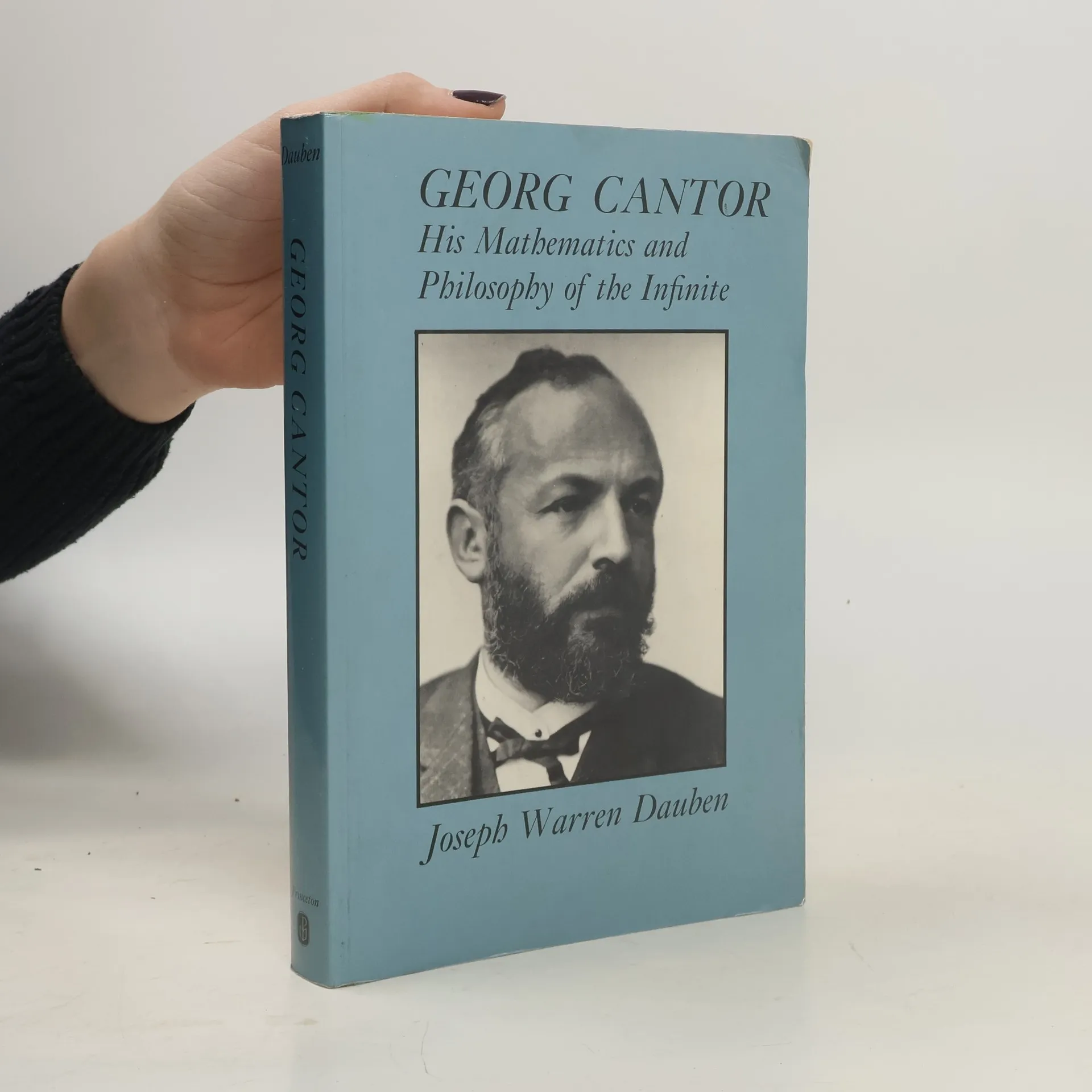
One of the greatest revolutions in mathematics occurred when Georg Cantor (1845-1918) promulgated his theory of transfinite sets. This revolution is the subject of Joseph Dauben's important studythe most thorough yet writtenof the philosopher and mathematician who was once called a "corrupter of youth" for an innovation that is now a vital component of elementary school curricula. Set theory has been widely adopted in mathematics and philosophy, but the controversy surrounding it at the turn of the century remains of great interest. Cantor's own faith in his theory was partly theological. His religious beliefs led him to expect paradoxes in any concept of the infinite, and he always retained his belief in the utter veracity of transfinite set theory. Later in his life, he was troubled by recurring attacks of severe depression. Dauben shows that these played an integral part in his understanding and defense of set theory.
Zakup książki
Georg Cantor, Joseph Warren Dauben
- Język

- Rok wydania
- 1990
- Oprawa
- (miękka)
Metody płatności
Brakuje nam tutaj Twojej recenzji.
- Tytuł
- Georg Cantor
- Podtytuł
- His Mathematics and Philosophy of the Infinite
- Język
- angielski
- Autorzy
- Joseph Warren Dauben
- Wydawca
- Princeton University Press
- Rok wydania
- 1990
- Oprawa
- miękka
- Liczba stron
- 404
- ISBN10
- 0691024472
- ISBN13
- 9780691024479
- Seria
- Kategorie
- Tagi
- Tematy historyczne, Tematyka filozoficzna, Nauka, Historia nauki, Historia nauk przyrodniczych, Historia matematyki, Teoria Zbiorów
- Ocena
- 4,25 z 5
- Opis
- One of the greatest revolutions in mathematics occurred when Georg Cantor (1845-1918) promulgated his theory of transfinite sets. This revolution is the subject of Joseph Dauben's important studythe most thorough yet writtenof the philosopher and mathematician who was once called a "corrupter of youth" for an innovation that is now a vital component of elementary school curricula. Set theory has been widely adopted in mathematics and philosophy, but the controversy surrounding it at the turn of the century remains of great interest. Cantor's own faith in his theory was partly theological. His religious beliefs led him to expect paradoxes in any concept of the infinite, and he always retained his belief in the utter veracity of transfinite set theory. Later in his life, he was troubled by recurring attacks of severe depression. Dauben shows that these played an integral part in his understanding and defense of set theory.