

Więcej o książce
In a time where the Internet and online retailing play a proliferating role in the world-wide economy, it is of major concern to understand e-commerce's advantages and pitfalls. Only then retailers and manufacturers can act effectively in this extremely competitive market. In this context interactive decision aids, or so called smart agents, are becoming more and more important. While it is known that their key advantage lies in offering various levels of interac tivity with which information can be tailored to each consumer's idiosyncratic needs, little is known about its particular advantages for consumers, retailers, or manufacturer when com pared to the alternative of offline shopping. Nina Maiar's work targets exactly this shortcoming. To be more precise, she deals with one of the currently most feasible interactive decision aids in order to show its usefulness for dif ferent product categories and effects on all actors in the market. Based on profound findings from research on constructive consumer preferences and economics of information, Nina Maiar analyses the consequences in an experimental simulation and demonstrates the deci sion aid's effectiveness and boundaries."
Zakup książki
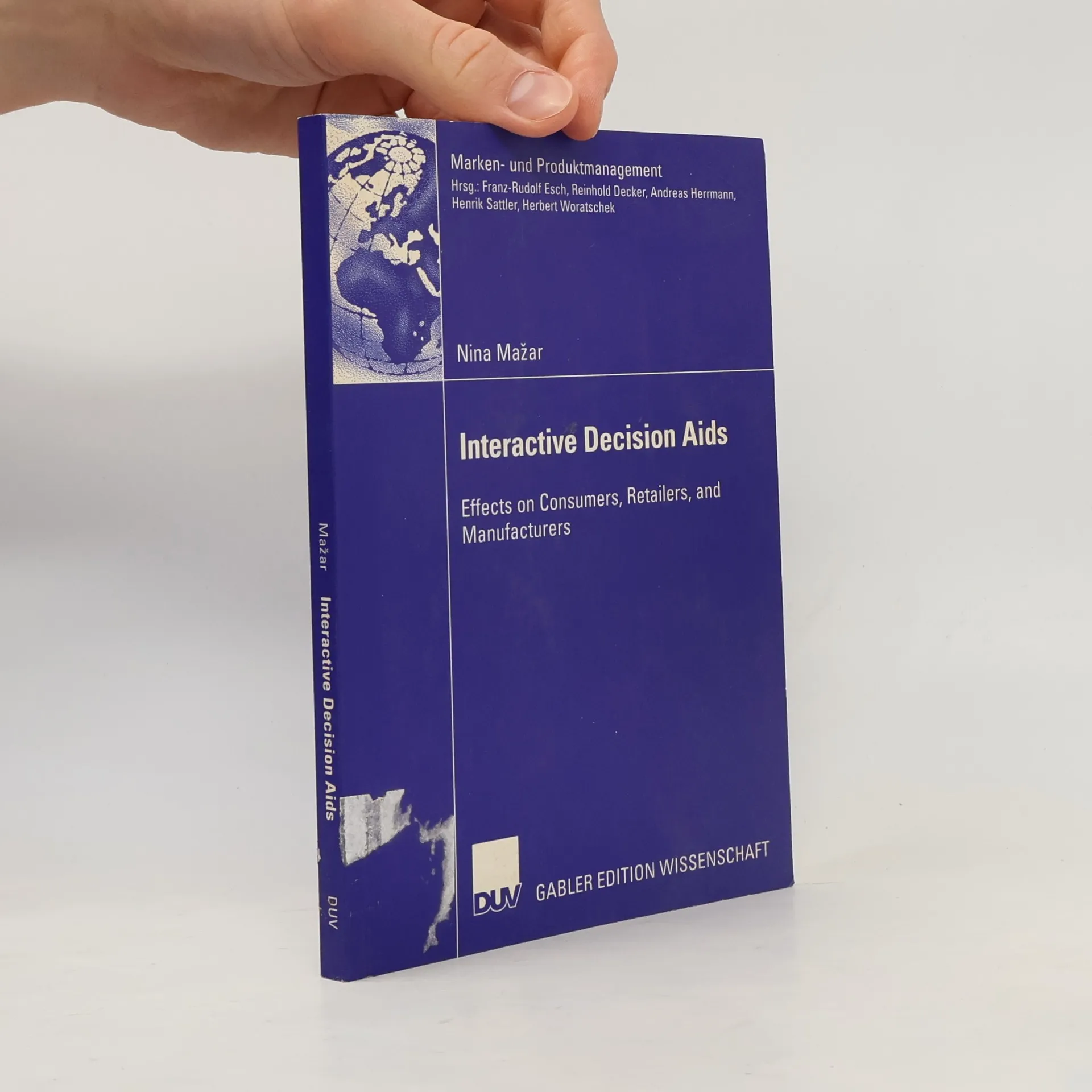
Interactive Decision Aids, Nina Mazar
- Język

- Rok wydania
- 2003
- Oprawa
- (miękka)
Metody płatności
Nikt jeszcze nie ocenił.
- Tytuł
- Interactive Decision Aids
- Podtytuł
- Effects on Consumers, Retailers, and Manufacturers
- Język
- angielski
- Autorzy
- Nina Mazar
- Wydawca
- Deutscher Universitätsverlag
- Rok wydania
- 2003
- Oprawa
- miękka
- Liczba stron
- 156
- ISBN10
- 3824480204
- ISBN13
- 9783824480203
- Seria
- Kategorie
- Opis
- In a time where the Internet and online retailing play a proliferating role in the world-wide economy, it is of major concern to understand e-commerce's advantages and pitfalls. Only then retailers and manufacturers can act effectively in this extremely competitive market. In this context interactive decision aids, or so called smart agents, are becoming more and more important. While it is known that their key advantage lies in offering various levels of interac tivity with which information can be tailored to each consumer's idiosyncratic needs, little is known about its particular advantages for consumers, retailers, or manufacturer when com pared to the alternative of offline shopping. Nina Maiar's work targets exactly this shortcoming. To be more precise, she deals with one of the currently most feasible interactive decision aids in order to show its usefulness for dif ferent product categories and effects on all actors in the market. Based on profound findings from research on constructive consumer preferences and economics of information, Nina Maiar analyses the consequences in an experimental simulation and demonstrates the deci sion aid's effectiveness and boundaries."