

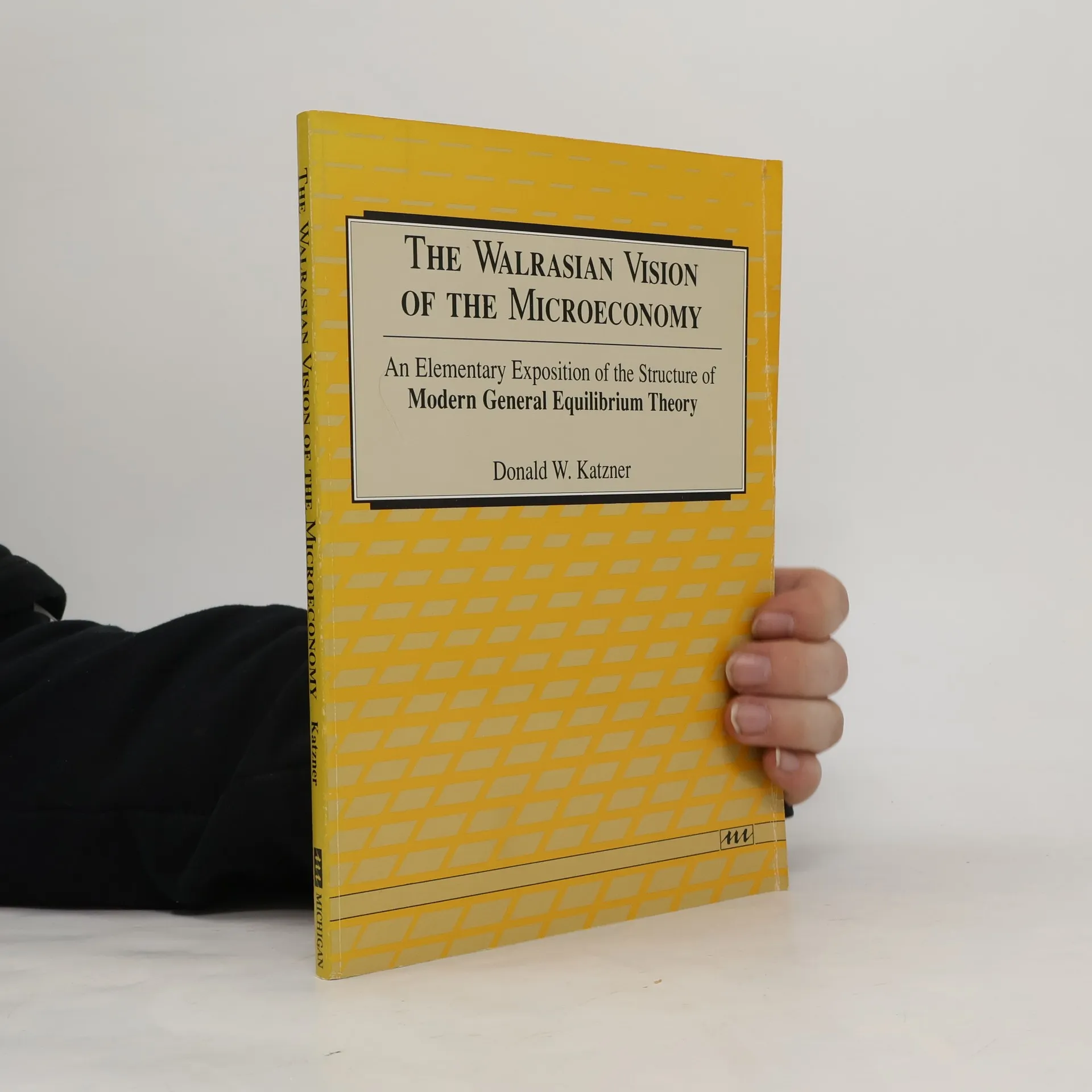

The Walrasian Vision of the Microeconomy
An Elementary Exposition of the Structure of Modern General Equilibrium Theory
Autorzy
Ocena książki
Więcej o książce
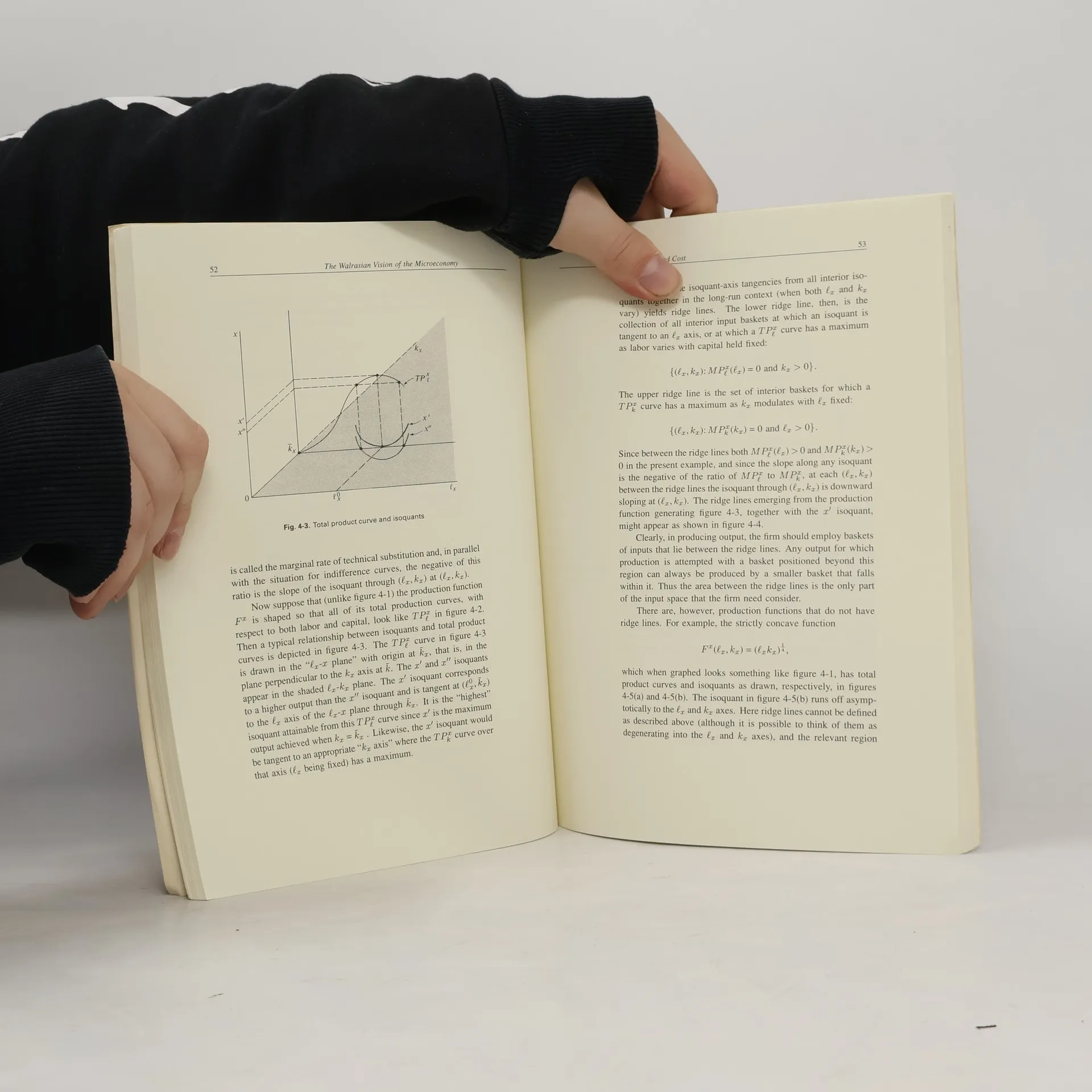
The Walrasian Vision of the Microeconomy articulates the traditional vision that is conjured up in the minds of most contemporary economists as they contemplate the microeconomy. It does so by setting out a very simple general-equilibrium model containing 1 produced consumer good, 1 produced capital good, 2 factors, 2 consumers, and 2 firms. Most of the basic theoretical ingredients of perfect competition taught in microeconomic theory courses are geometrically developed in this market equilibrium, the derivation of consumer demand for goods and supply of factors from constrained utility maximization, the relation between cost and production functions, the derivation of firm output supply and input demand from profit maximization, and the connections between competitive equilibrium, Pareto optimality, and welfare maximization. Also included is an elementary geometric proof of the existence and uniqueness of competitive equilibrium. The underlying premise is that these elements are all components of a larger picture and, as a result, fit together into a unified whole. The book is ideally suited to accompany the fuller and more detailed expositions of standard microeconomic theory texts.
Zakup książki
The Walrasian Vision of the Microeconomy, Donald W Katzner
- Język

- Rok wydania
- 1989
- Oprawa
- (miękka)
Metody płatności
Brakuje nam tutaj Twojej recenzji.
- Tytuł
- The Walrasian Vision of the Microeconomy
- Podtytuł
- An Elementary Exposition of the Structure of Modern General Equilibrium Theory
- Język
- angielski
- Autorzy
- Donald W Katzner
- Wydawca
- University of Michigan Press
- Rok wydania
- 1989
- Oprawa
- miękka
- Liczba stron
- 120
- ISBN10
- 0472064096
- ISBN13
- 9780472064090
- Seria
- Tagi
- Biznes
- Ocena
- 2 z 5
- Opis
- The Walrasian Vision of the Microeconomy articulates the traditional vision that is conjured up in the minds of most contemporary economists as they contemplate the microeconomy. It does so by setting out a very simple general-equilibrium model containing 1 produced consumer good, 1 produced capital good, 2 factors, 2 consumers, and 2 firms. Most of the basic theoretical ingredients of perfect competition taught in microeconomic theory courses are geometrically developed in this market equilibrium, the derivation of consumer demand for goods and supply of factors from constrained utility maximization, the relation between cost and production functions, the derivation of firm output supply and input demand from profit maximization, and the connections between competitive equilibrium, Pareto optimality, and welfare maximization. Also included is an elementary geometric proof of the existence and uniqueness of competitive equilibrium. The underlying premise is that these elements are all components of a larger picture and, as a result, fit together into a unified whole. The book is ideally suited to accompany the fuller and more detailed expositions of standard microeconomic theory texts.