

Więcej o książce
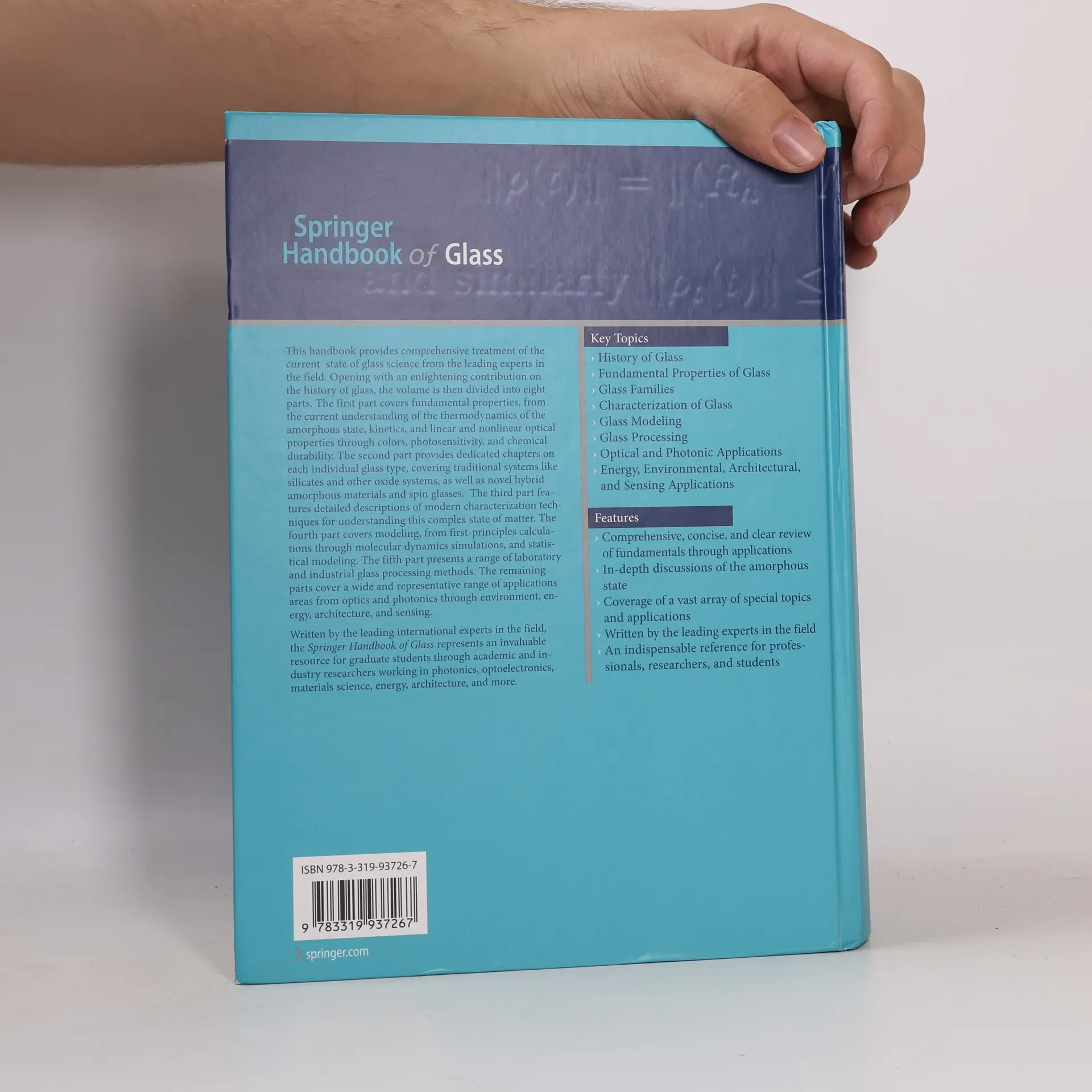
This handbook offers a thorough exploration of glass science, authored by leading experts. It begins with an insightful overview of glass history and is organized into eight parts. The first part addresses fundamental properties, including thermodynamics of the amorphous state, kinetics, and both linear and nonlinear optical properties, as well as colors, photosensitivity, and chemical durability. The second part focuses on individual glass types, detailing traditional silicates and oxide systems alongside innovative hybrid amorphous materials and spin glasses. The third part describes modern characterization techniques essential for understanding this complex material. The fourth part delves into modeling approaches, from first-principles calculations to molecular dynamics simulations and statistical modeling. The fifth part presents various laboratory and industrial glass processing methods. The final sections discuss a diverse array of applications, spanning optics, photonics, environmental science, energy, architecture, and sensing. This comprehensive resource is invaluable for graduate students and researchers in photonics, optoelectronics, materials science, and related fields.
Zakup książki
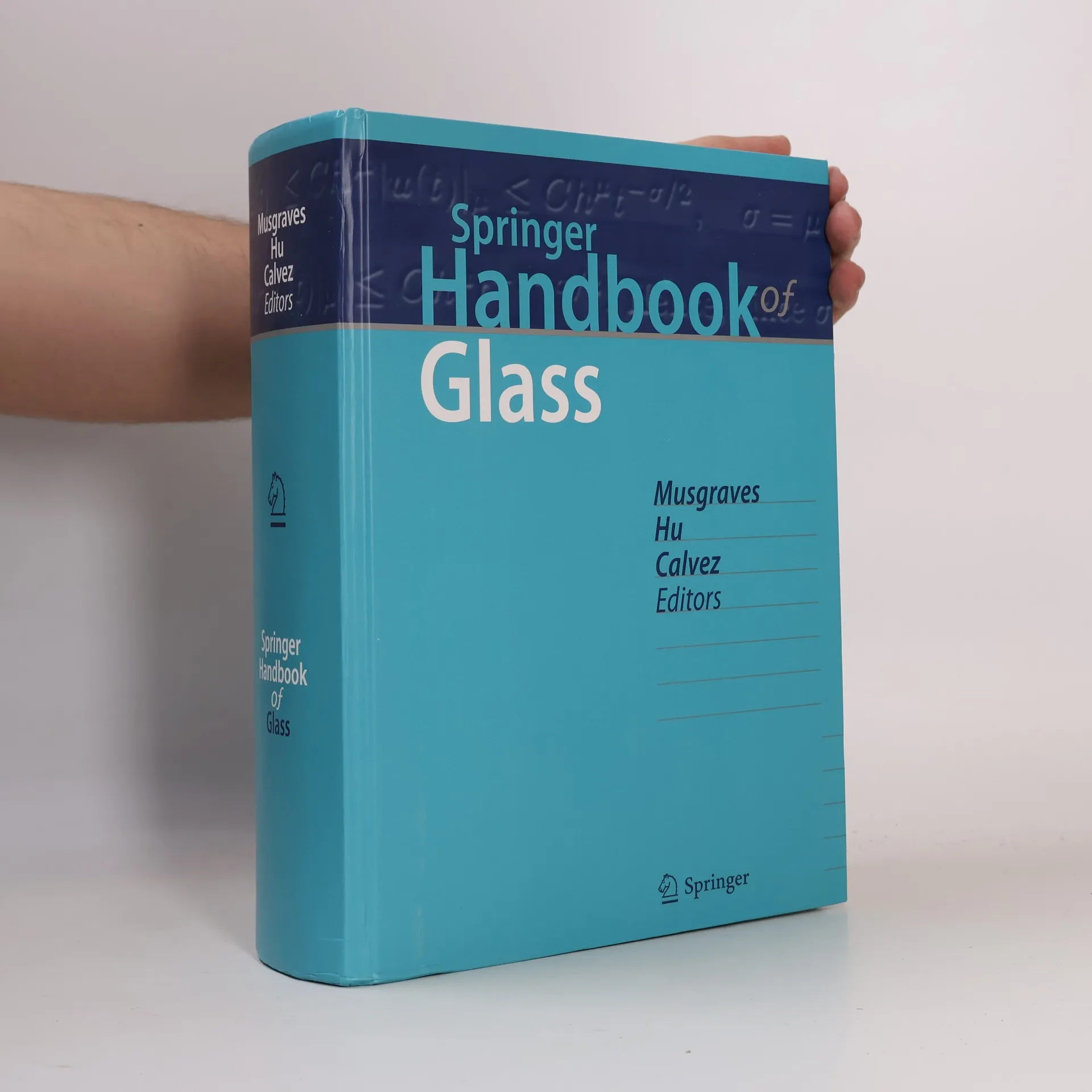
Springer Handbooks: Springer Handbook of Glass, J. David Musgraves, Laurent Calvez, Juejun Hu
- Język

- Rok wydania
- 2019
- Oprawa
- (twarda)
Metody płatności
Brakuje nam tutaj Twojej recenzji.
- Tytuł
- Springer Handbooks: Springer Handbook of Glass
- Język
- angielski
- Autorzy
- J. David Musgraves, Laurent Calvez, Juejun Hu
- Wydawca
- Springer
- Rok wydania
- 2019
- Oprawa
- twarda
- Liczba stron
- 1877
- ISBN10
- 331993726X
- ISBN13
- 9783319937267
- Seria
- Kategorie
- Tagi
- Nauki przyrodnicze, Nauka, Technologia, Szwajcaria, Inżynieria, Ceramika, Chemia nieorganiczna, Lasery
- Ocena
- 5 z 5
- Opis
- This handbook offers a thorough exploration of glass science, authored by leading experts. It begins with an insightful overview of glass history and is organized into eight parts. The first part addresses fundamental properties, including thermodynamics of the amorphous state, kinetics, and both linear and nonlinear optical properties, as well as colors, photosensitivity, and chemical durability. The second part focuses on individual glass types, detailing traditional silicates and oxide systems alongside innovative hybrid amorphous materials and spin glasses. The third part describes modern characterization techniques essential for understanding this complex material. The fourth part delves into modeling approaches, from first-principles calculations to molecular dynamics simulations and statistical modeling. The fifth part presents various laboratory and industrial glass processing methods. The final sections discuss a diverse array of applications, spanning optics, photonics, environmental science, energy, architecture, and sensing. This comprehensive resource is invaluable for graduate students and researchers in photonics, optoelectronics, materials science, and related fields.