

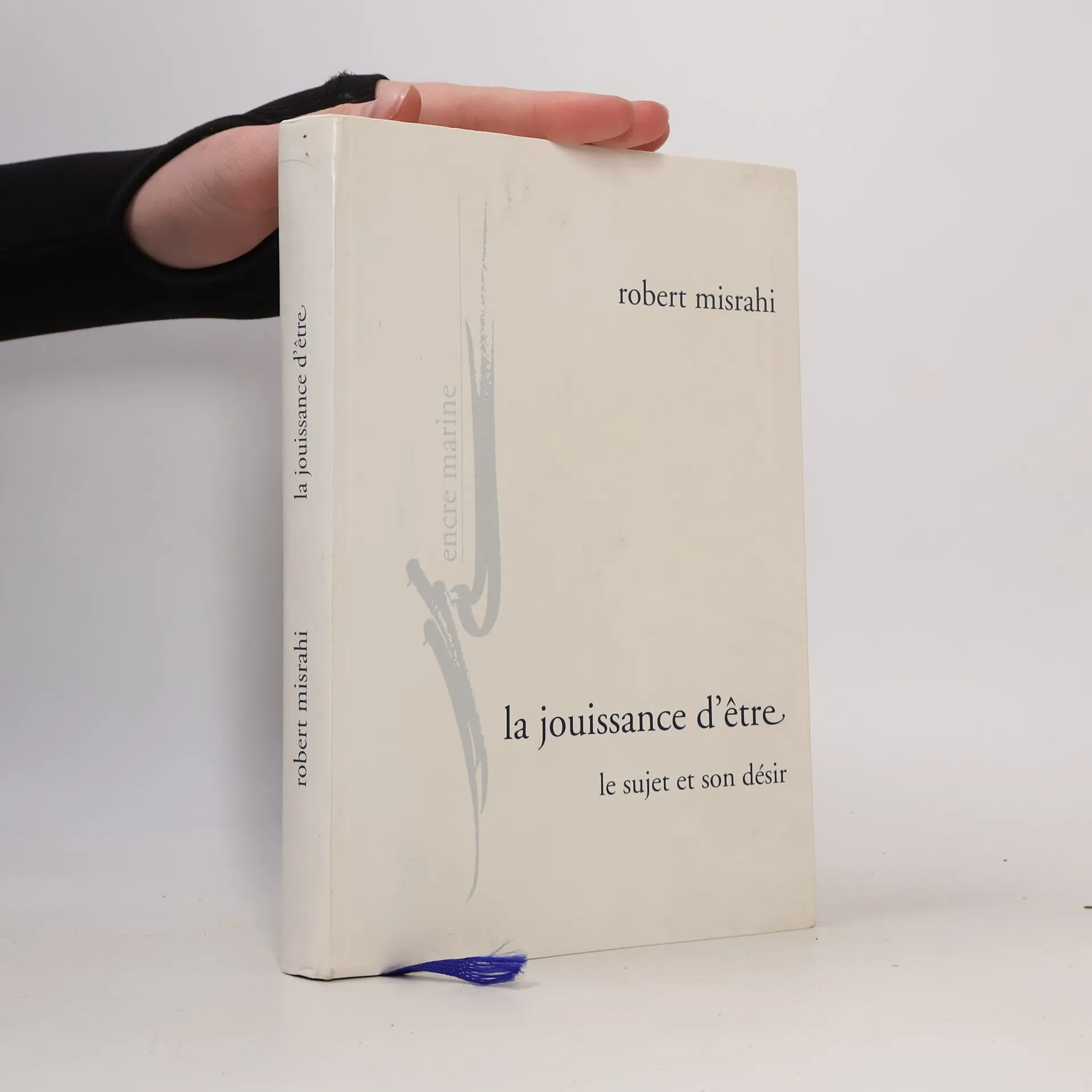
Encre Marine: La jouissance d'être
Le sujet et son désir
Autorzy
Więcej o książce
The author aims to develop a theory of the subject that encompasses both desire and reflexivity. The chosen method is integral phenomenology, which is uniquely suited to address the complexity of the subject's constitutive power in terms of both its qualitative aspects of existence and desire, as well as its cognitive dimensions of reflection and reason. This phenomenology unfolds into a philosophical anthropology that respects the subject's freedom while being attentive to its existential and reflexive movements. It reveals the subject as an act of enjoying being, where joy and pleasure serve as both the origin and purpose of desirous existence and constitutive reflection. The subject's identity and justification stem from this enjoyment of being and existence. Despite their prevalence, misfortune and tragedy are viewed as distortions of human existence. In this theory of the Desire-subject, eudemonistic ethics finds its foundation, with joy serving as its condition of possibility.
Zakup książki
Encre Marine: La jouissance d'être, Robert Misrahi
- Język

- Rok wydania
- 2009
- Oprawa
- (twarda)
Metody płatności
Nikt jeszcze nie ocenił.
- Tytuł
- Encre Marine: La jouissance d'être
- Podtytuł
- Le sujet et son désir
- Język
- francuski
- Autorzy
- Robert Misrahi
- Wydawca
- Les Belles Lettres
- Rok wydania
- 2009
- Oprawa
- twarda
- Liczba stron
- 432
- ISBN10
- 2350880184
- ISBN13
- 9782350880181
- Seria
- Opis
- The author aims to develop a theory of the subject that encompasses both desire and reflexivity. The chosen method is integral phenomenology, which is uniquely suited to address the complexity of the subject's constitutive power in terms of both its qualitative aspects of existence and desire, as well as its cognitive dimensions of reflection and reason. This phenomenology unfolds into a philosophical anthropology that respects the subject's freedom while being attentive to its existential and reflexive movements. It reveals the subject as an act of enjoying being, where joy and pleasure serve as both the origin and purpose of desirous existence and constitutive reflection. The subject's identity and justification stem from this enjoyment of being and existence. Despite their prevalence, misfortune and tragedy are viewed as distortions of human existence. In this theory of the Desire-subject, eudemonistic ethics finds its foundation, with joy serving as its condition of possibility.