

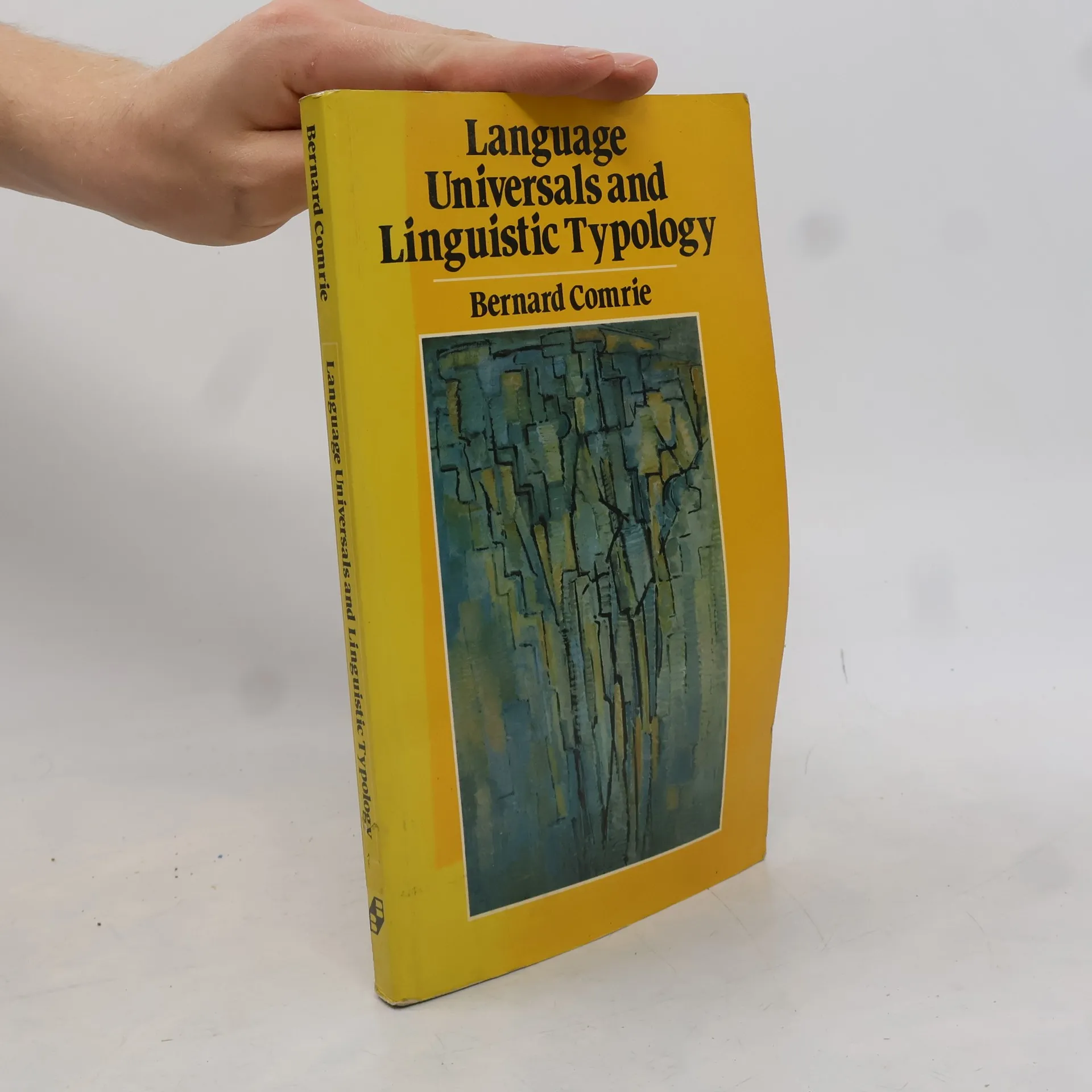
Więcej o książce
Since its first publication, Language Universals and Linguistic Typology has become established as the leading introductory account of one of the most productive areas of linguistics—the analysis, comparison, and classification of the common features and forms of the organization of languages. Adopting an approach to the subject pioneered by Greenberg and others, Bernard Comrie is particularly concerned with syntactico-semantic universals, devoting chapters to word order, case making, relative clauses, and causative constructions. His book is informed throughout by the conviction that an exemplary account of universal properties of human language cannot restrict itself to purely formal aspects, nor focus on analysis of a single language. Rather, it must also consider language use, relate formal properties to testable claims about cognition and cognitive development, and treat data from a wide range of languages. This second edition has been revised and updated to take full account of new research in universals and typology in the past decade, and more generally to consider how the approach advocated here relates to recent advances in generative grammatical theory.
Zakup książki
Language Universals and Linguistic Typology, Bernard Comrie
- Język

- Rok wydania
- 1981
- Oprawa
- (miękka)
Metody płatności
Brakuje nam tutaj Twojej recenzji.
- Tytuł
- Language Universals and Linguistic Typology
- Podtytuł
- Syntax and Morphology
- Język
- angielski
- Autorzy
- Bernard Comrie
- Wydawca
- Blackwell Publishers
- Rok wydania
- 1981
- Oprawa
- miękka
- Liczba stron
- 252
- ISBN10
- 063112618X
- ISBN13
- 9780631126188
- Seria
- Kategorie
- Tagi
- Poradniki, Lingwistyka
- Ocena
- 4 z 5
- Opis
- Since its first publication, Language Universals and Linguistic Typology has become established as the leading introductory account of one of the most productive areas of linguistics—the analysis, comparison, and classification of the common features and forms of the organization of languages. Adopting an approach to the subject pioneered by Greenberg and others, Bernard Comrie is particularly concerned with syntactico-semantic universals, devoting chapters to word order, case making, relative clauses, and causative constructions. His book is informed throughout by the conviction that an exemplary account of universal properties of human language cannot restrict itself to purely formal aspects, nor focus on analysis of a single language. Rather, it must also consider language use, relate formal properties to testable claims about cognition and cognitive development, and treat data from a wide range of languages. This second edition has been revised and updated to take full account of new research in universals and typology in the past decade, and more generally to consider how the approach advocated here relates to recent advances in generative grammatical theory.