

Parametry
- 240 stron
- 9 godzin czytania
Więcej o książce
Sand and stone embody Earth’s fragmented memory, mirroring how each individual is shaped by memory and loss. Lauret Savoy, as an educator and Earth historian, learned early on that the American land did not harbor hatred. Her exploration of the continent’s past reveals the eroded paths of ancestors—free and enslaved Africans, European colonists, and Indigenous peoples. In a powerful mosaic of personal and historical inquiry, Savoy examines how the nation’s evolving history and concepts of “race” have impacted her and the land. Traveling from the San Andreas Fault to a South Carolina plantation, and from national parks to burial grounds, she confronts a painful national narrative, uncovering the often-silenced presence of the past. Through distinctive prose that captures the rhythms of language and landscapes, she intertwines stories of migration, silence, and displacement, reflecting the continent’s vastness. With a keen vision and a blend of scientific and lyrical insight, Savoy navigates fragmented histories—natural, personal, and cultural—to reveal hidden stories of place in America. "Every landscape is an accumulation," one epigraph notes, emphasizing the importance of understanding the past. Savoy courageously reconciles these terrains of memory, making sense of the land and its complex history.
Zakup książki
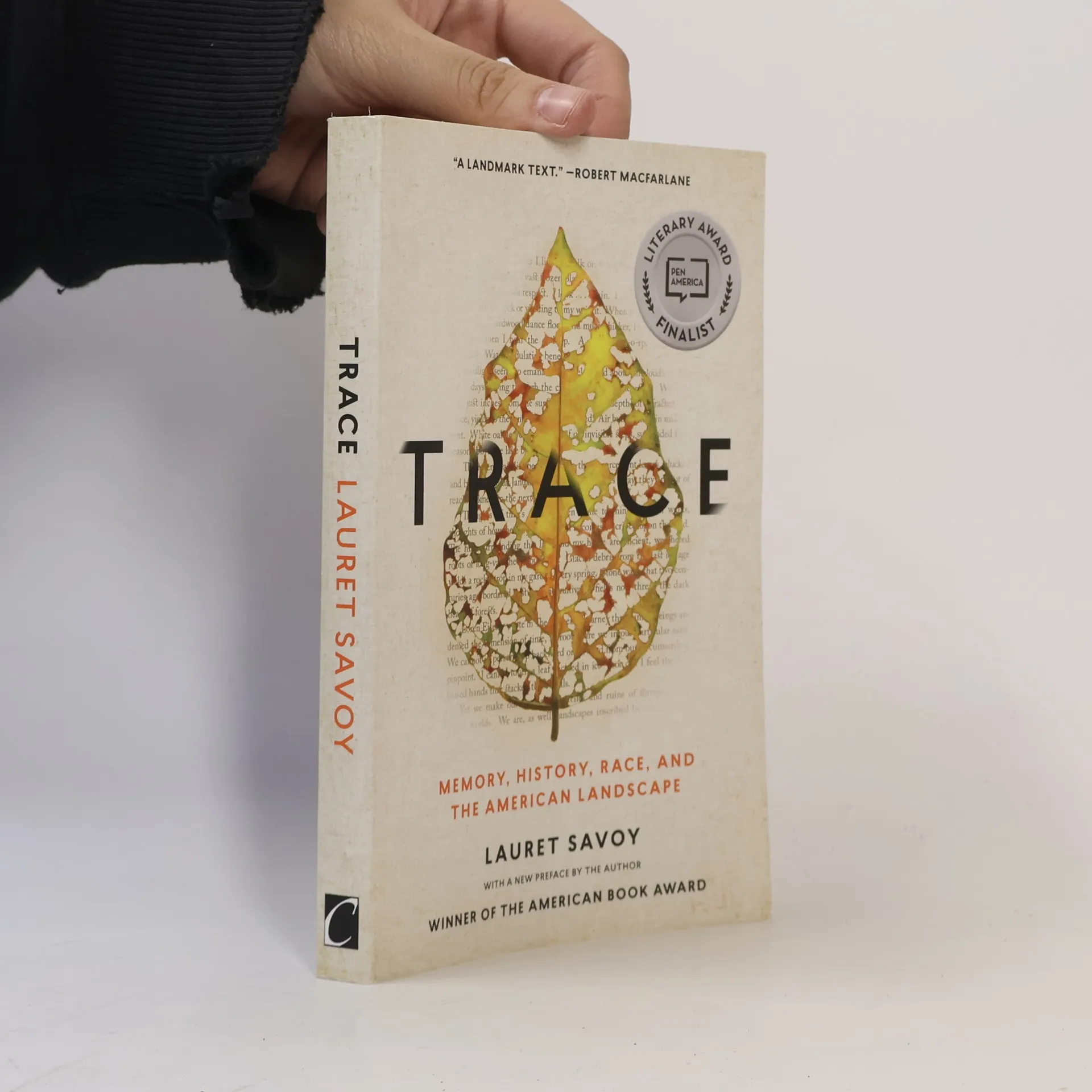
Trace: Memory, History, Race, and the American Landscape, Lauret E. Savoy
- Język

- Rok wydania
- 2015
- Oprawa
- (miękka)
Metody płatności
Nikt jeszcze nie ocenił.
- Tytuł
- Trace: Memory, History, Race, and the American Landscape
- Język
- angielski
- Autorzy
- Lauret E. Savoy
- Wydawca
- COUNTERPOINT PR
- Rok wydania
- 2015
- Oprawa
- miękka
- Liczba stron
- 240
- ISBN10
- 1619028255
- ISBN13
- 9781619028258
- Seria
- Kategorie
- Opis
- Sand and stone embody Earth’s fragmented memory, mirroring how each individual is shaped by memory and loss. Lauret Savoy, as an educator and Earth historian, learned early on that the American land did not harbor hatred. Her exploration of the continent’s past reveals the eroded paths of ancestors—free and enslaved Africans, European colonists, and Indigenous peoples. In a powerful mosaic of personal and historical inquiry, Savoy examines how the nation’s evolving history and concepts of “race” have impacted her and the land. Traveling from the San Andreas Fault to a South Carolina plantation, and from national parks to burial grounds, she confronts a painful national narrative, uncovering the often-silenced presence of the past. Through distinctive prose that captures the rhythms of language and landscapes, she intertwines stories of migration, silence, and displacement, reflecting the continent’s vastness. With a keen vision and a blend of scientific and lyrical insight, Savoy navigates fragmented histories—natural, personal, and cultural—to reveal hidden stories of place in America. "Every landscape is an accumulation," one epigraph notes, emphasizing the importance of understanding the past. Savoy courageously reconciles these terrains of memory, making sense of the land and its complex history.