

Więcej o książce
Writing a textbook is a significant endeavor, requiring nearly two years of dedicated effort. My motivation stemmed from three key sources. First, the increasing pressure from our German administration on research institutions to focus on politically mandated five-year plans diverted attention from actual research. The challenge of writing a textbook helped me maintain my integrity as a scientist and provided an escape from this pressure. Second, I aimed to understand transport processes at the solid/electrolyte interface using concepts developed for solid surfaces in vacuum. These concepts create logical links between the properties of individual atoms and larger atomic ensembles, but adapting them to the solid/electrolyte interface proved challenging. A major hurdle was the differing meanings of terms like surface tension in surface physics and electrochemistry, along with the fact that identical quantities often have different names in the two fields. I was motivated by the challenge of bridging these two worlds. Consequently, this volume distinctly addresses surfaces in vacuum and in an electrolyte side-by-side, highlighting their connections. The final source of motivation emerged during the writing process itself.
Zakup książki
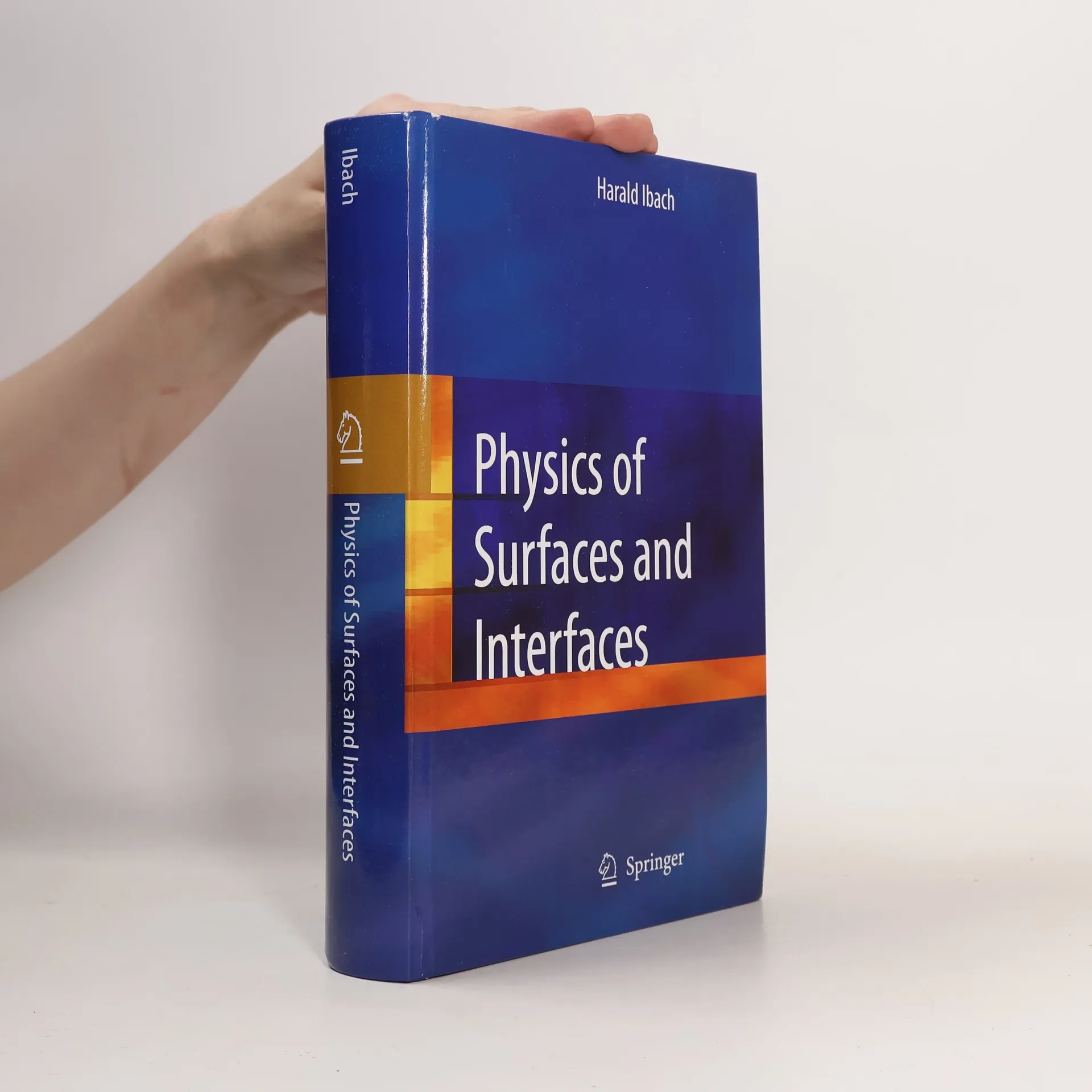
Physics of Surfaces and Interfaces, Harald Ibach
- Język

- Rok wydania
- 2006
- Oprawa
- (twarda)
Metody płatności
Nikt jeszcze nie ocenił.
- Tytuł
- Physics of Surfaces and Interfaces
- Język
- angielski
- Autorzy
- Harald Ibach
- Wydawca
- Springer
- Rok wydania
- 2006
- Oprawa
- twarda
- Liczba stron
- 646
- ISBN10
- 3540347097
- ISBN13
- 9783540347095
- Seria
- Opis
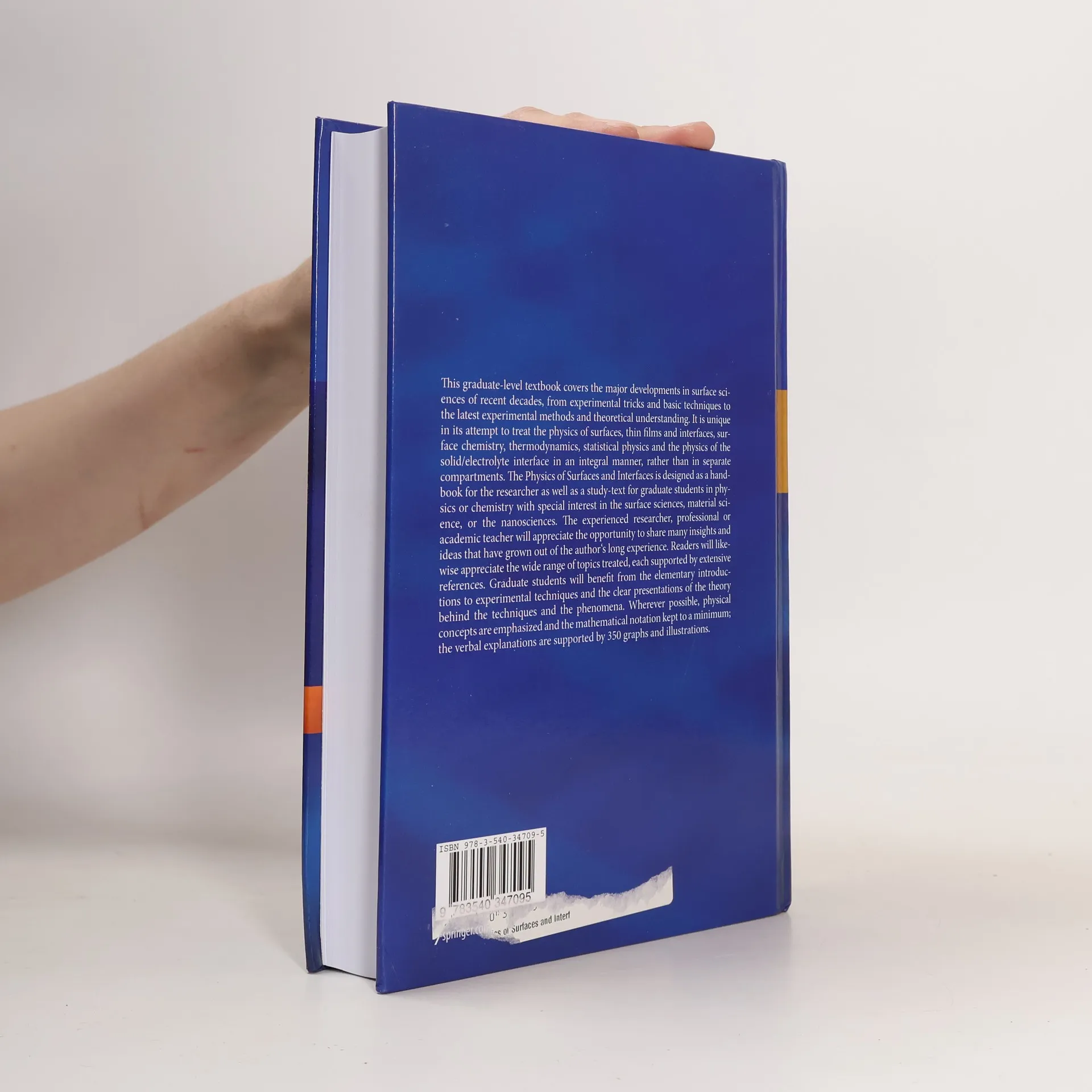
- Writing a textbook is a significant endeavor, requiring nearly two years of dedicated effort. My motivation stemmed from three key sources. First, the increasing pressure from our German administration on research institutions to focus on politically mandated five-year plans diverted attention from actual research. The challenge of writing a textbook helped me maintain my integrity as a scientist and provided an escape from this pressure. Second, I aimed to understand transport processes at the solid/electrolyte interface using concepts developed for solid surfaces in vacuum. These concepts create logical links between the properties of individual atoms and larger atomic ensembles, but adapting them to the solid/electrolyte interface proved challenging. A major hurdle was the differing meanings of terms like surface tension in surface physics and electrochemistry, along with the fact that identical quantities often have different names in the two fields. I was motivated by the challenge of bridging these two worlds. Consequently, this volume distinctly addresses surfaces in vacuum and in an electrolyte side-by-side, highlighting their connections. The final source of motivation emerged during the writing process itself.