

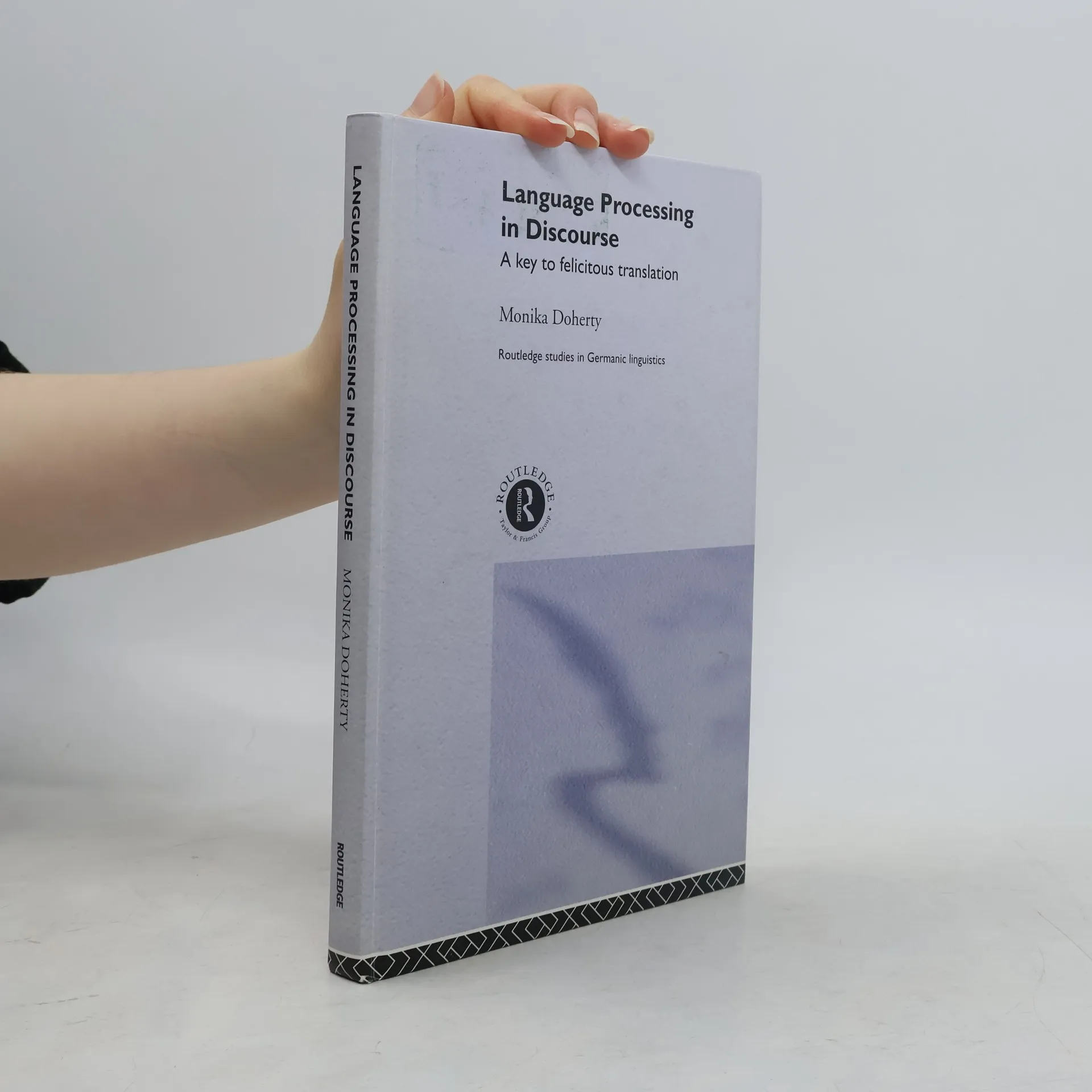
Więcej o książce
This book argues that language systems determine language use to a greater extent than is generally assumed. The author demonstrates how the typological characteristics of a language determine even the most general aspects of our stylistic preferences.Through extensive analysis of examples in German and English, the author demonstrates how analogous options of sentence structure must be surrendered in order to achieve felicitous translations. Two major aspects that determine the appropriateness of language use are language processing and discourse-dependency.Essential reading for translation scholars and linguists involved in the comparative study of English and German, this book will also be of interest to scholars of psycholinguistics and cognitive science, as well as translators and linguists more generally.
Zakup książki
Routledge Studies in Germanic Linguistics: Language Processing in Discourse, Monika Doherty
- Język

- Rok wydania
- 2002
- Oprawa
- (twarda)
Metody płatności
Nikt jeszcze nie ocenił.
- Tytuł
- Routledge Studies in Germanic Linguistics: Language Processing in Discourse
- Podtytuł
- A Key to Felicitous Translation
- Język
- angielski
- Autorzy
- Monika Doherty
- Wydawca
- Routledge
- Rok wydania
- 2002
- Oprawa
- twarda
- Liczba stron
- 208
- ISBN10
- 041528189X
- ISBN13
- 9780415281898
- Seria
- Opis
- This book argues that language systems determine language use to a greater extent than is generally assumed. The author demonstrates how the typological characteristics of a language determine even the most general aspects of our stylistic preferences.Through extensive analysis of examples in German and English, the author demonstrates how analogous options of sentence structure must be surrendered in order to achieve felicitous translations. Two major aspects that determine the appropriateness of language use are language processing and discourse-dependency.Essential reading for translation scholars and linguists involved in the comparative study of English and German, this book will also be of interest to scholars of psycholinguistics and cognitive science, as well as translators and linguists more generally.