

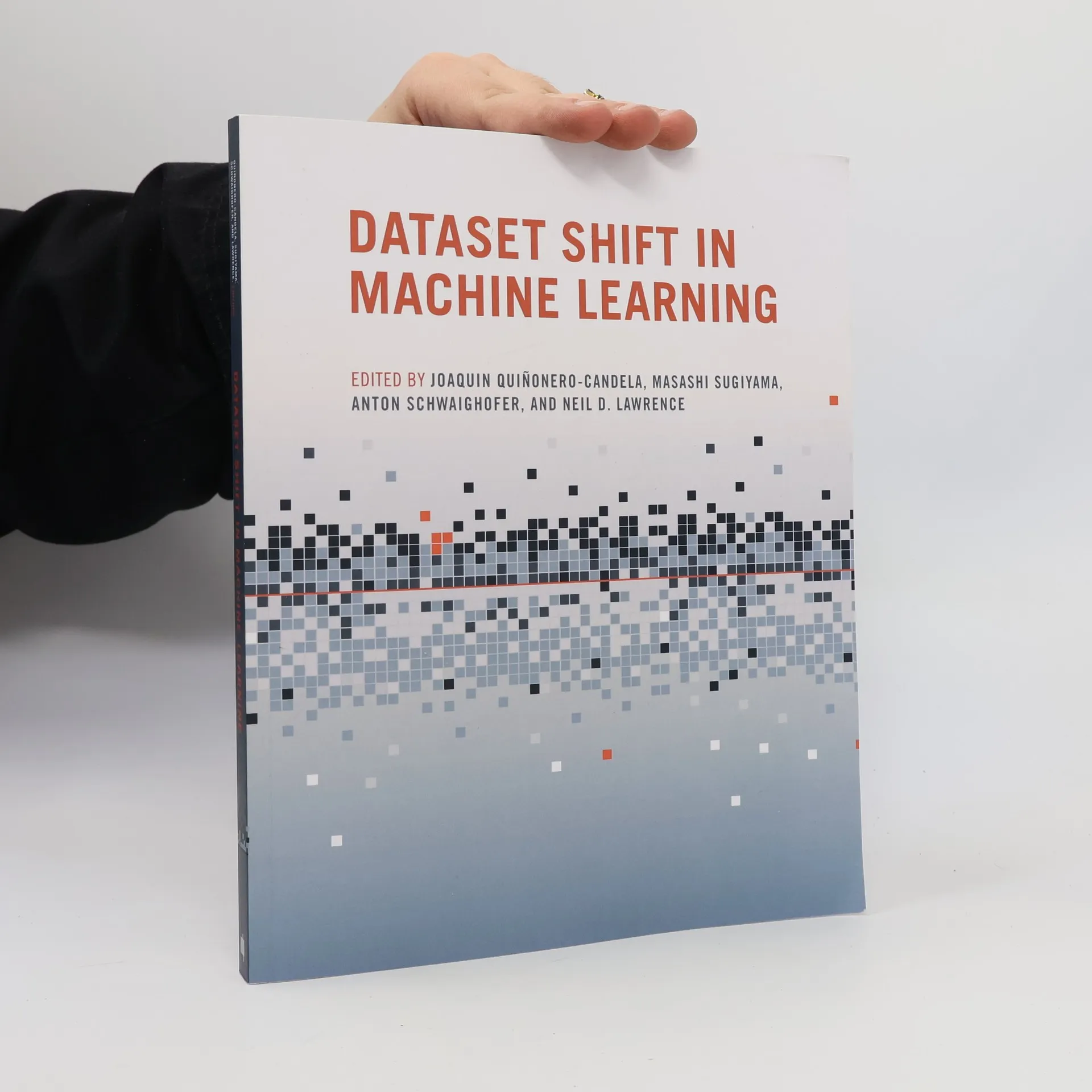


Więcej o książce
This volume provides an overview of recent efforts in the machine learning community to address dataset and covariate shift, which occur when training and test inputs and outputs have differing distributions. Dataset shift is a prevalent issue in predictive modeling, arising when the joint distribution of inputs and outputs varies between training and testing phases. Covariate shift, a specific instance of dataset shift, happens when only the input distribution changes. This problem is common in practical applications, influenced by factors such as experimental design bias and the unreliability of testing conditions during training. For example, email spam filters may struggle to identify new spam forms that differ from the training data. Despite its significance, dataset shift has historically received limited attention compared to related topics like semi-supervised and active learning. The chapters in this volume provide a mathematical and philosophical introduction to the issue, contextualize dataset shift within transfer learning, transduction, local learning, active learning, and semi-supervised learning, and present theoretical perspectives, including decision-theoretic and Bayesian views. Additionally, algorithms for addressing covariate shift are discussed.
Zakup książki
Dataset Shift in Machine Learning, Joaquin Quiñonero-Candela, Masashi Sugiyama, Anton Schwaighofer, Neil D. Lawrence
- Język

- Rok wydania
- 2022
- Oprawa
- (miękka),
- Stan książki
- Bardzo dobry
- Cena
- 24,85 zł
Metody płatności
Nikt jeszcze nie ocenił.
- Tytuł
- Dataset Shift in Machine Learning
- Język
- angielski
- Wydawca
- MIT Press
- Rok wydania
- 2022
- Oprawa
- miękka
- Liczba stron
- 245
- ISBN10
- 026254587X
- ISBN13
- 9780262545877
- Seria
- Kategorie
- Opis
- This volume provides an overview of recent efforts in the machine learning community to address dataset and covariate shift, which occur when training and test inputs and outputs have differing distributions. Dataset shift is a prevalent issue in predictive modeling, arising when the joint distribution of inputs and outputs varies between training and testing phases. Covariate shift, a specific instance of dataset shift, happens when only the input distribution changes. This problem is common in practical applications, influenced by factors such as experimental design bias and the unreliability of testing conditions during training. For example, email spam filters may struggle to identify new spam forms that differ from the training data. Despite its significance, dataset shift has historically received limited attention compared to related topics like semi-supervised and active learning. The chapters in this volume provide a mathematical and philosophical introduction to the issue, contextualize dataset shift within transfer learning, transduction, local learning, active learning, and semi-supervised learning, and present theoretical perspectives, including decision-theoretic and Bayesian views. Additionally, algorithms for addressing covariate shift are discussed.