


Więcej o książce
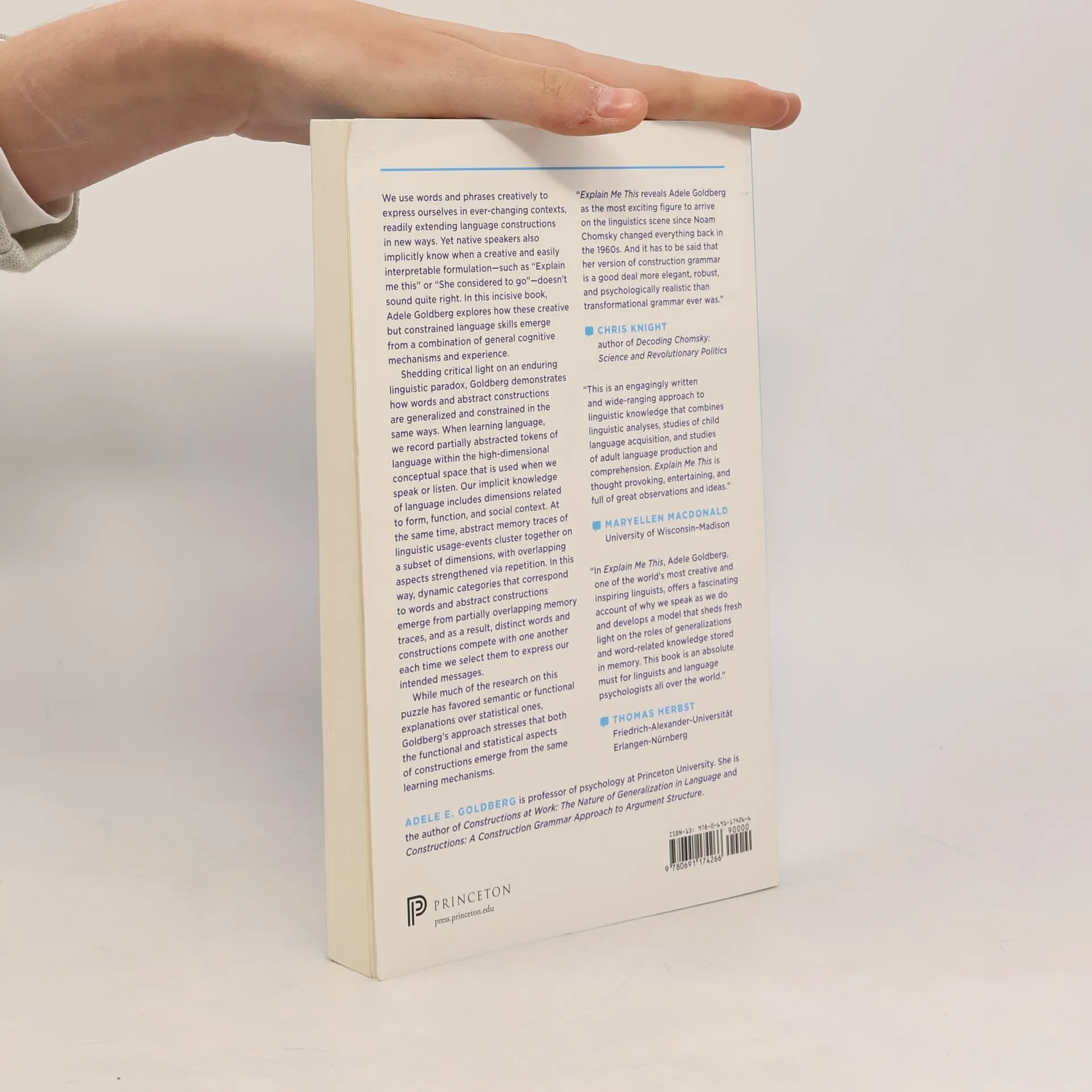
We creatively use language to express ourselves, often extending constructions in novel ways. However, native speakers instinctively recognize when certain phrases, like "Explain me this" or "She considered to go," sound off. In this incisive exploration, Adele Goldberg examines how our constrained language skills arise from a blend of cognitive mechanisms and experience. She sheds light on a linguistic paradox, illustrating how words and abstract constructions are both generalized and constrained. Language learning involves recording partially abstracted tokens within a high-dimensional conceptual space used during communication. Our implicit language knowledge encompasses form, function, and social context. Additionally, abstract memory traces of linguistic events cluster on specific dimensions, with repeated elements reinforcing overlaps. This process leads to the emergence of dynamic categories corresponding to words and constructions, which compete for selection when we convey our messages. While much research has leaned toward semantic or functional explanations, Goldberg emphasizes that both functional and statistical aspects of constructions originate from the same learning mechanisms.
Zakup książki
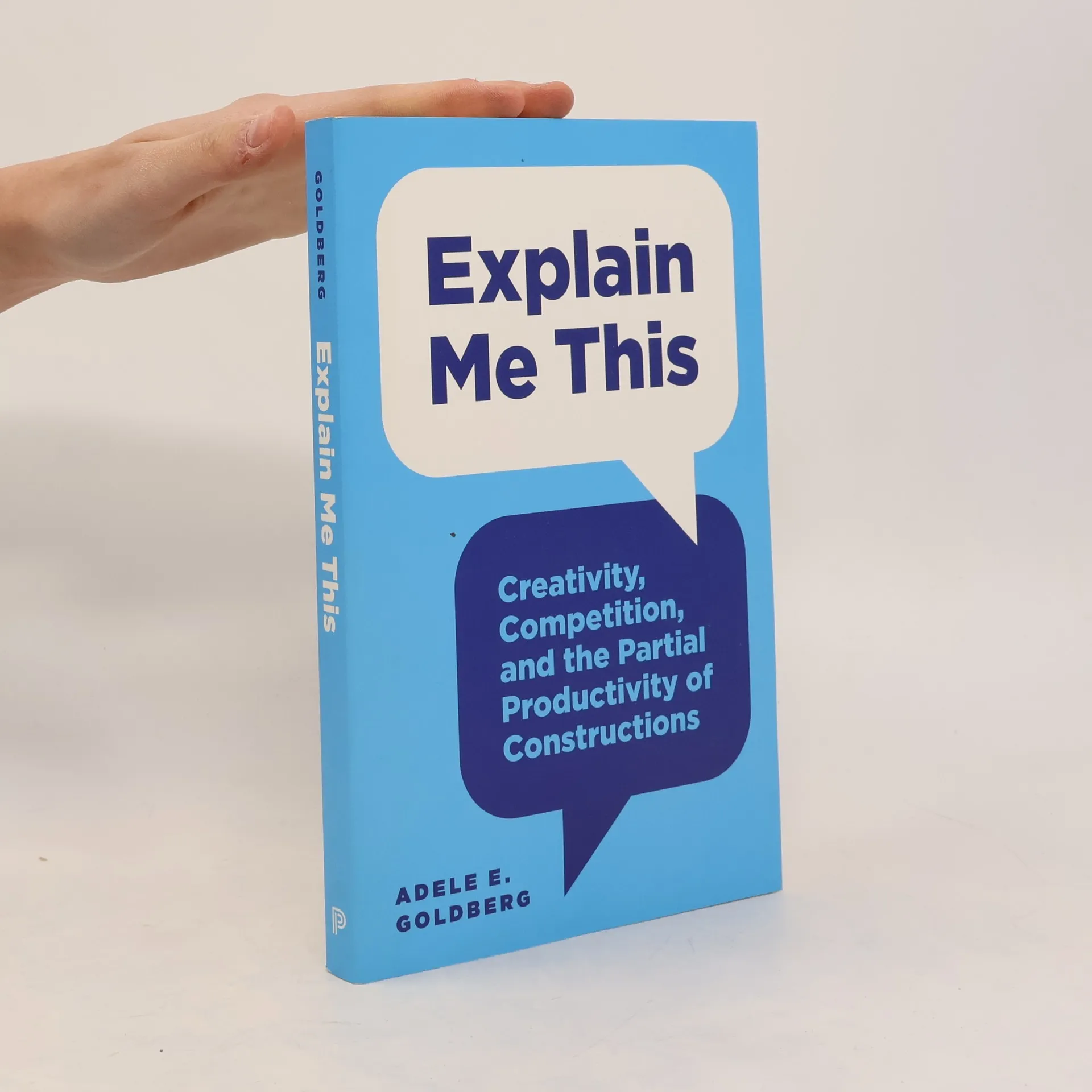
Explain Me This, Adele E. Goldberg
- Język

- Rok wydania
- 2019
- Oprawa
- (miękka)
Metody płatności
Nikt jeszcze nie ocenił.
- Tytuł
- Explain Me This
- Język
- angielski
- Autorzy
- Adele E. Goldberg
- Wydawca
- Princeton University Press
- Rok wydania
- 2019
- Oprawa
- miękka
- Liczba stron
- 216
- ISBN10
- 0691174261
- ISBN13
- 9780691174266
- Seria
- Opis
- We creatively use language to express ourselves, often extending constructions in novel ways. However, native speakers instinctively recognize when certain phrases, like "Explain me this" or "She considered to go," sound off. In this incisive exploration, Adele Goldberg examines how our constrained language skills arise from a blend of cognitive mechanisms and experience. She sheds light on a linguistic paradox, illustrating how words and abstract constructions are both generalized and constrained. Language learning involves recording partially abstracted tokens within a high-dimensional conceptual space used during communication. Our implicit language knowledge encompasses form, function, and social context. Additionally, abstract memory traces of linguistic events cluster on specific dimensions, with repeated elements reinforcing overlaps. This process leads to the emergence of dynamic categories corresponding to words and constructions, which compete for selection when we convey our messages. While much research has leaned toward semantic or functional explanations, Goldberg emphasizes that both functional and statistical aspects of constructions originate from the same learning mechanisms.