

Więcej o książce
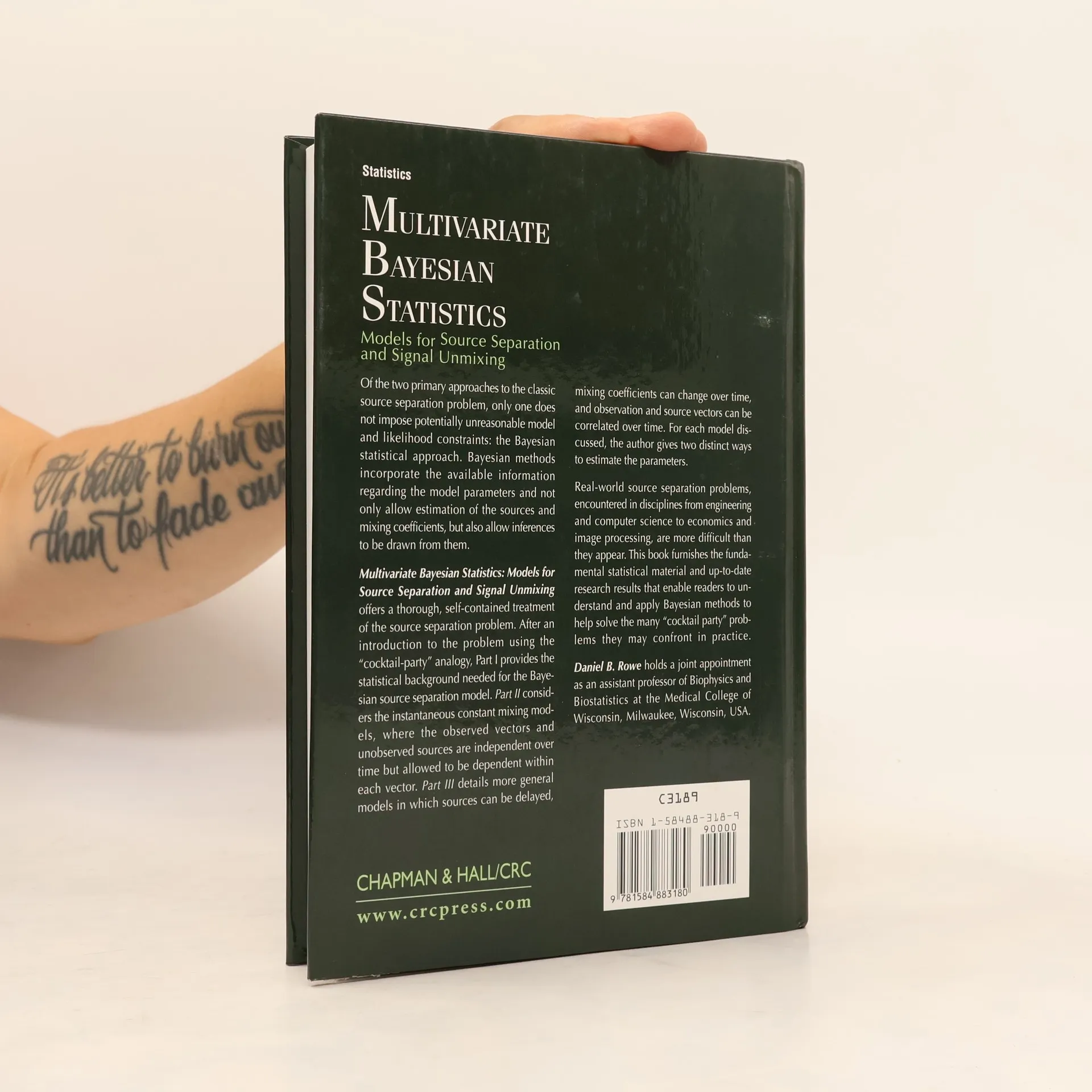
Of the two primary approaches to the classic source separation problem, only the Bayesian statistical approach avoids imposing unreasonable model and likelihood constraints. Bayesian methods leverage available information about model parameters, enabling estimation of sources and mixing coefficients while allowing for inferences. This comprehensive treatment of the source separation problem begins with an introduction using the "cocktail-party" analogy. Part I covers the necessary statistical background for the Bayesian source separation model. Part II focuses on instantaneous constant mixing models, where observed vectors and unobserved sources are independent over time but can be dependent within each vector. Part III explores more complex models, accommodating delayed sources, time-varying mixing coefficients, and temporal correlations between observation and source vectors. For each model, the author presents two distinct methods for parameter estimation. Real-world source separation challenges span various fields, including engineering, computer science, economics, and image processing, and often prove more complex than they seem. This book equips readers with essential statistical concepts and current research findings to effectively apply Bayesian methods in tackling the diverse "cocktail party" problems they may encounter.
Zakup książki
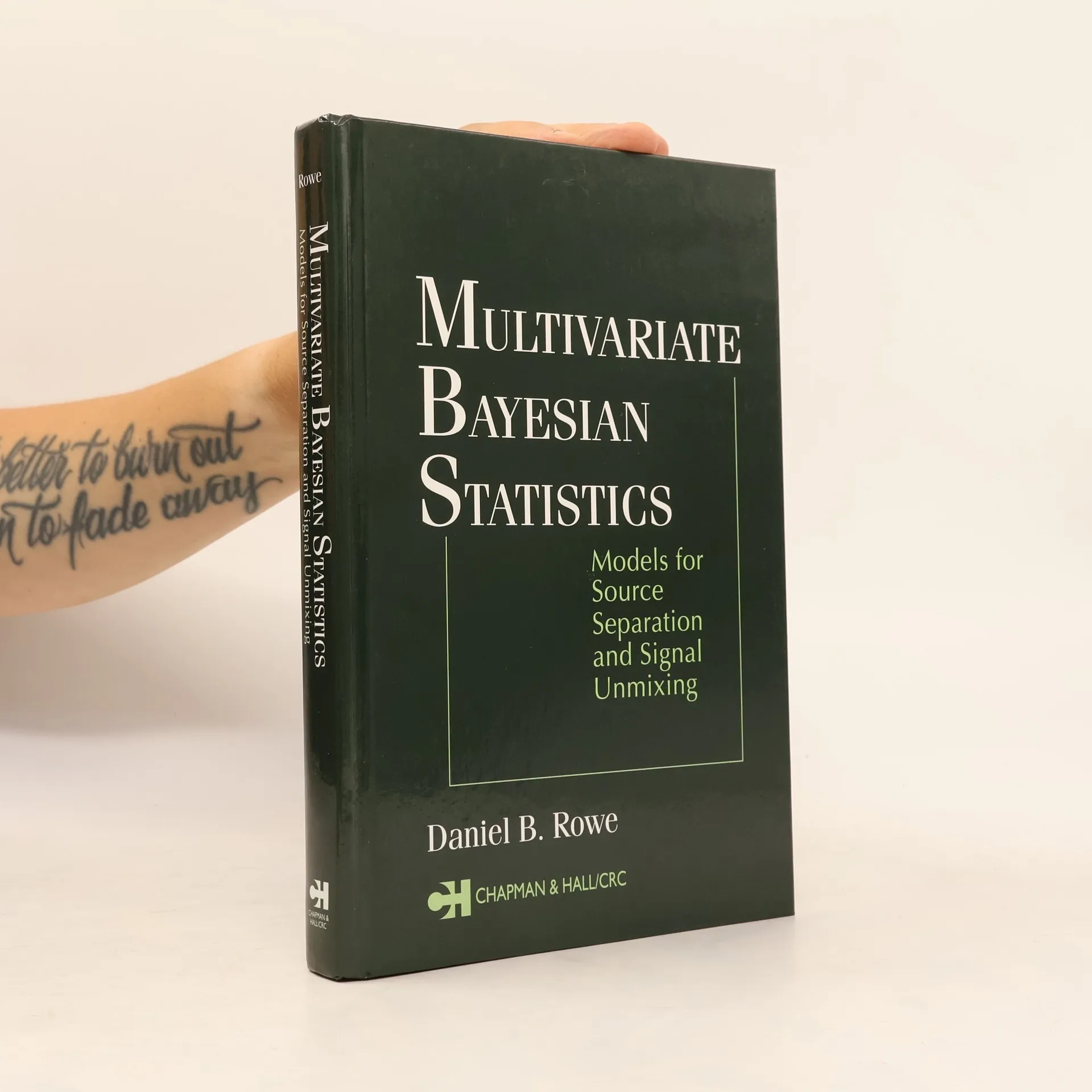
Multivariate Bayesian Statistics, Daniel B. Rowe
- Język

- Rok wydania
- 2002
- Oprawa
- (twarda)
Metody płatności
Nikt jeszcze nie ocenił.
- Tytuł
- Multivariate Bayesian Statistics
- Podtytuł
- Models for Source Separation and Signal Unmixing
- Język
- angielski
- Autorzy
- Daniel B. Rowe
- Wydawca
- Chapman and Hall/CRC
- Rok wydania
- 2002
- Oprawa
- twarda
- Liczba stron
- 352
- ISBN10
- 1584883189
- ISBN13
- 9781584883180
- Seria
- Kategorie
- Tagi
- Opis
- Of the two primary approaches to the classic source separation problem, only the Bayesian statistical approach avoids imposing unreasonable model and likelihood constraints. Bayesian methods leverage available information about model parameters, enabling estimation of sources and mixing coefficients while allowing for inferences. This comprehensive treatment of the source separation problem begins with an introduction using the "cocktail-party" analogy. Part I covers the necessary statistical background for the Bayesian source separation model. Part II focuses on instantaneous constant mixing models, where observed vectors and unobserved sources are independent over time but can be dependent within each vector. Part III explores more complex models, accommodating delayed sources, time-varying mixing coefficients, and temporal correlations between observation and source vectors. For each model, the author presents two distinct methods for parameter estimation. Real-world source separation challenges span various fields, including engineering, computer science, economics, and image processing, and often prove more complex than they seem. This book equips readers with essential statistical concepts and current research findings to effectively apply Bayesian methods in tackling the diverse "cocktail party" problems they may encounter.