



Więcej o książce
This book focuses on the financing of formal primary and secondary education in developing nations. The study does not consider the areas of pre-primary, post-secondary, or nonformal education. Financing includes not only monetary inputs to education, but also material, labor, expertise, and land. The study examines the volume, nature, and mechanics of community financing in a range of settings. Policy issues facing governments and those who work with them are presented. Instruments for incentives, guidance, and control of community activities are considered. Specific strategies from different countries are presented and evaluated, along with the importance of monitoring and evaluation. The paper concludes by summarizing the lessons in the context of debate about centralization and decentralization. Sections of the book include: (1) "Communities and Their Characteristics"; (2) "Scale, Motivation, and Nature of Community Financing"; (3) "Mechanics of Community Financing"; (4) "Policy Issues Confronting Governments"; (5) "Government Incentives, Guidance, and Controls"; (6) "Challenges and Risks"; (7) "Monitoring and Evaluation"; and (8) Conclusion. (Contains an 87-item list of references.) (EH)
Zakup książki
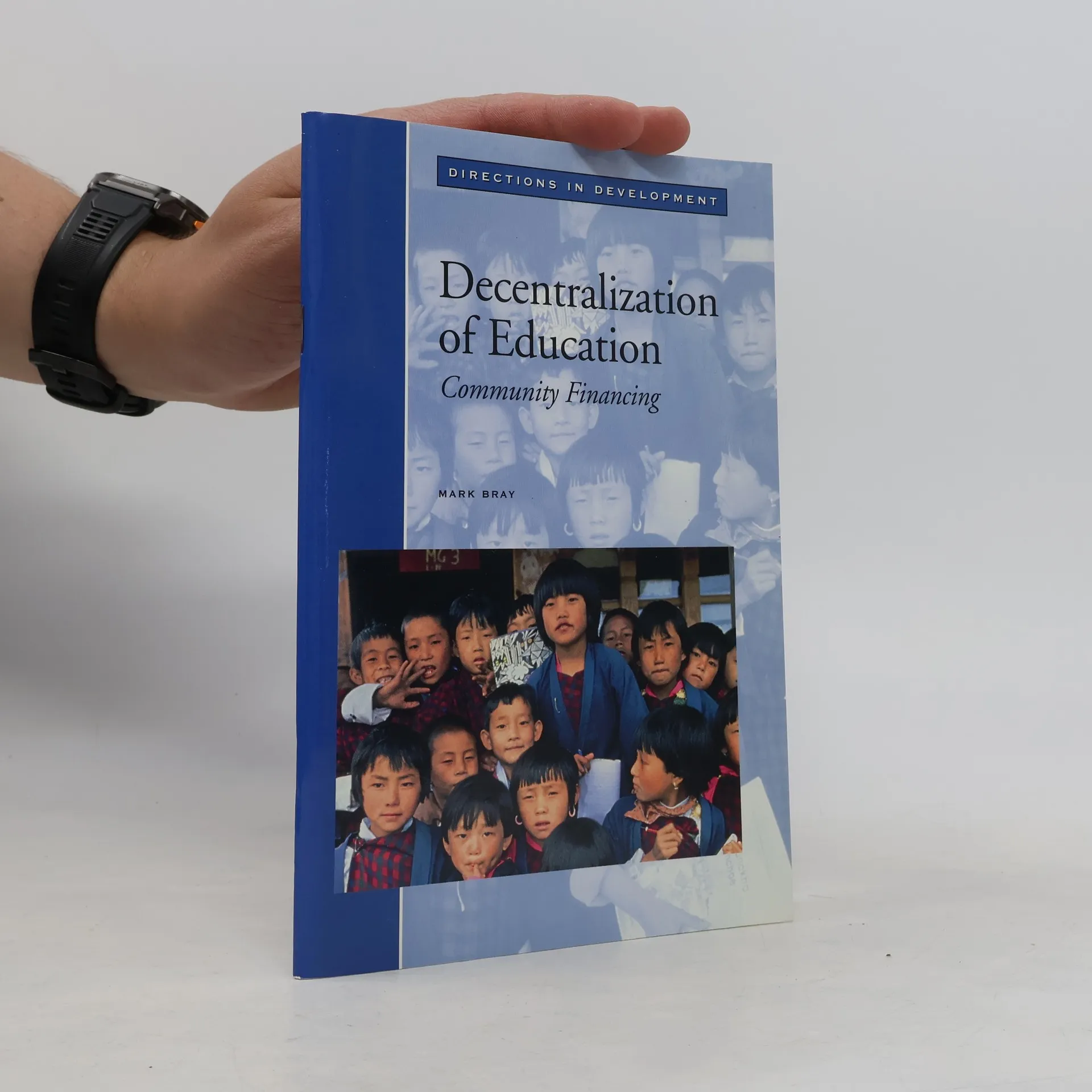
Directions in Development: Decentralization of Education, Mark Bray
- Język

- Rok wydania
- 1996
- Oprawa
- (miękka),
- Stan książki
- Dobry
- Cena
- 26,64 zł
Metody płatności
Nikt jeszcze nie ocenił.
- Tytuł
- Directions in Development: Decentralization of Education
- Podtytuł
- Community Financing
- Język
- angielski
- Autorzy
- Mark Bray
- Wydawca
- World Bank Publications
- Rok wydania
- 1996
- Oprawa
- miękka
- Liczba stron
- 51
- ISBN10
- 0821337246
- ISBN13
- 9780821337240
- Seria
- Tagi
- Edukacja & Szkolnictwo, Afryka, Finanse, Teorie polityczne, Prawo cywilne, Ameryka Łacińska, Polityka społeczna, Kraje rozwijające się
- Opis
- This book focuses on the financing of formal primary and secondary education in developing nations. The study does not consider the areas of pre-primary, post-secondary, or nonformal education. Financing includes not only monetary inputs to education, but also material, labor, expertise, and land. The study examines the volume, nature, and mechanics of community financing in a range of settings. Policy issues facing governments and those who work with them are presented. Instruments for incentives, guidance, and control of community activities are considered. Specific strategies from different countries are presented and evaluated, along with the importance of monitoring and evaluation. The paper concludes by summarizing the lessons in the context of debate about centralization and decentralization. Sections of the book include: (1) "Communities and Their Characteristics"; (2) "Scale, Motivation, and Nature of Community Financing"; (3) "Mechanics of Community Financing"; (4) "Policy Issues Confronting Governments"; (5) "Government Incentives, Guidance, and Controls"; (6) "Challenges and Risks"; (7) "Monitoring and Evaluation"; and (8) Conclusion. (Contains an 87-item list of references.) (EH)