

Więcej o książce
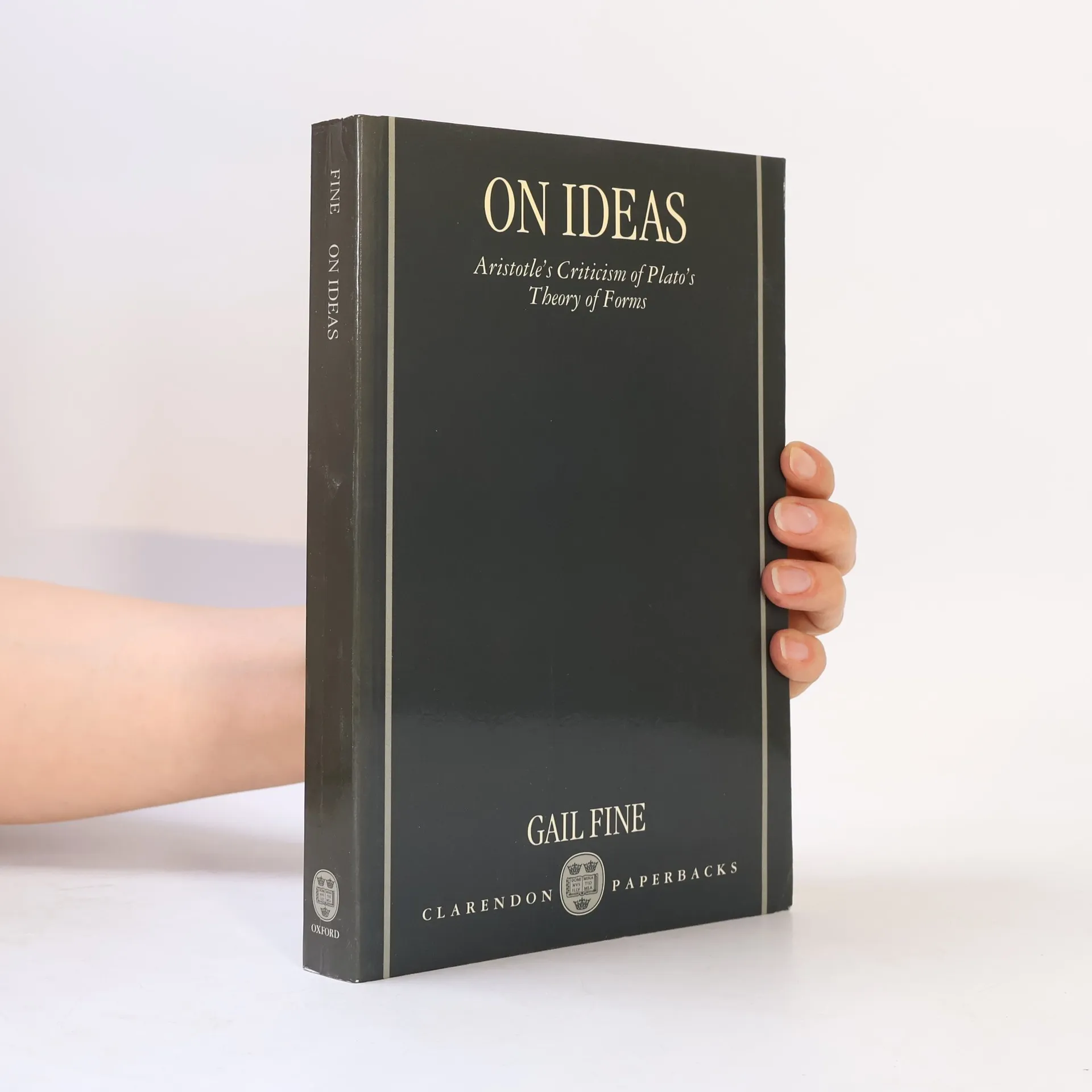
The Peri ideôn (On Ideas) is the only work in which Aristotle systematically sets out and criticizes arguments for the existence of Platonic forms. Gail Fine presents the first full-length treatment in English of this important but neglected work. She asks how, and how well, Aristotle understands Plato's theory of forms, and why and with what justification he favors an alternative metaphysical scheme. She examines the significance of the Peri ideôn for some central questions about Plato's theory of forms--whether, for example, there are forms corresponding to every property or only to some, and if only to some, then to which ones; whether forms are universals, particulars or both; and whether they are meanings, properties or both. Fine also provides a general discussion of Plato's theory of forms, and of our evidence about the Peri ideon and its date, scope, and aims. While she pays careful attention to the details of the text, she also relates it to contemporary philosophical concerns. The book will be valuable for anyone interested in metaphysics ancient or modern."
Zakup książki
On Ideas, Gail Fine
- Język

- Rok wydania
- 1993
- Oprawa
- (miękka)
Metody płatności
Nikt jeszcze nie ocenił.
- Tytuł
- On Ideas
- Podtytuł
- Aristotle's Criticism of Plato's Theory of Forms
- Język
- angielski
- Autorzy
- Gail Fine
- Wydawca
- Clarendon Press
- Rok wydania
- 1993
- Oprawa
- miękka
- Liczba stron
- 416
- ISBN10
- 0198235496
- ISBN13
- 9780198235491
- Seria
- Tagi
- Opis
- The Peri ideôn (On Ideas) is the only work in which Aristotle systematically sets out and criticizes arguments for the existence of Platonic forms. Gail Fine presents the first full-length treatment in English of this important but neglected work. She asks how, and how well, Aristotle understands Plato's theory of forms, and why and with what justification he favors an alternative metaphysical scheme. She examines the significance of the Peri ideôn for some central questions about Plato's theory of forms--whether, for example, there are forms corresponding to every property or only to some, and if only to some, then to which ones; whether forms are universals, particulars or both; and whether they are meanings, properties or both. Fine also provides a general discussion of Plato's theory of forms, and of our evidence about the Peri ideon and its date, scope, and aims. While she pays careful attention to the details of the text, she also relates it to contemporary philosophical concerns. The book will be valuable for anyone interested in metaphysics ancient or modern."