

Więcej o książce
This book explores a fundamental tension in Aristotle's how can an entity such as a living organisma composite generated through the imposition of form on preexisting matterhave the conceptual unity that Aristotle demands of primary substances? Mary Louise Gill bases her treatment of the problem of unity, and of Aristotle's solution, on a fresh interpretation of the relation between matter and form. Challenging the traditional understanding of Aristotelian matter, she argues that material substances are subverted by matter and maintained by form that controls the matter to serve a positive end. The unity of material substances thus involves a dynamic relation between resistant materials and directive ends.Aristotle on Substance offers both a general account of matter, form, and substantial unity and a specific assessment of particular Aristotelian arguments. At every point, Gill engages Aristotle on his own philosophical ground through the detailed analysis of central, and often controversial, texts from the Metaphysics, Physics, On Generation and Corruption, De Anima, De Caelo, and the biological works. The result is a coherent, firmly grounded rethinking of Aristotle's central metaphysical concepts and of his struggle toward a fully consistent theory of material substances.
Zakup książki
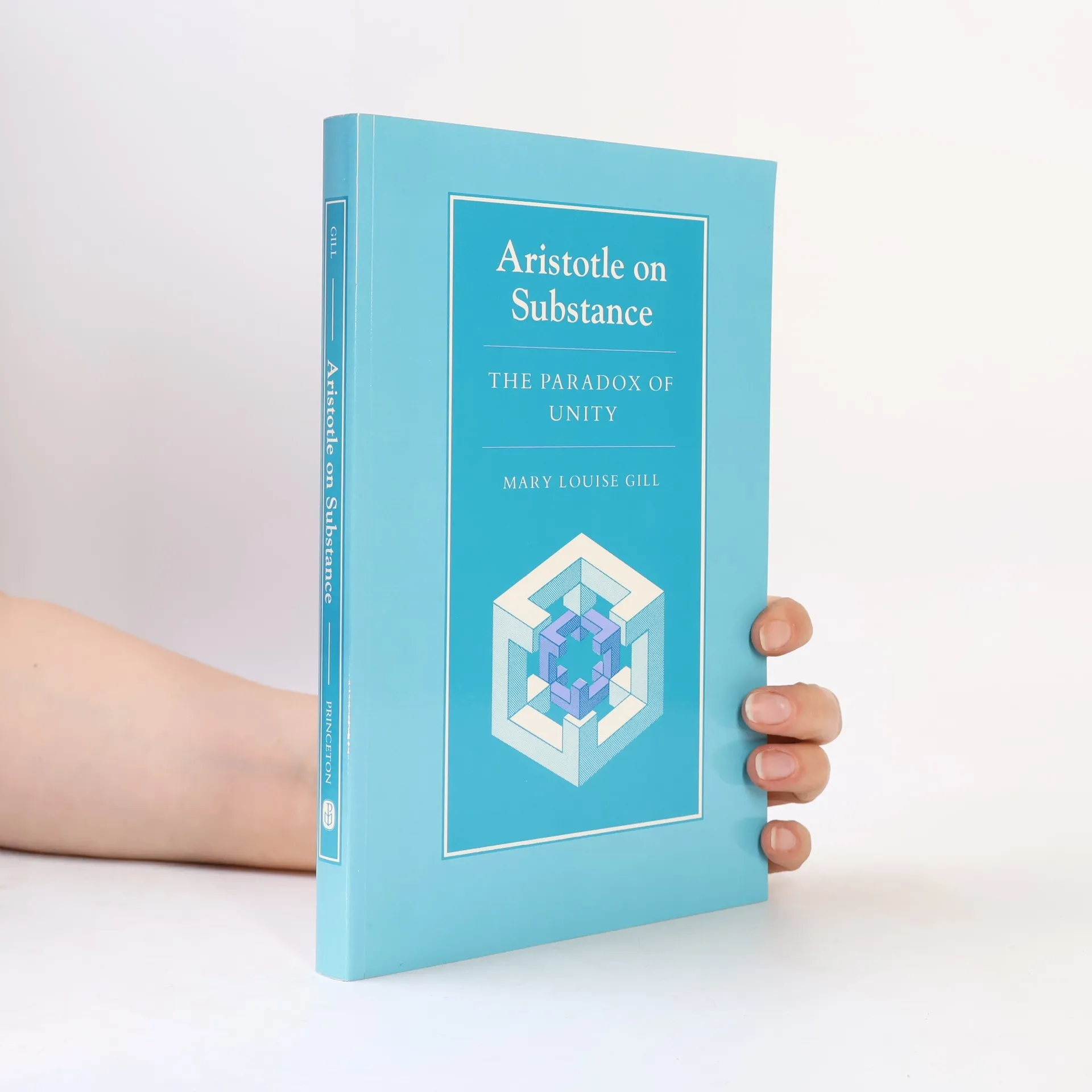
Aristotle on Substance, Mary Louise Gill
- Język

- Rok wydania
- 1989
- Oprawa
- (miękka)
Metody płatności
Nikt jeszcze nie ocenił.
- Tytuł
- Aristotle on Substance
- Podtytuł
- The Paradox of Unity
- Język
- angielski
- Autorzy
- Mary Louise Gill
- Wydawca
- Princeton University Press
- Rok wydania
- 1989
- Oprawa
- miękka
- Liczba stron
- 296
- ISBN10
- 0691020701
- ISBN13
- 9780691020709
- Seria
- Tagi
- Opis
- This book explores a fundamental tension in Aristotle's how can an entity such as a living organisma composite generated through the imposition of form on preexisting matterhave the conceptual unity that Aristotle demands of primary substances? Mary Louise Gill bases her treatment of the problem of unity, and of Aristotle's solution, on a fresh interpretation of the relation between matter and form. Challenging the traditional understanding of Aristotelian matter, she argues that material substances are subverted by matter and maintained by form that controls the matter to serve a positive end. The unity of material substances thus involves a dynamic relation between resistant materials and directive ends.Aristotle on Substance offers both a general account of matter, form, and substantial unity and a specific assessment of particular Aristotelian arguments. At every point, Gill engages Aristotle on his own philosophical ground through the detailed analysis of central, and often controversial, texts from the Metaphysics, Physics, On Generation and Corruption, De Anima, De Caelo, and the biological works. The result is a coherent, firmly grounded rethinking of Aristotle's central metaphysical concepts and of his struggle toward a fully consistent theory of material substances.