

Więcej o książce
This book combines a theoretical and empirical cross-national perspective to examine how societal transformations in European welfare states affect patterns of solidarity between men and women, and across generations. The authors' research has highlighted substantial discrepancies in various countries between the assumptions made at the macro-level of social policy on family issues and the reality of women's and men's contributions at home. In countries where social policy relies on family solidarity as the main source of support, this may result in growing social inequality. Finally, the chapters reveal the crucial role of women in the transformation of family life and welfare state policy. These conclusions could have important ramifications for European welfare policy. The cross-national perspective allows for a detailed understanding of the similarities and differences between the various European countries and their policies. Solidarity Between the Sexes and the Generations will appeal to scholars and researchers of social policy, sociology and welfare as well as women and gender studies. Because of its comparative perspective the book is also of interest to those involved in developing social policy in European countries.
Zakup książki
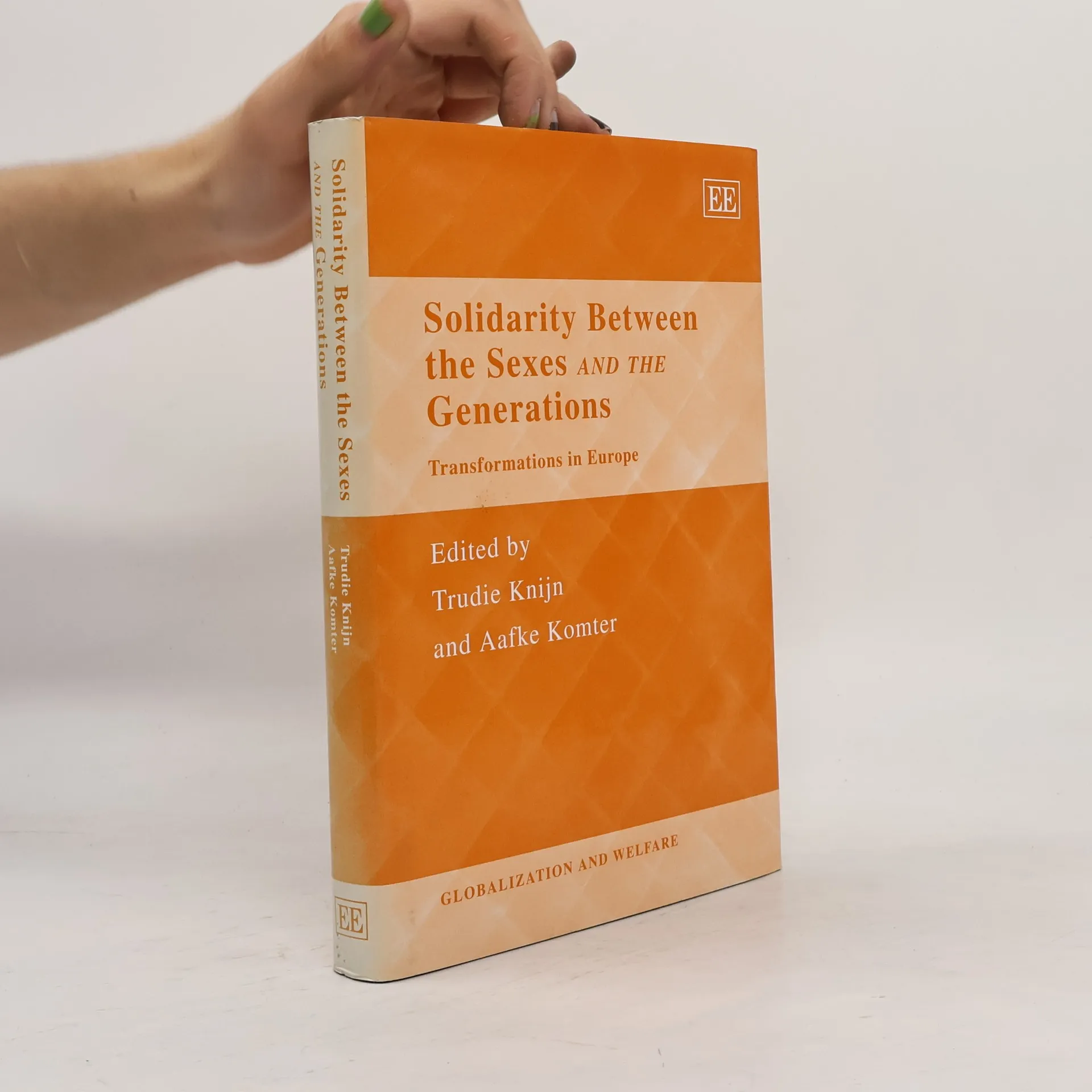
Globalization and Welfare: Solidarity Between the Sexes and the Generations, Trudie Knijn, Aafke Komter
- Język

- Rok wydania
- 2004
- Oprawa
- (twarda)
Metody płatności
Nikt jeszcze nie ocenił.
- Tytuł
- Globalization and Welfare: Solidarity Between the Sexes and the Generations
- Podtytuł
- Transformations in Europe
- Język
- angielski
- Autorzy
- Trudie Knijn, Aafke Komter
- Wydawca
- Edward Elgar Publishing
- Rok wydania
- 2004
- Oprawa
- twarda
- Liczba stron
- 256
- ISBN10
- 1843763583
- ISBN13
- 9781843763581
- Seria
- Kategorie
- Tagi
- Rodzina, Kobiety, Problemy społeczne
- Opis
- This book combines a theoretical and empirical cross-national perspective to examine how societal transformations in European welfare states affect patterns of solidarity between men and women, and across generations. The authors' research has highlighted substantial discrepancies in various countries between the assumptions made at the macro-level of social policy on family issues and the reality of women's and men's contributions at home. In countries where social policy relies on family solidarity as the main source of support, this may result in growing social inequality. Finally, the chapters reveal the crucial role of women in the transformation of family life and welfare state policy. These conclusions could have important ramifications for European welfare policy. The cross-national perspective allows for a detailed understanding of the similarities and differences between the various European countries and their policies. Solidarity Between the Sexes and the Generations will appeal to scholars and researchers of social policy, sociology and welfare as well as women and gender studies. Because of its comparative perspective the book is also of interest to those involved in developing social policy in European countries.