



Więcej o książce
In a world shaped by natural selection, philosopher Ronald de Sousa examines the unique power of rational thinking. This concise exploration addresses the dual issues of natural selection mimicking rational design and rational thinking as a product of evolution. While we often consider ourselves superior to other species, natural selection does not guarantee optimal outcomes. The pursuit of rationality raises questions about its effectiveness as a strategy. Language, including mathematics and science, plays a crucial role in enhancing our intelligence compared to our closest primate relatives. Instinctual responses can sometimes outperform conscious reasoning, as seen in the swift movements of trained athletes. However, language allows for abstract thinking and precise calculations, enabling remarkable achievements like space exploration. Moreover, it facilitates the formulation of diverse values that may conflict with each other and with our instincts. This engaging book illustrates the intricate relationship between our rational and irrational tendencies, drawing on a wide range of evidence to explore the implications of being human within the natural world.
Zakup książki
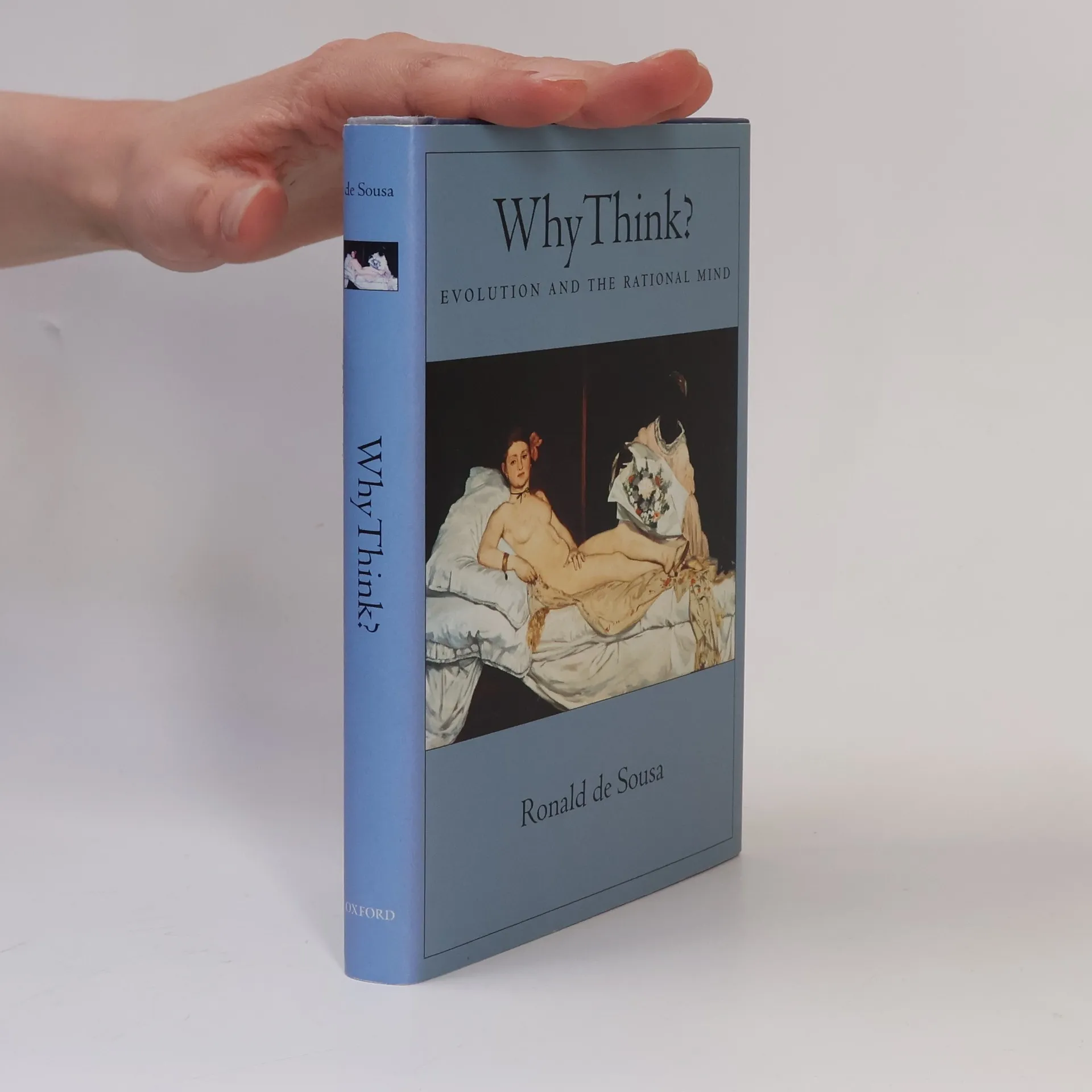
Why Think? The Evolution of the Rational Mind, Ronald De Sousa
- Język

- Rok wydania
- 2007
- Oprawa
- (twarda)
Metody płatności
Nikt jeszcze nie ocenił.
- Tytuł
- Why Think? The Evolution of the Rational Mind
- Język
- angielski
- Autorzy
- Ronald De Sousa
- Wydawca
- Oxford University Press
- Rok wydania
- 2007
- Oprawa
- twarda
- Liczba stron
- 200
- ISBN10
- 019518985X
- ISBN13
- 9780195189858
- Seria
- Opis
- In a world shaped by natural selection, philosopher Ronald de Sousa examines the unique power of rational thinking. This concise exploration addresses the dual issues of natural selection mimicking rational design and rational thinking as a product of evolution. While we often consider ourselves superior to other species, natural selection does not guarantee optimal outcomes. The pursuit of rationality raises questions about its effectiveness as a strategy. Language, including mathematics and science, plays a crucial role in enhancing our intelligence compared to our closest primate relatives. Instinctual responses can sometimes outperform conscious reasoning, as seen in the swift movements of trained athletes. However, language allows for abstract thinking and precise calculations, enabling remarkable achievements like space exploration. Moreover, it facilitates the formulation of diverse values that may conflict with each other and with our instincts. This engaging book illustrates the intricate relationship between our rational and irrational tendencies, drawing on a wide range of evidence to explore the implications of being human within the natural world.